

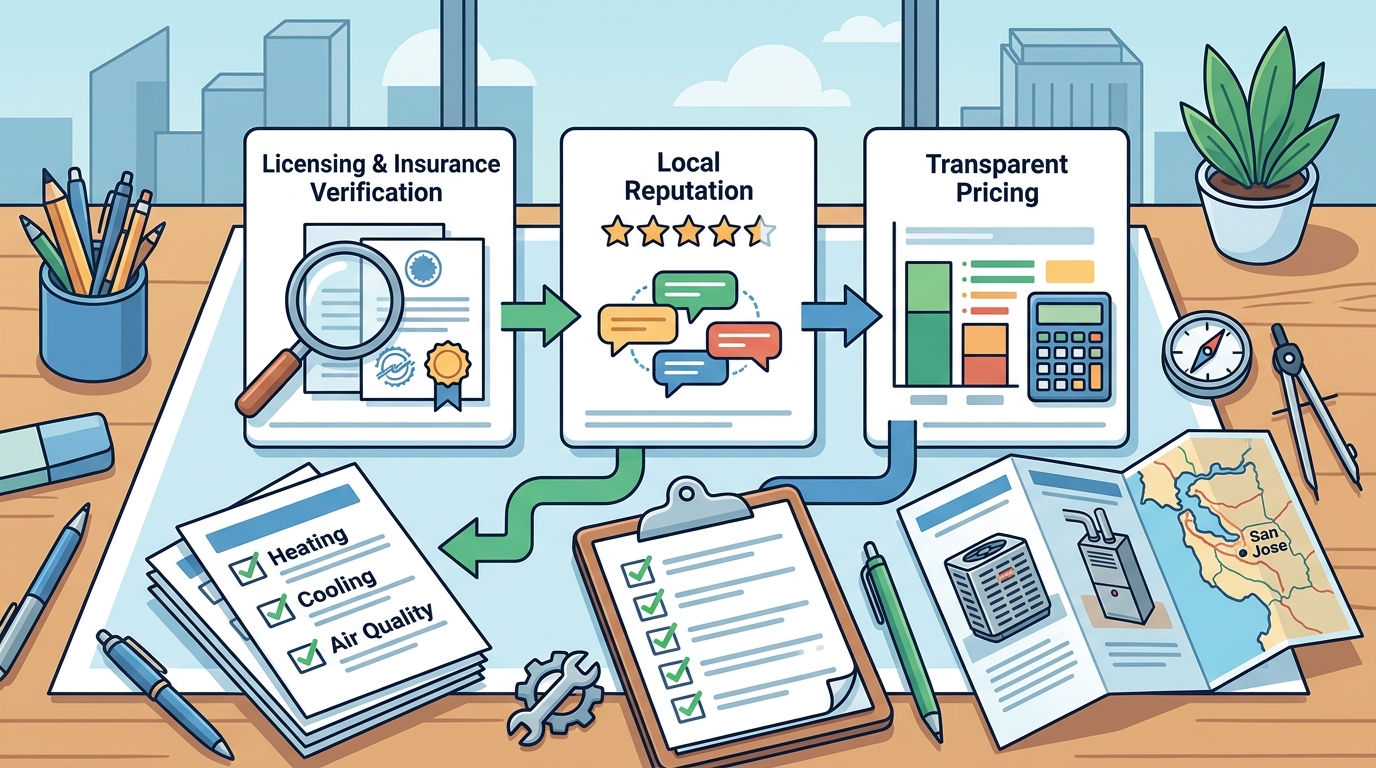
Choosing the best HVAC company in San Jose and the South Bay requires verifying state licensing, checking local reputation, and confirming transparent pricing before signing a contract. This guide explains how to evaluate providers like Air Sharks, which serves the region with heating, cooling, and air quality services. We cover verification steps, cost drivers, common mistakes, and local regulations to help you make an informed decision.
How to Choose a Reliable Provider
Selecting a contractor involves more than finding the lowest bid. A reputable HVAC company is a licensed business that maintains insurance, employs trained technicians, and provides clear communication. In the San Jose area, you should look for providers who specialize in both residential and commercial systems. Air Sharks, for example, operates as a fully licensed and insured entity serving the South Bay. They handle installations, repairs, and preventative maintenance for various system types.
Experience matters significantly in this trade. A company that has operated for several years in your specific neighborhood understands local housing stock and climate challenges. Look for teams that offer comprehensive solutions rather than just emergency fixes. This includes ductwork assessment and indoor air quality improvements. A provider that addresses the whole system is often more reliable than one that only patches individual components.
Local Presence and Reputation
Check how long the company has served the San Jose and South Bay areas. Local providers often have established relationships with local suppliers and understand regional building codes. Read recent reviews to gauge customer satisfaction. Pay attention to how the company responds to negative feedback. A professional team addresses complaints constructively and offers solutions.
Scope of Services
Ensure the provider covers your specific needs. Some companies focus only on air conditioning, while others handle heating and air quality. Air Sharks offers a broad range of services including furnace service, heat pump installation, and ductwork repair. Having a single provider for all HVAC needs simplifies scheduling and ensures consistent service standards across different system components.
Specific Questions to Ask
Before committing to a service provider, ask targeted questions to assess their professionalism. Do not accept vague answers. Specificity indicates a well-managed operation. Ask about their licensing status, insurance coverage, and warranty terms. These are non-negotiable items for any serious contractor.
Licensing and Insurance
Ask for the contractor's California C-20 license number. This is the standard license for heating, air conditioning, and refrigeration work. Verify that they carry general liability insurance and workers' compensation. If a technician is injured on your property, you do not want to be liable. A legitimate company will provide this information without hesitation.
Warranty and Guarantees
Inquire about the warranty on both parts and labor. Manufacturer warranties often require installation by a certified professional to remain valid. Ask how long the labor warranty lasts. A strong provider stands behind their workmanship. Clarify what is covered and what is excluded. This prevents disputes later if a system fails.
Pricing Structure
Ask how they calculate costs. Do they charge by the hour, by the job, or by the part? Request a written estimate before work begins. Understand if there are additional fees for after-hours service or emergency calls. Transparent pricing builds trust. Avoid companies that refuse to provide a written quote.
Verifying Credentials and Claims
Never take a contractor's word for their credentials. Verification is a critical step in protecting your investment. You can check licensing status through the California Contractors State License Board (CSLB). This is a free public resource. Enter the license number to see if it is active and in good standing.
Checking the CSLB Database
Visit the CSLB website and search for the contractor's license number. Look for the license status. It should be active. Check for any disciplinary actions or complaints. A clean record is a good sign. If the license is expired or suspended, do not hire that company. This step takes only a few minutes and can save you significant trouble.
Verifying Insurance
Ask for a certificate of insurance. This document proves that the company carries the required coverage. You can verify this with the insurance provider directly if needed. Ensure the policy covers general liability and workers' compensation. This protects you from financial liability in case of accidents or property damage during the job.
The Service Process and Timeline
Understanding the workflow helps you manage expectations. A standard HVAC service or installation follows a predictable sequence. The process begins with a consultation and assessment. The technician evaluates your current system, your home's layout, and your comfort goals. This step is crucial for accurate sizing and planning.
Assessment and Proposal
After the assessment, the provider prepares a detailed proposal. This includes the recommended equipment, installation steps, and total cost. Review this document carefully. Ask questions about any unclear items. The timeline for this phase is usually a few days. You should not feel pressured to sign immediately. Take the time you need to review the offer.
Installation and Testing
Once you approve the proposal, the company schedules the installation. For a full system replacement, this typically takes one to two days. The team removes the old equipment, installs the new unit, and connects the ductwork. They then test the system to ensure it operates correctly. You should be present for the final walkthrough to understand how to use the new system.
Understanding Cost Drivers
HVAC costs vary widely based on several factors. There is no single fixed price for all jobs. The total cost depends on the type of system, the size of your home, and the complexity of the installation. Understanding these drivers helps you budget accurately and avoid surprises.
System Type and Efficiency
The type of equipment you choose is the biggest cost factor. High-efficiency units cost more upfront but save money on energy bills over time. Standard efficiency units are cheaper to buy but consume more energy. Consider your long-term goals. If you plan to stay in your home for many years, a higher efficiency model may be worth the investment. Air Sharks can help you evaluate these options based on your specific needs.
Installation Complexity
The condition of your existing ductwork and electrical system affects the price. If you need new ductwork or electrical upgrades, the cost increases. Access to the installation site also matters. Difficult access can require more labor. A thorough assessment identifies these issues before you sign the contract. This prevents hidden costs from appearing later.
Common Mistakes to Avoid
Homeowners often make errors that lead to poor outcomes. Avoiding these mistakes ensures a smoother experience. The most common error is choosing a provider based solely on price. Low bids often reflect low quality or hidden fees. Another mistake is skipping the verification step. Always check licenses and insurance.
Ignoring Sizing Issues
Installing a unit that is too large or too small is a frequent problem. An oversized unit cycles on and off frequently, reducing efficiency and comfort. An undersized unit runs constantly and struggles to maintain temperature. A professional load calculation determines the correct size. Do not accept a guess. Insist on a proper calculation.
Skipping Maintenance
Many homeowners neglect regular maintenance. This leads to premature system failure and higher repair costs. A maintenance plan keeps your system running efficiently. It also extends the lifespan of the equipment. Air Sharks offers preventative maintenance services to help you avoid these issues. Regular tune-ups are a small investment that pays off significantly.
Comparing Service Models
There are different ways to approach HVAC services. You can hire a one-time repair service, a full-service provider, or a membership-based plan. Each model has its pros and cons. Understanding the differences helps you choose the right fit for your situation.
| Service Model | Best For | Pros | Cons |
|---|---|---|---|
| One-Time Repair | Emergency fixes | No long-term commitment | Higher per-visit cost, no priority scheduling |
| Full-Service Provider | Comprehensive care | Single point of contact, consistent quality | Requires trust in the provider's long-term stability |
| Membership Plan | Preventative care | Discounted repairs, priority service | Annual fee, may not cover major replacements |
Situational Advice for Homeowners
Your specific situation affects the best choice. Consider your home's age, your budget, and your timeline. Older homes may need ductwork upgrades. Newer homes may focus on efficiency. Your budget determines whether you can afford a high-efficiency system or need a standard model. Your timeline dictates whether you need emergency service or can plan ahead.
Older Homes
Older homes in San Jose often have outdated ductwork. This can reduce efficiency and comfort. A provider experienced in older housing stock can identify these issues. They can recommend upgrades that improve performance without requiring a full system replacement. This is a cost-effective way to enhance comfort.
New Construction
New construction offers an opportunity to install the most efficient system possible. You can design the ductwork for optimal airflow. This ensures maximum comfort and energy savings. Work with a provider who specializes in new installations. They can integrate the HVAC system with other home systems for seamless operation.
Regulations and Consumer Protections
California has specific regulations for HVAC contractors. These rules protect consumers and ensure professional standards. The CSLB oversees licensing and discipline. Contractors must follow building codes and safety standards. Understanding these protections helps you know your rights.
Licensing Requirements
Contractors must hold a C-20 license to perform HVAC work in California. This license requires passing an exam and demonstrating financial responsibility. It ensures that the contractor has the necessary knowledge and experience. Hiring an unlicensed contractor is illegal and voids any insurance coverage. Always verify the license before hiring.
Consumer Rights
You have the right to a written contract. This contract should detail the scope of work, cost, and timeline. You have the right to inspect the work. You have the right to a warranty on parts and labor. If a dispute arises, you can file a complaint with the CSLB. This process can lead to disciplinary action against the contractor.
San Jose and South Bay Specifics
The San Jose and South Bay areas have unique climate and housing characteristics. These factors influence HVAC needs. The region experiences mild winters and warm summers. However, temperature swings can be significant. Housing stock varies from older bungalows to modern builds. A local provider understands these nuances.
Climate Considerations
The South Bay climate is generally mild, but humidity can be an issue. This affects the choice of equipment. A system with good dehumidification capabilities is beneficial. Air quality is also a concern in the region. Providers who offer air quality solutions can help you address this. Look for companies that understand local environmental factors.
Housing Stock
San Jose has a mix of housing types. Older homes may have single-story layouts. Newer homes may be multi-story. This affects ductwork design and equipment placement. A local provider knows the common challenges in each neighborhood. They can tailor their recommendations to your specific home. This local expertise is a key differentiator.
Timing Your HVAC Project
Peak Seasons
Summer is the peak season for air conditioning. Demand is high, and technicians are busy. Prices may be higher due to increased demand. If your system fails in summer, you may face a long wait for service. Planning ahead can mitigate this. Schedule maintenance in the spring to prepare for summer.
Off-Peak Seasons
Spring and fall are ideal times for HVAC projects. Demand is lower, and technicians have more availability. Prices are often more competitive. This is the best time to schedule installations or major repairs. You can take your time to compare options and make a decision. Air Sharks can help you schedule your project during these optimal periods.
Long-Term Performance and Savings
A well-chosen HVAC system delivers long-term benefits. These include energy savings, comfort, and durability. A high-efficiency system reduces your energy bills. A properly sized system maintains consistent comfort. A well-maintained system lasts longer. These outcomes justify the initial investment.
Energy Savings
High-efficiency systems use less energy to provide the same level of comfort. This translates to lower monthly bills. Over the life of the system, these savings can be significant. Calculate the payback period for a high-efficiency model. It is often shorter than you might expect. This is a key factor in the long-term value of your investment.
System Longevity
Regular maintenance extends the life of your HVAC system. A well-maintained system can last 15 to 20 years. Neglect can shorten this lifespan significantly. A maintenance plan ensures that your system receives the care it needs. This protects your investment and ensures reliable performance for years to come.
Key Takeaways
- Verify the contractor's California C-20 license through the CSLB database.
- Ask for proof of insurance and a written warranty on parts and labor.
- Request a detailed written estimate before signing any contract.
- Insist on a professional load calculation to ensure correct system sizing.
- Schedule major projects during off-peak seasons for better pricing and availability.
- Choose a provider with local experience in San Jose and the South Bay.
- Consider a maintenance plan to extend system life and ensure efficiency.
- Review recent customer reviews to gauge the provider's reputation.
Frequently Asked Questions
How do I verify an HVAC contractor's license in California?
You can verify a contractor's license by visiting the California Contractors State License Board (CSLB) website. Enter the license number provided by the contractor. Check the status and any disciplinary actions. This is a free and reliable method to ensure the contractor is licensed and in good standing.
What is a C-20 license?
A C-20 license is the California state license for heating, air conditioning, and refrigeration contractors. It requires passing an exam and demonstrating financial responsibility. This license ensures that the contractor has the necessary knowledge and experience to perform HVAC work safely and professionally.
How much does a new HVAC system cost in San Jose?
The cost of a new HVAC system varies based on the type of equipment, the size of your home, and the complexity of the installation. High-efficiency systems cost more upfront but save money on energy bills. A professional assessment provides an accurate estimate for your specific situation.
How often should I service my HVAC system?
You should service your HVAC system at least once a year. Many providers recommend twice a year, once for heating and once for cooling. Regular maintenance keeps your system running efficiently and extends its lifespan. It also helps identify minor issues before they become major problems.
What is the difference between a standard and high-efficiency HVAC system?
Do I need a maintenance plan?
How long does an HVAC installation take?
A standard HVAC installation typically takes one to two days. The exact duration depends on the complexity of the job and the condition of your existing system. A professional provider will give you a timeline during the assessment phase. This helps you plan for the disruption.
What should I do if my HVAC system fails in an emergency?
Contact a provider that offers emergency service. Explain the issue and your location. A reputable company will dispatch a technician as soon as possible. Keep the area around the system clear to allow for safe and efficient repair. Do not attempt to repair the system yourself if you are not qualified.
Conclusion
Choosing the best HVAC company in San Jose and the South Bay requires careful evaluation of credentials, reputation, and service models. By verifying licenses, asking the right questions, and understanding cost drivers, you can make an informed decision. Air Sharks provides a reliable option for homeowners seeking comprehensive heating, cooling, and air quality solutions. To schedule a consultation or learn more about our services, visit the schedule service page on our website.