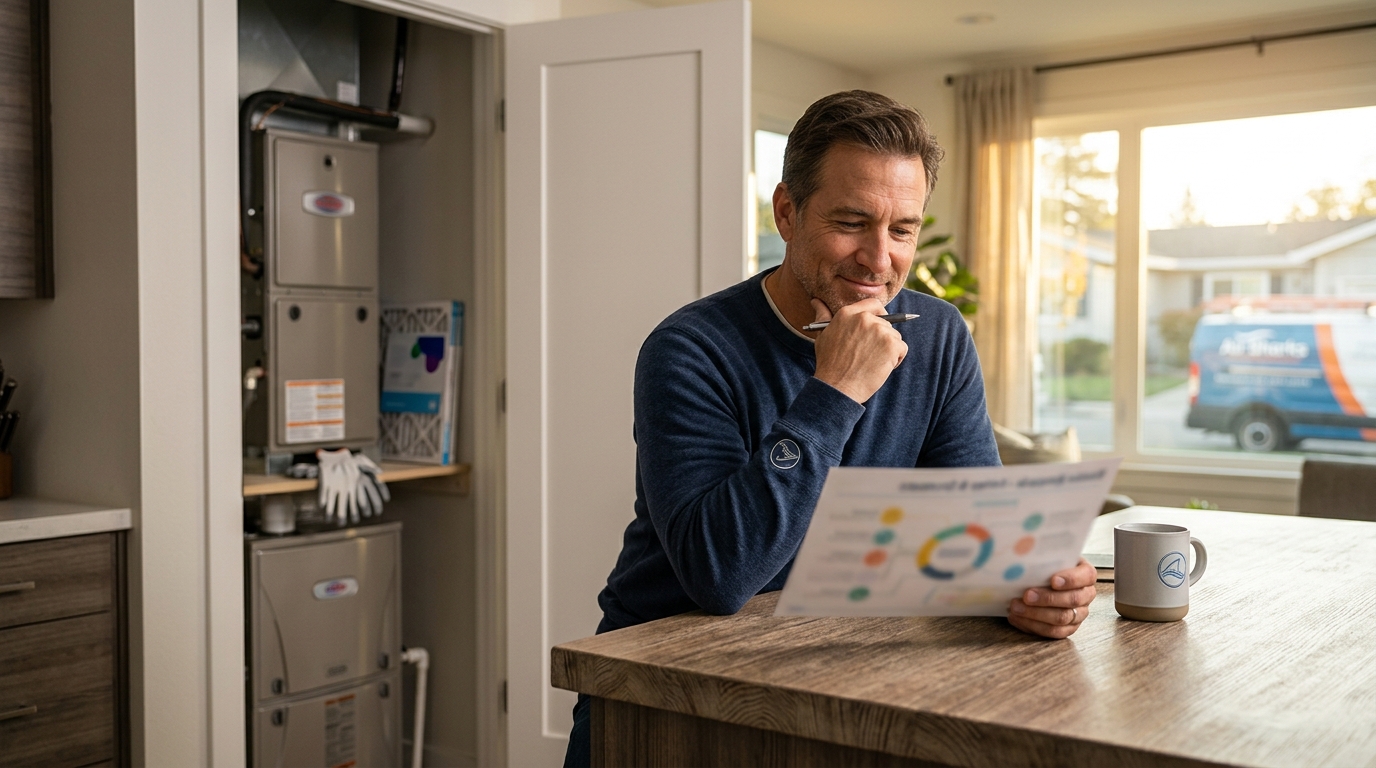
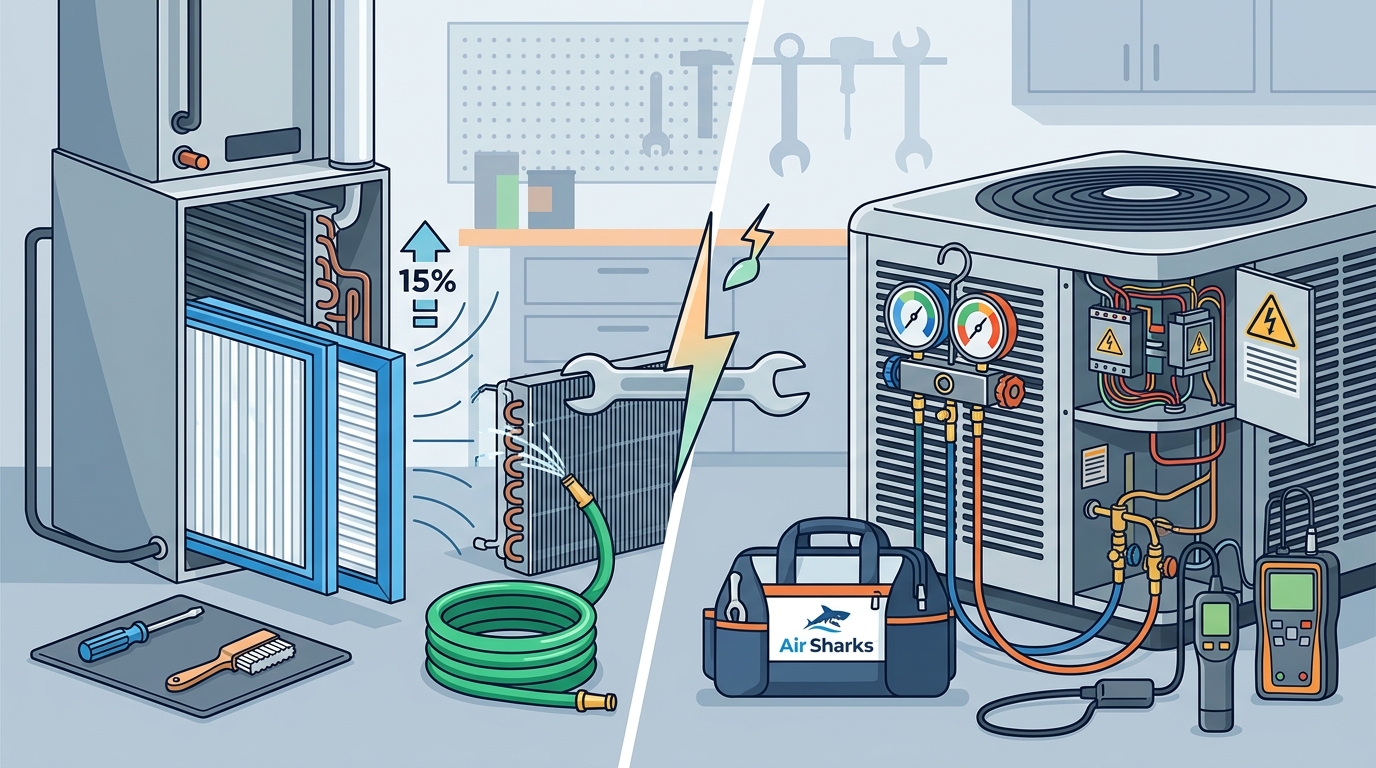
Homeowners often seek ways to reduce utility bills and extend the life of their climate control systems. Energy Star reports that proper maintenance can improve HVAC efficiency by up to 15 percent. This statistic highlights the critical balance between homeowner responsibility and professional expertise. While some tasks are safe for DIY enthusiasts, others require licensed technicians to ensure safety and compliance with local codes. Air Sharks in San Jose provides the professional oversight needed for complex system health. (Career Air Sharks)
Safe DIY Tasks for Homeowners
Regular upkeep is essential for maintaining indoor comfort. There are several low-risk activities that homeowners can perform without specialized tools or training. These tasks focus on airflow and basic filtration, which are the lifeblood of any HVAC system. (Air Quality Air Sharks)
Filter Replacement
The air filter is the first line of defense for your system. The EPA states that indoor air can be two to five times more polluted than outdoor air. A clogged filter restricts airflow, forcing the blower motor to work harder. This increases energy consumption and wear on the components. Homeowners should check their filters monthly during peak usage seasons. Replacing a standard 1-inch filter is a simple task that takes less than ten minutes. For optimal performance, consider upgrading to a high-efficiency pleated filter.
Outdoor Unit Clearance
The condenser unit located outside your home requires adequate space to dissipate heat. Debris such as leaves, grass clippings, and dirt can accumulate around the unit. This buildup acts as insulation, trapping heat and reducing cooling efficiency. Homeowners should maintain a two-foot clearance around the entire unit. Gently hose down the fins to remove surface dirt. Avoid using high-pressure washers, as they can bend the delicate aluminum fins. Straightening bent fins requires a specialized tool called a fin comb.
Thermostat Calibration
An inaccurate thermostat can cause your system to cycle on and off incorrectly. This leads to temperature swings and discomfort. If your system seems to run longer than usual to reach the set temperature, the thermostat may be miscalibrated. You can test this by placing a separate thermometer near the thermostat. Compare the readings. If there is a significant discrepancy, you may need to recalibrate the device or replace it with a smart thermostat. Smart thermostats can learn your schedule and optimize energy usage automatically.
HVAC Tasks You Must Avoid
While DIY maintenance has its place, certain tasks are strictly off-limits for homeowners. These activities involve high voltage, refrigerant handling, or complex mechanical components. Attempting these repairs can result in severe injury, system damage, or voided warranties.
Refrigerant Handling
Refrigerant is the chemical agent that absorbs and releases heat within your AC system. EPA regulations mandate that only certified technicians can handle refrigerants. It is illegal for homeowners to purchase or recharge refrigerant themselves. Low refrigerant levels indicate a leak, not just a simple need for a refill. Sealing a leak requires specialized equipment and expertise. Adding refrigerant without fixing the leak is wasteful and harmful to the environment. Only a licensed professional can safely diagnose and repair refrigerant issues.
Electrical Component Repair
HVAC systems operate on high voltage electricity. The contactors, relays, and capacitors inside the outdoor unit carry lethal charges. Even after the power is turned off, capacitors can store a dangerous charge for a long time. Homeowners should never open the electrical panels of their HVAC units. Diagnosing electrical faults requires a multimeter and knowledge of electrical schematics. Incorrect handling can lead to electrocution or fire hazards. If you suspect an electrical issue, such as a tripping breaker or burning smell, call a professional immediately.
Ductwork Sealing and Modification
Air ducts distribute conditioned air throughout your home. Leaky ducts can waste up to 30 percent of the air that passes through them. Energy Star estimates that this loss significantly impacts heating and cooling costs. While surface-level sealing with mastic tape is possible, proper duct sealing requires specialized tools and knowledge of airflow dynamics. Improper sealing can create pressure imbalances that damage your furnace or air handler. Professional duct sealing ensures airtight connections and optimal airflow distribution.
Signs Your System Needs Professional Help
Recognizing the warning signs of HVAC failure can save you from costly emergency repairs. Early intervention by a licensed technician can extend the lifespan of your system. Air Sharks in San Jose offers comprehensive diagnostics to identify these issues before they become critical.
Unusual Noises
Grinding, squealing, or banging noises are never normal. A grinding sound often indicates a motor bearing failure. Squealing usually points to a loose or worn belt. Banging can signal a broken component inside the compressor. These sounds indicate mechanical stress that will worsen over time. Ignoring these noises can lead to complete system failure. A professional can diagnose the source of the noise and recommend the appropriate repair.
Weak Airflow
If you notice weak airflow from your vents, the problem could be several things. It might be a clogged filter, a blocked duct, or a failing blower motor. While checking the filter is a simple DIY task, diagnosing blower motor issues requires technical expertise. A failing blower motor can overheat and burn out. This is a complex repair that involves electrical and mechanical components. Professional inspection ensures the root cause is identified and fixed correctly.
Frequent Cycling
Short cycling occurs when your system turns on and off more frequently than normal. This can be caused by an oversized unit, a faulty thermostat, or an overheating heat exchanger. Short cycling puts excessive wear on the compressor and other components. It also leads to uneven temperatures and higher energy bills. Diagnosing the cause of short cycling requires specialized tools and knowledge of system dynamics. A professional can determine if the issue is mechanical, electrical, or related to system sizing.
DIY vs. Professional Maintenance
Understanding the differences between DIY maintenance and professional service helps homeowners make informed decisions. Each approach has its place in a comprehensive HVAC care strategy.
| Aspect | DIY Maintenance | Professional Service |
|---|---|---|
| Cost | Low (Materials only) | Higher (Labor and expertise) |
| Safety | Low Risk | Managed by Licensed Experts |
| Complexity | Basic Tasks Only | Full System Diagnostics |
| Warranty | May Void Warranty | Preserves Manufacturer Warranty |
| Efficiency | Marginal Improvement | Significant Optimization |
DIY maintenance is a valuable supplement to professional care. It keeps the system running smoothly between visits. However, it cannot replace the depth of a professional inspection. Air Sharks provides the expertise needed to keep your system operating at peak efficiency. Their technicians are trained to identify issues that are invisible to the untrained eye.
Key Takeaways
- Replacing air filters monthly is the most effective DIY maintenance task.
- Refrigerant handling is illegal for homeowners and requires EPA certification.
- Electrical repairs pose severe safety risks and should be left to professionals.
- Professional maintenance can improve HVAC efficiency by up to 15 percent.
- Unusual noises often indicate mechanical failure requiring immediate attention.
- Leaky ducts can waste up to 30 percent of conditioned air.
- Regular professional inspections preserve manufacturer warranties.
Frequently Asked Questions
How often should I change my HVAC filter?
Most manufacturers recommend changing standard filters every 30 to 90 days. Homes with pets or allergies may need monthly changes. Regular filter replacement ensures optimal airflow and indoor air quality.
Can I recharge my own AC refrigerant?
No, it is illegal for homeowners to handle refrigerant. Only EPA-certified technicians can legally purchase and recharge refrigerant. Attempting this can result in fines and system damage.
What are the signs of a failing HVAC compressor?
Signs include loud banging noises, warm air from vents, and frequent cycling. A failing compressor is a serious issue that requires professional diagnosis and repair.
Does DIY maintenance void my warranty?
Basic maintenance like filter changes does not void warranties. However, attempting complex repairs or modifications can void the manufacturer's warranty. Always consult your warranty terms before performing non-standard tasks.
How can I improve my home's indoor air quality?
Regular filter changes, duct cleaning, and UV light installation can improve air quality. Professional air quality testing can identify specific pollutants and recommend targeted solutions.
What is the ASAP Membership?
The ASAP Membership offers priority service, lifetime warranties on repairs, and significant discounts on parts and diagnostics. It is designed to provide long-term value and peace of mind for homeowners.
Why is professional duct sealing important?
Professional duct sealing ensures airtight connections and optimal airflow. It prevents energy loss and improves system efficiency. DIY sealing often fails to address hidden leaks and pressure imbalances.
Schedule Your Professional Service
While DIY maintenance is valuable, professional oversight is essential for system longevity and safety. Air Sharks in San Jose offers comprehensive HVAC services, including heating, cooling, and air quality solutions. Their licensed technicians provide expert diagnostics and repairs. Visit Air Sharks Schedule Service to book your appointment today. Experience the difference of professional care with Air Sharks.