
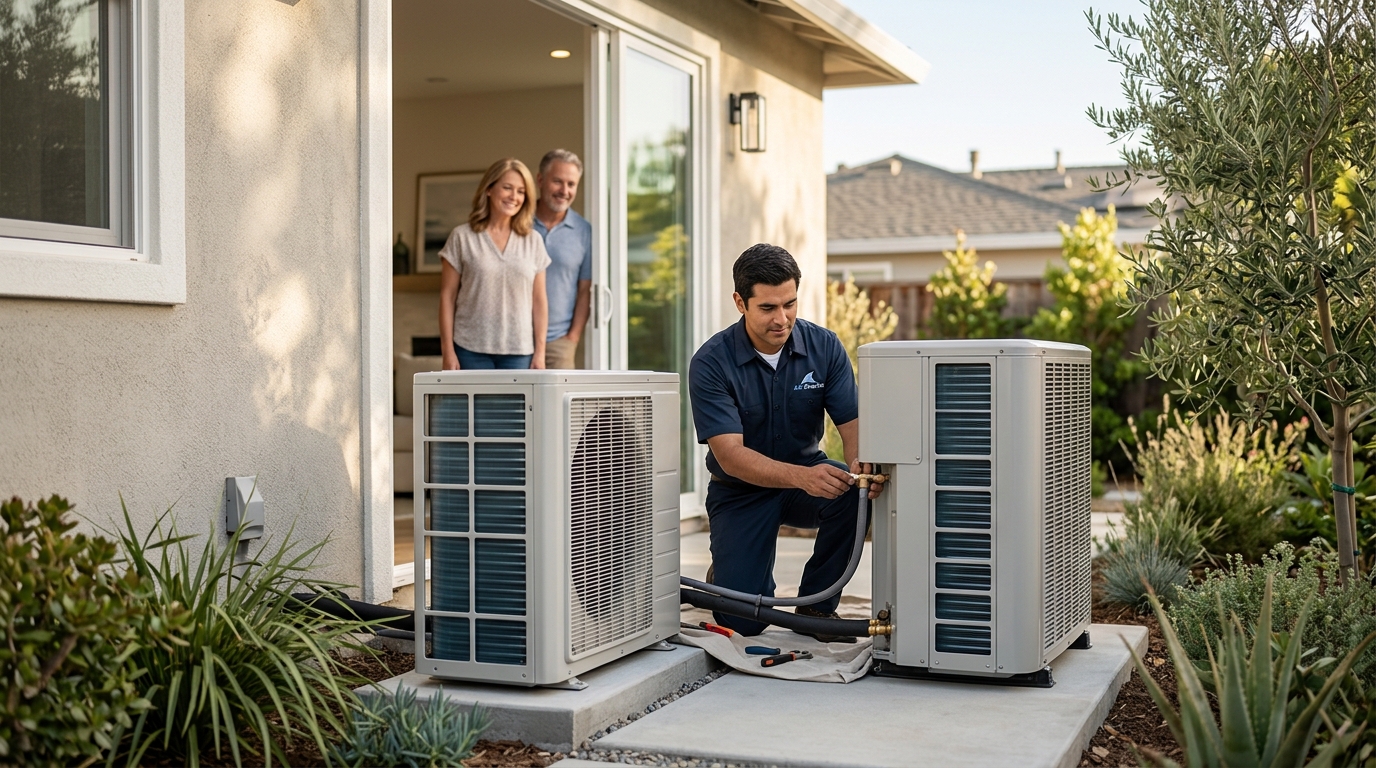
San Jose homeowners are increasingly turning to heat pump technology to combat rising energy costs and meet strict California building codes. According to the U.S. Department of Energy, heat pumps can deliver up to three units of heat for every one unit of electricity consumed, making them significantly more efficient than traditional fossil fuel systems. This guide details the precise steps to install an energy-efficient heat pump system in your San Jose home while ensuring compliance with local regulations and maximizing long-term comfort.
Understanding Heat Pump Technology
A heat pump is a device that transfers heat from one place to another rather than generating it through combustion. Heat pump is a heating and cooling system that moves thermal energy. This technology allows a single unit to provide both warmth during the cold San Jose winters and cool air during the hot summers. Unlike traditional furnaces that burn gas, heat pumps rely on electricity, which aligns with California's push toward electrification and reduced carbon emissions.
The efficiency of these systems is largely determined by their ability to move air and manage refrigerant cycles. Proper installation is critical because even the most advanced unit will underperform if the ductwork is leaky or the unit is improperly sized. Air Sharks provides comprehensive heating services in San Jose to ensure your new system integrates seamlessly with your existing home infrastructure.
Selecting the Right System for Climate
Choosing the correct capacity and type of heat pump is the first step in the installation process. San Jose's Mediterranean climate features mild, wet winters and dry, warm summers. This means the system must be balanced for both heating and cooling loads.
Central vs. Ductless Systems
Homeowners must decide between a central ducted system or a ductless mini-split configuration. Central systems are ideal for homes with existing ductwork, while ductless systems offer targeted efficiency for additions or homes without ducts. Air Sharks offers expert air conditioning installation and repair to help you determine the best fit for your property.
Capacity Sizing
Undersized units struggle to maintain temperature during extreme weather, while oversized units cycle on and off too frequently, reducing efficiency and comfort. A professional load calculation, known as a Manual J assessment, is essential. This calculation considers your home's insulation, window quality, and square footage to determine the exact BTU (British Thermal Unit) requirements.
The Installation Process
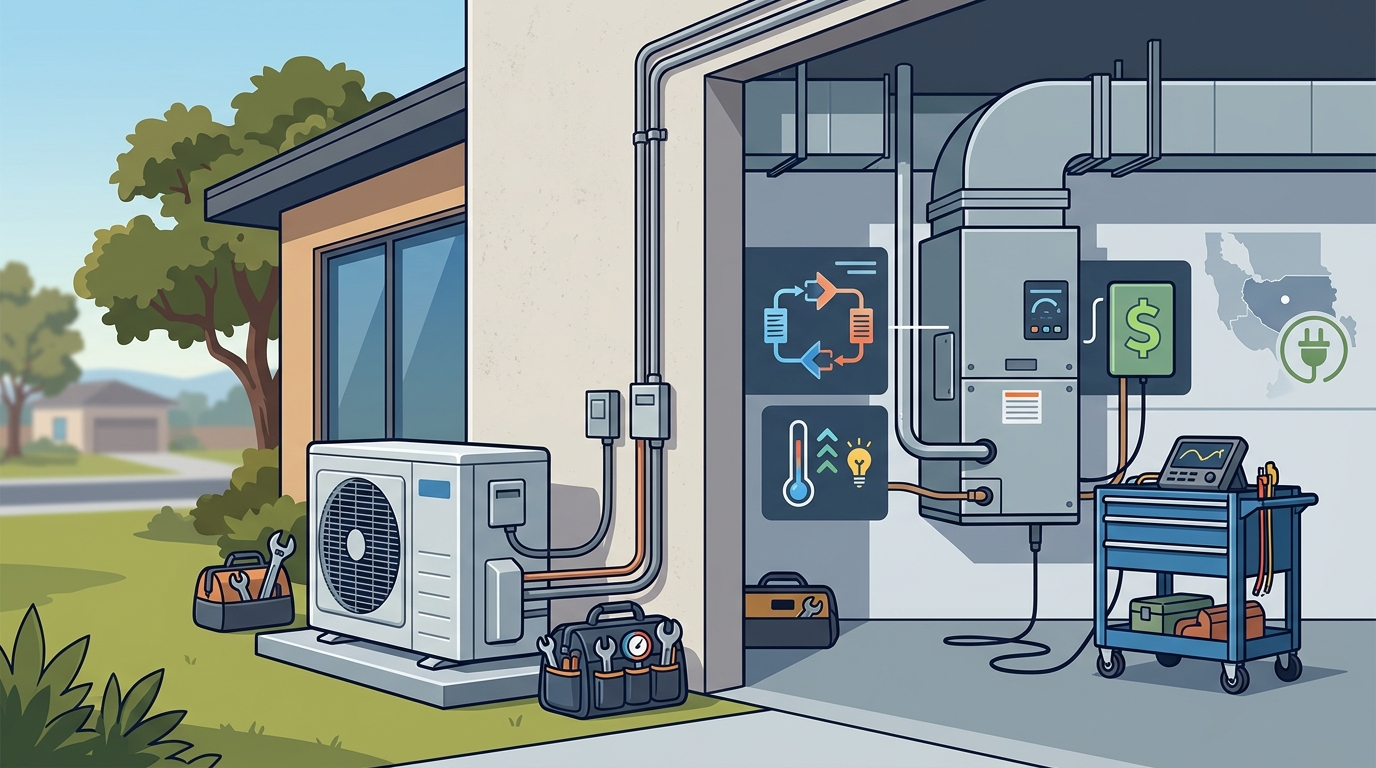
Professional installation involves several critical phases. Skipping steps or using unlicensed technicians can void warranties and violate local building codes. The process typically follows these stages:
- Site Assessment: Technicians evaluate the location for the outdoor condenser and indoor air handler. Proper clearance is required for airflow and maintenance access.
- Ductwork Inspection: If using a central system, the ductwork must be sealed and insulated to prevent energy loss. Air Sharks provides thorough air quality and ductwork services to ensure optimal airflow.
- Electrical Connection: Heat pumps require specific electrical circuits. Upgrading your electrical panel may be necessary to handle the load.
- Refrigerant Charging: Technicians charge the system with the precise amount of refrigerant specified by the manufacturer. Overcharging or undercharging reduces efficiency.
- Testing and Commissioning: The system is tested for temperature drop, airflow, and proper operation of all safety controls.
For those seeking reliable AC repair and installation, Air Sharks ensures every step meets manufacturer standards and local codes. Our team is fully licensed and insured, providing peace of mind throughout the installation.
Efficiency Metrics and Ratings
Understanding efficiency ratings helps you select a system that minimizes operating costs. Two key metrics define heat pump performance:
| Metric | Definition | Why It Matters |
|---|---|---|
| SEER2 | Seasonal Energy Efficiency Ratio 2 | Measures cooling efficiency over a typical season. Higher is better. |
| HSPF2 | Heating Seasonal Performance Factor 2 | Measures heating efficiency. Critical for San Jose winter performance. |
| COP | Coefficient of Performance | Ratio of heat output to electrical input. A COP of 3 means 300% efficiency. |
California building codes require minimum efficiency standards for new installations. Choosing a unit with a high SEER2 and HSPF2 rating can significantly reduce your monthly utility bills. Air Sharks helps you navigate these HVAC services in San Jose to find the most cost-effective solution.
Maintenance and Longevity
Regular maintenance is essential for preserving the efficiency of your heat pump. Dirty filters, clogged coils, and low refrigerant levels can reduce efficiency by up to 15 percent. Air Sharks offers the ASAP Membership which includes priority service and significant savings on repairs and parts.
Annual tune-ups should include cleaning the outdoor condenser coil, checking electrical connections, and inspecting the condensate drain line. These proactive measures extend the lifespan of your system and prevent costly breakdowns during peak seasons. For more information on our air quality services, contact our team to schedule a comprehensive home inspection.
Key Takeaways
- Heat pumps offer up to 300% efficiency by moving heat rather than generating it.
- Proper sizing via Manual J calculation is critical for comfort and efficiency.
- California building codes mandate minimum SEER2 and HSPF2 ratings for new installations.
- Ductwork sealing and insulation are vital for central heat pump performance.
- Regular maintenance through programs like the ASAP Membership extends system life.
- Professional installation ensures compliance with local safety and electrical codes.
- San Jose's mild climate makes heat pumps an ideal year-round solution.
Frequently Asked Questions
How long does a heat pump installation take?
A standard heat pump installation typically takes one to two days, depending on the complexity of the ductwork and electrical requirements. Air Sharks ensures efficient service to minimize disruption to your home.
Are heat pumps effective in cold weather?
Modern cold-climate heat pumps are designed to operate efficiently even when temperatures drop below freezing. San Jose's mild winters are particularly well-suited for heat pump performance.
What is the lifespan of a heat pump?
With proper maintenance, a heat pump can last 15 to 20 years. Regular tune-ups and timely repairs are key to maximizing this lifespan.
Do I need to replace my ductwork?
Not necessarily. If your existing ductwork is in good condition, it can often be sealed and insulated to work efficiently with a new heat pump. Air Sharks provides ductwork inspection and repair to assess your current system.
What rebates are available for heat pumps in San Jose?
Homeowners may qualify for federal tax credits and local utility rebates for installing high-efficiency heat pumps. Air Sharks can help you navigate these HVAC services in San Jose to maximize your savings.
Can I install a heat pump myself?
No. Heat pump installation requires specialized knowledge of refrigerants, electrical systems, and building codes. DIY installation can void warranties and create safety hazards. Always hire a licensed professional.
How do I choose between a central and ductless system?
Central systems are best for homes with existing ducts, while ductless systems are ideal for additions or homes without ducts. Air Sharks offers expert air conditioning installation to help you decide.
Schedule Your Consultation
Ready to upgrade your home's comfort and efficiency? Air Sharks is your trusted partner for HVAC company San Jose services. Our licensed experts provide tailored solutions for heating, cooling, and air quality. Contact us today to schedule your visit and experience the Air Sharks difference. Visit our schedule service page to book your appointment now.