
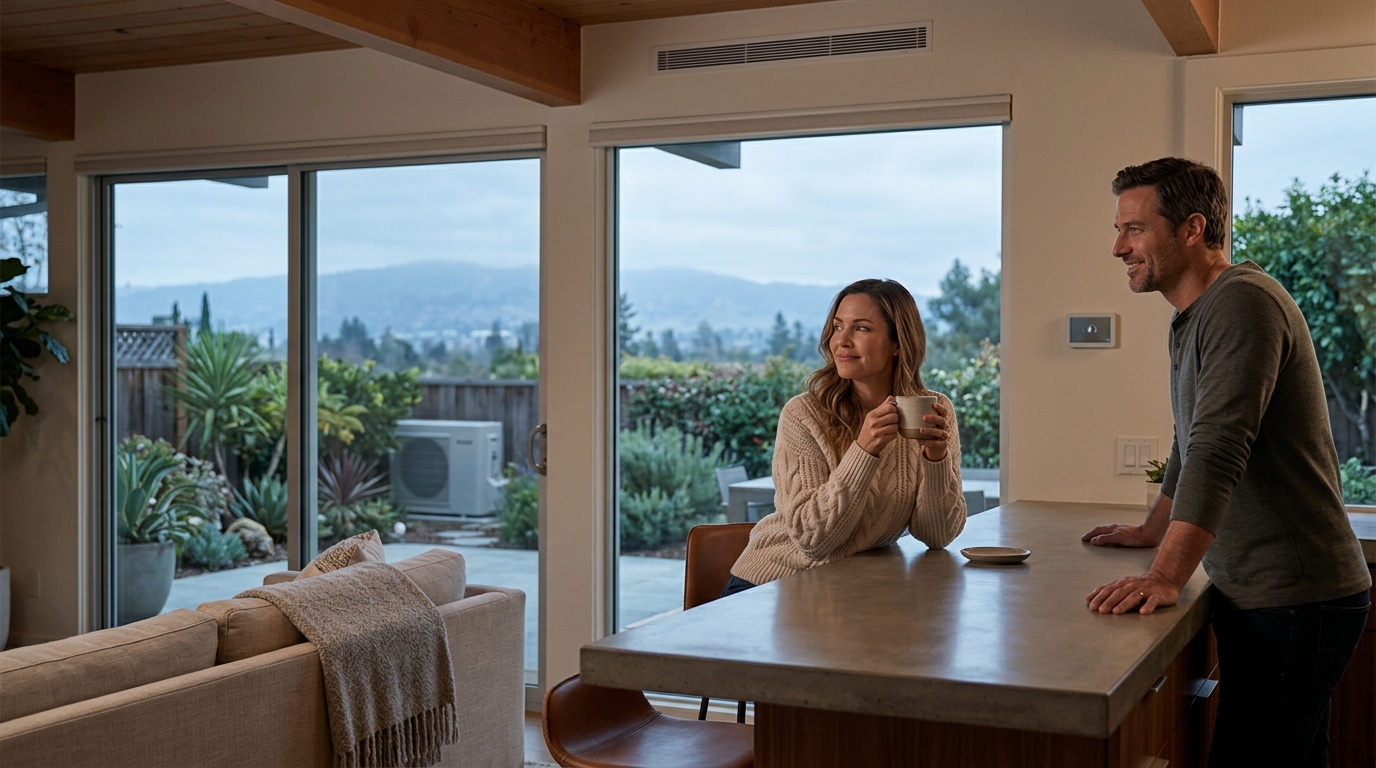
For most San Jose homeowners, a heat pump is the superior long-term investment compared to a gas furnace. The mild local climate allows heat pumps to operate efficiently year-round, often cutting energy costs by 30 to 50 percent. This guide explains the technical, financial, and structural factors you must evaluate before replacing your heating system. We cover electrical requirements, climate performance, and the specific advantages of modern hybrid systems.
The San Jose Climate Advantage
San Jose sits in a transitional climate zone that favors electric resistance and heat pump technology. The city experiences mild winters with average lows rarely dropping below 40 degrees Fahrenheit. This weather pattern means a heat pump does not need to work as hard as it would in colder regions like the Sierra Nevada or the Pacific Northwest. A heat pump is a device that moves heat rather than creating it, which allows it to maintain efficiency even when outdoor temperatures are cool. In San Jose, a standard air-source heat pump can often handle the entire heating load without a backup system. This efficiency is the primary driver for the switch from gas to electric. For additional details, review the ASAP Membership Air Sharks.
Efficiency Metrics in Local Conditions
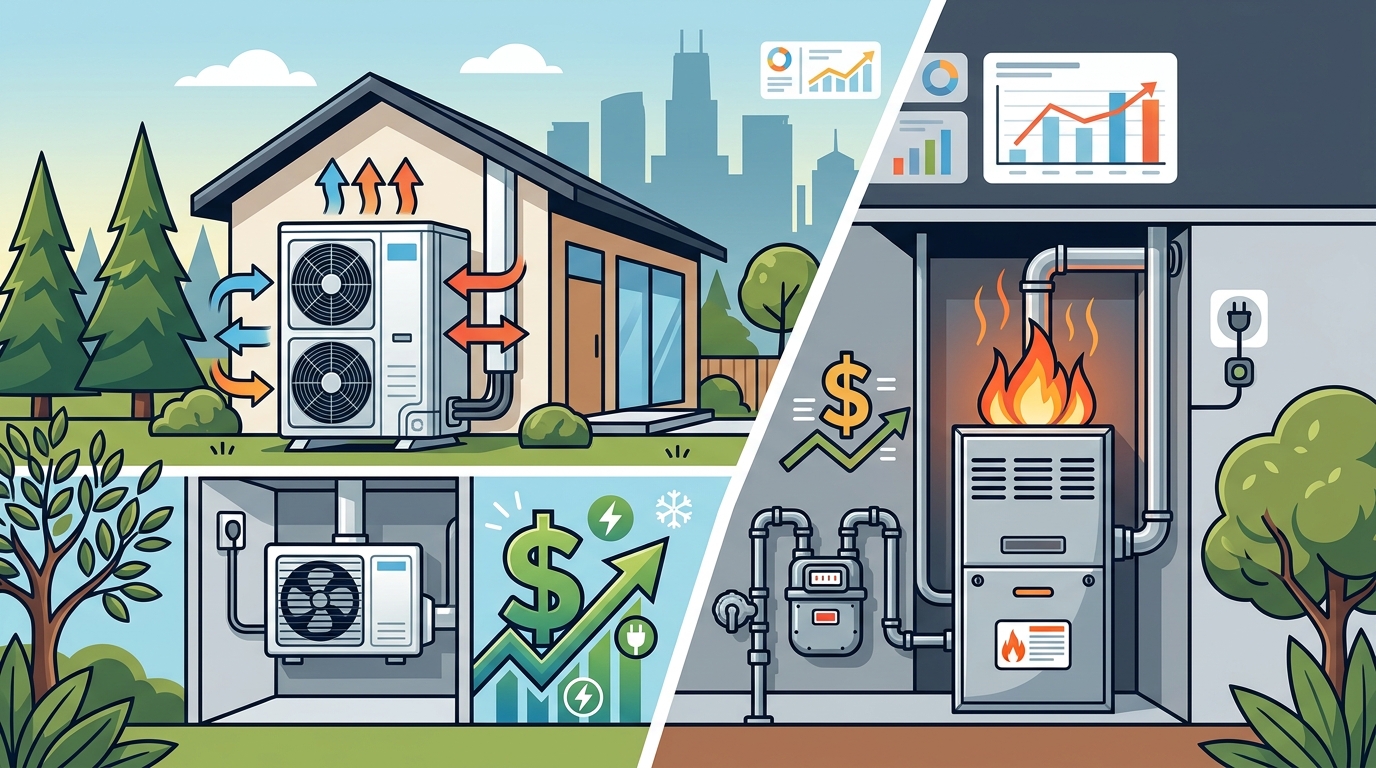
Traditional gas furnaces have an Annual Fuel Utilization Efficiency (AFUE) rating, typically ranging from 80 to 98 percent. Heat pumps use a Coefficient of Performance (COP) or Seasonal Energy Efficiency Ratio (SEER2). In San Jose, a heat pump can achieve a COP of 3.0 to 4.0 during the heating season. This means for every one unit of electricity consumed, the system delivers three to four units of heat. Gas furnaces cannot exceed 1.0 efficiency because they burn fuel to create heat. The physics of heat transfer gives electric systems a distinct advantage in mild climates. For additional details, review the .
Electrical Panel Upgrades and Load Management
Assessing Your Current Load
Code Compliance and Permits
San Jose building codes require that all electrical work be permitted and inspected. The National Electrical Code (NEC) mandates that the main service panel must have adequate spare capacity for new loads. Installers must verify that the panel has enough available space for new breakers. If the panel is full, a sub-panel or a full replacement is required. Working with a licensed HVAC contractor who coordinates with electricians ensures that the installation meets all local safety standards. This coordination prevents costly rework and ensures the system operates reliably from day one.
Hybrid Systems: The Best of Both Worlds
When to Choose Hybrid
Cost Analysis and ROI
The upfront cost of a heat pump is generally higher than a gas furnace. However, the total cost of ownership over 15 to 20 years often favors the heat pump. This is due to lower energy bills and the elimination of gas service fees. In San Jose, the cost of natural gas has risen steadily, while electricity rates have remained relatively stable. A heat pump can save homeowners hundreds of dollars per month during the heating season. Additionally, federal and state incentives, such as the Inflation Reduction Act tax credits, can offset a significant portion of the installation cost. These incentives make the initial investment more manageable.
Comparison of System Types
| Upfront Cost | Lower | Higher | Medium | Energy Efficiency | 80-98% AFUE | 300-400% COP | Variable | Monthly Utility Cost | Higher (Gas) | Lower (Electric) | Lowest | Electrical Requirement | Low | High (20-40A) | Medium | Lifespan | 15-20 Years | 15-20 Years | 15-20 Years |
Indoor Air Quality and Comfort
Key Takeaways
- San Jose's mild climate makes heat pumps highly efficient, often outperforming gas furnaces in energy savings.
- Electrical panel upgrades are a critical consideration; most modern heat pumps require a 200-amp service.
- Hybrid systems provide a cost-effective transition for homes with existing gas lines.
- Heat pumps eliminate combustion risks, improving indoor air quality and safety.
- Federal tax credits and local incentives can significantly reduce the upfront cost of installation.
- Long-term savings on energy bills often offset the higher initial investment within 5 to 7 years.
Frequently Asked Questions
Is a heat pump efficient enough for San Jose winters?
Yes. San Jose winters are mild, with average lows rarely dropping below 40 degrees. Modern heat pumps maintain high efficiency in these conditions, often achieving a COP of 3.0 or higher. They can handle the entire heating load without a backup system in most cases.
Do I need to upgrade my electrical panel for a heat pump?
It depends on your current service. If you have a 100-amp panel, an upgrade to 200 amps is likely required. If you have a 200-amp panel, you may have sufficient capacity, but a professional load calculation is necessary to confirm.
What is a hybrid heat pump system?
How much can I save on energy bills with a heat pump?
Homeowners in San Jose can typically save 30 to 50 percent on heating costs by switching from a gas furnace to a heat pump. The exact savings depend on the efficiency of the old system and local utility rates.
Are heat pumps quieter than gas furnaces?
Yes. Heat pumps operate much more quietly than gas furnaces. The outdoor unit produces a low hum, and the indoor air handler is nearly silent. This makes them ideal for bedrooms and quiet living spaces.
Can I install a heat pump if I have an EV charger?
Yes, but it requires careful load management. An EV charger and a heat pump both draw significant power. A professional assessment is needed to ensure your electrical panel can handle both loads simultaneously without overloading the system.