

Detailed Cost Breakdown
Equipment Costs
Labor and Installation Fees
Additional Materials and Permits
How Sizing Affects Price
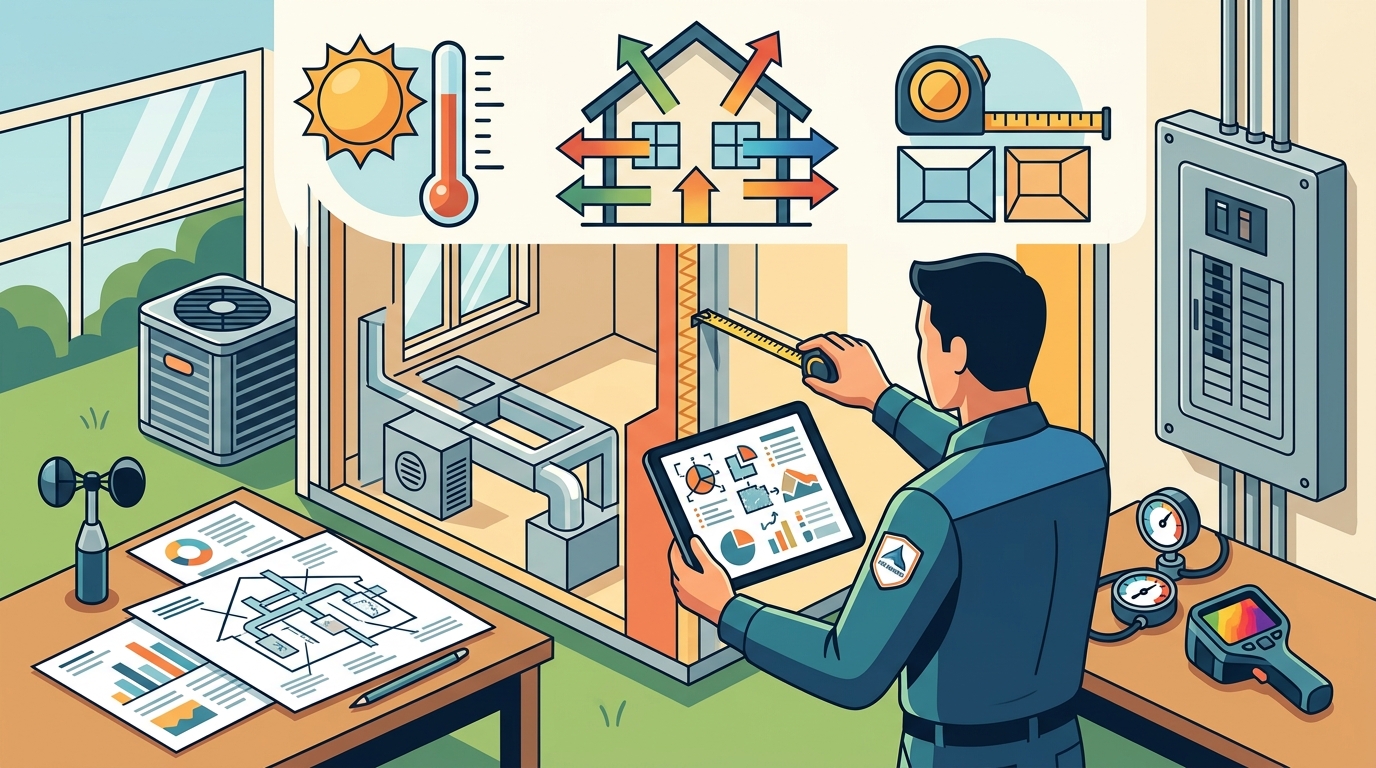
AC sizing is the most critical technical factor in determining installation cost. An oversized unit cycles on and off frequently, leading to poor humidity control and higher energy bills. An undersized unit runs constantly, wearing out components faster and failing to cool the home adequately. Proper sizing requires a Manual J load calculation, which analyzes your home's square footage, insulation, window orientation, and local climate data. For additional details, review the Terms Of Use Air.
The Manual J Calculation
Manual J is a standardized method for calculating the heating and cooling load of a building. It is the industry standard for determining the correct equipment size. Skipping this step to save money often results in a system that performs poorly. Air Sharks technicians perform detailed load calculations to ensure the unit matches your specific home requirements.
Square Footage Guidelines
As a general rule of thumb, a 1.5-ton unit cools approximately 1,500 square feet. A 3-ton unit covers around 3,000 square feet. However, this rule is a rough estimate. A home with poor insulation or many large windows may require a larger unit than the square footage suggests. Conversely, a well-insulated home may need a smaller, more efficient unit. For additional details, review the .
San Jose Climate and Local Factors
San Jose's unique climate significantly impacts HVAC costs and performance. The city experiences hot, dry summers and mild winters. This means your AC system works harder during the summer months, making efficiency a key consideration. The dry climate also means you do not need a humidifier, which can lower the overall system cost compared to regions with high humidity.
Energy Efficiency and SEER2 Ratings
SEER2 is the current standard for measuring air conditioner efficiency. Higher SEER2 ratings indicate better energy efficiency. In San Jose, where AC usage is concentrated in the summer, choosing a unit with a SEER2 rating of 16 or higher can result in significant energy savings. The higher upfront cost is often offset by lower monthly utility bills within a few years.
Local Labor Rates
Labor rates in the San Jose area are among the highest in California. Skilled HVAC technicians command premium wages due to the high cost of living and the specialized nature of the work. This is reflected in the installation price. Choosing a local, reputable provider ensures you get certified technicians who understand the specific challenges of San Jose homes.
Financing and Incentives
Energy Rebates and Incentives
California offers various rebates and incentives for installing high-efficiency HVAC systems. These programs are designed to encourage energy conservation and reduce carbon emissions. The amount of the rebate depends on the efficiency rating of the unit and the utility provider. Always check with your local utility company for current available incentives before purchasing.
Tax Credits
Federal tax credits may also be available for energy-efficient home improvements. These credits can reduce your taxable income, providing additional savings. Consult with a tax professional to determine your eligibility for current federal incentives. Combining local rebates and federal tax credits can significantly lower the net cost of your new AC system.
Cost Comparison Table
The following table summarizes the estimated costs for different types of AC installations in San Jose. These figures are estimates and can vary based on specific home conditions and equipment choices.
| System Type | Estimated Equipment Cost | Estimated Labor Cost | Total Estimated Cost |
|---|
Key Takeaways
- Proper sizing via a Manual J calculation is critical for performance and cost efficiency.
- San Jose's hot, dry climate makes high-efficiency SEER2 units a smart long-term investment.
- Labor costs in the San Jose area are higher than the national average due to local wage rates.
- Financing options and energy rebates can significantly reduce the upfront cost.
- Always choose a reputable, licensed HVAC provider to ensure proper installation and warranty coverage.
- Ductless mini-splits are a cost-effective option for homes without existing ductwork.
Frequently Asked Questions
How long does an AC installation take?
A standard central AC installation typically takes one to two days. The first day is usually dedicated to removing the old unit and installing the new condenser and air handler. The second day involves connecting the refrigerant lines, testing the system, and performing final adjustments. Complex installations involving new ductwork may take longer.
What is the lifespan of a new AC unit?
Do I need new ductwork for a new AC?
You do not always need new ductwork. If your existing ducts are in good condition and properly sized for the new unit, they can be reused. However, if your ducts are leaky, damaged, or improperly sized, replacing or modifying them may be necessary. A professional inspection can determine if your ducts are suitable for the new system.
What is the difference between SEER and SEER2?
SEER2 is the updated standard for measuring air conditioner efficiency. It replaced the older SEER rating in 2023. SEER2 accounts for real-world operating conditions more accurately. When comparing units, ensure you are looking at SEER2 ratings for the most accurate efficiency comparison.
Can I install a new AC myself?
No, you should not install a new AC yourself. HVAC installation requires specialized knowledge, tools, and licensing. Improper installation can lead to safety hazards, system damage, and voided warranties. Always hire a licensed and insured HVAC professional for your installation.
How do I choose the right size AC for my home?
The right size AC is determined by a Manual J load calculation. This calculation considers your home's square footage, insulation, window orientation, and local climate. A professional HVAC technician will perform this calculation to recommend the correct unit size. Avoid relying on simple square footage rules of thumb.
Are there rebates for new AC installations in San Jose?
Yes, there are often rebates available for installing high-efficiency HVAC systems in California. These rebates are offered by utility companies and state programs. The amount of the rebate depends on the efficiency rating of the unit. Check with your local utility provider for current available incentives.
Final Thoughts
Investing in a new AC system is a significant decision that impacts your comfort and energy costs. By understanding the cost factors, sizing requirements, and local incentives, you can make an informed choice. Air Sharks is committed to providing transparent pricing and expert guidance for your HVAC needs. Our team of certified technicians ensures that your new system is installed correctly and performs efficiently for years to come. To get started, schedule a consultation with Air Sharks today and take the first step toward a cooler, more comfortable home.