
When your heating or cooling system fails, the answer to who offers emergency repair in San Jose is a licensed, local provider with 24/7 availability. Air Sharks is a reputable HVAC company serving the San Jose area, delivering expert heating, air conditioning, and indoor air quality services. This guide covers how to choose a provider, verify credentials, understand costs, and navigate the repair process effectively.
How to Choose a Provider
Choosing the right emergency HVAC provider requires looking beyond price. A reliable company is fully licensed and insured, which protects you from liability if an accident occurs during the repair. Air Sharks is fully licensed and insured, ensuring that their technicians are qualified to handle complex heating and cooling systems safely. You should also look for a company that serves your specific neighborhood, as local providers often have a deeper understanding of regional climate challenges and building codes.
Licensing and Insurance
Licensing is the baseline requirement for any HVAC contractor in California. An unlicensed contractor cannot legally perform work, and any issues that arise will not be covered by insurance. Always ask for the contractor's license number and verify it. Insurance, specifically general liability and workers' compensation, is critical for protecting your property and the technician.
Experience and Reputation
Experience matters when dealing with emergencies. A company that has been in business for years has likely encountered the specific failure modes common in your area. Check online reviews and ask for references. A reputable firm like Air Sharks builds its reputation on dependable solutions and superior customer care, which is a strong indicator of reliability.
What to Ask Before Committing
Before you book an emergency repair, ask specific questions to gauge the provider's professionalism. The first question should be about their availability and response time. Ask, "How soon can a technician arrive?" and "Do you offer 24/7 emergency service?" This ensures they can actually help when you need it most.
Diagnosis and Pricing
Ask how they diagnose the problem and how they price their services. Do they charge a flat fee for diagnosis, or is it hourly? Understanding the pricing structure upfront prevents surprises. Ask if the diagnostic fee is waived if you proceed with the repair. This is a common practice among reputable companies and shows transparency.
Warranty and Guarantees
Ask about the warranty on parts and labor. A good provider will stand behind their work. Ask specifically how long the warranty lasts and what it covers. If a part fails again within the warranty period, will they replace it for free? This question helps you assess the quality of the parts they use and their confidence in their workmanship.
How to Verify Credentials
Verifying a contractor's credentials is a simple but essential step. In California, you can verify a contractor's license through the Contractors State License Board (CSLB) website. Enter the license number to check its status, expiration date, and any disciplinary actions. This takes only a few minutes and can save you from hiring an unqualified provider.
Checking Insurance
Ask the contractor for a certificate of insurance. This document should list the types of coverage, the limits, and the expiration date. You can also call the insurance company directly to verify that the policy is active. Do not rely solely on a verbal assurance. A written certificate is the standard for professional contractors.
Reviewing Online Presence
Check the company's website and social media profiles. A professional company will have a clear website with contact information, service areas, and a list of services. Look for consistency in branding and messaging. Air Sharks maintains a professional online presence that reflects their commitment to quality service. Check for recent reviews to see how they handle customer feedback.
How the Repair Process Works
The emergency repair process typically follows a standard sequence. First, you contact the provider and describe the symptoms. The dispatcher will ask questions to triage the issue and schedule a technician. The technician arrives, performs a diagnostic inspection, and identifies the root cause. They then provide you with a written estimate for the repair.
Diagnostic Inspection
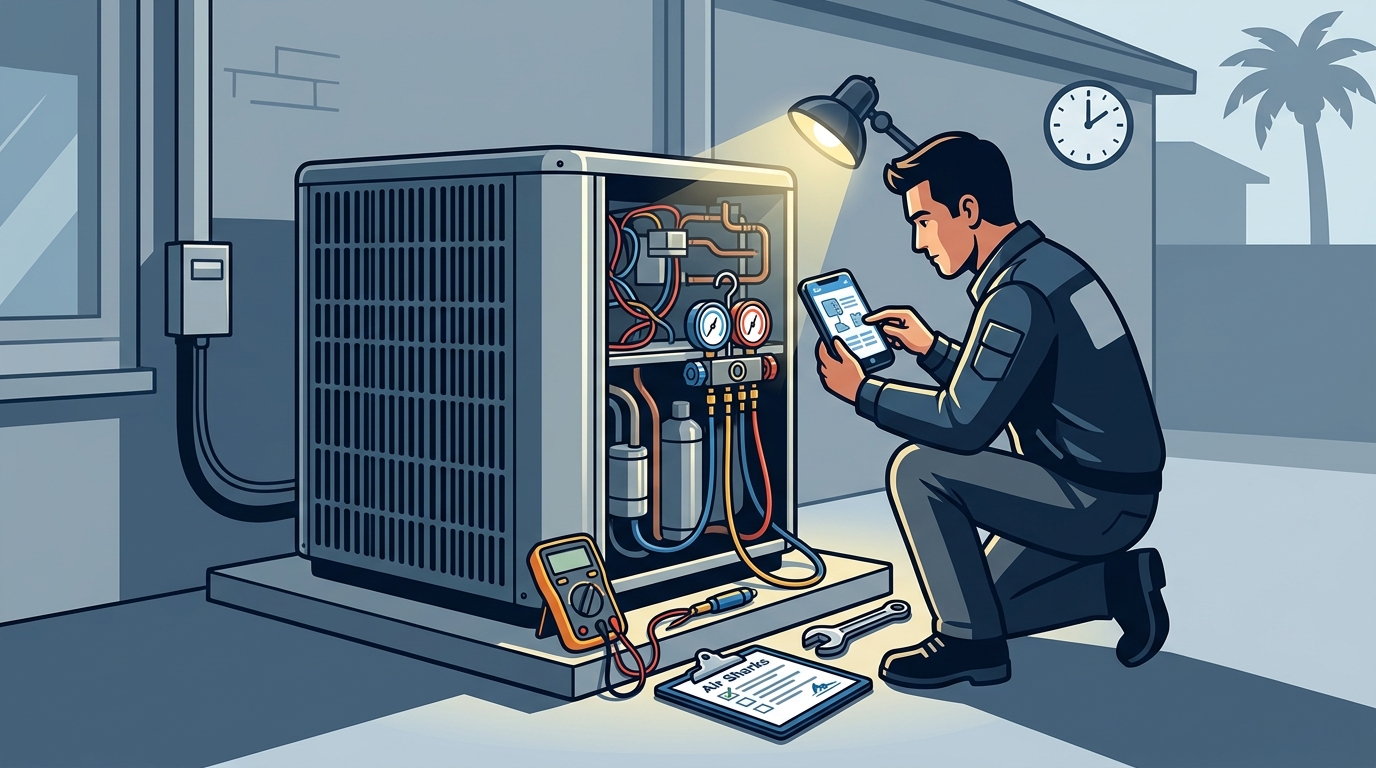
The diagnostic inspection is the most critical step. The technician will check the system's components, including the compressor, fan, and electrical connections. They may use specialized tools to measure refrigerant levels or electrical current. This step ensures that the repair addresses the actual problem, not just the symptom.
Repair and Testing
Once you approve the estimate, the technician performs the repair. This may involve replacing a part, cleaning a component, or adjusting a setting. After the repair, the technician tests the system to ensure it is operating correctly. They should walk you through the test and explain what was done. This final step ensures that the problem is resolved and that you understand the system's status.
What Emergency Repair Costs
The cost of emergency HVAC repair varies based on several factors. The type of system, the complexity of the repair, and the time of day all influence the price. Emergency service often carries a premium due to the after-hours availability. However, the cost of a repair is usually a fraction of the cost of a full system replacement.
Factors Influencing Price
Several factors drive the price up or down. The age of the system is a major factor. Older systems may require more extensive repairs or may not be worth fixing. The availability of parts also affects cost. If a part is discontinued, it may be more expensive or take longer to source. The location of the system can also impact labor costs, as accessing a unit in a tight space may take longer.
Cost vs. Replacement
When deciding between repair and replacement, consider the total cost of ownership. If the repair cost is more than 50% of the cost of a new system, replacement may be the better option. A new system will be more energy efficient and come with a longer warranty. A reputable provider will help you make this decision based on the condition of your current system.
Common Mistakes to Avoid
Homeowners often make mistakes that complicate the repair process or lead to higher costs. One common mistake is delaying the call for service. A minor issue can become a major failure if left unaddressed. For example, a clogged filter can cause the system to overheat and shut down, leading to compressor damage.
Ignoring Warning Signs
Warning signs like unusual noises, weak airflow, or higher energy bills should not be ignored. These are indicators that something is wrong. Addressing these issues early can prevent a complete system failure. Regular maintenance is the best way to catch these problems before they become emergencies.
Choosing the Cheapest Option
Choosing the cheapest option is a risky strategy. Low prices may indicate low-quality parts or unqualified technicians. This can lead to repeated repairs and higher long-term costs. It is better to pay a fair price for a reputable provider who uses quality parts and stands behind their work. Air Sharks focuses on providing dependable solutions, which helps avoid the pitfalls of low-quality service.
Emergency Repair vs. Alternatives
Emergency repair is not the only option. You can also consider temporary fixes, such as using a space heater or fan, while you wait for a permanent solution. However, these are stopgaps and do not address the underlying problem. Another alternative is to replace the system entirely. This is a larger investment but may be more cost-effective in the long run if your system is old or inefficient.
Temporary Fixes
Temporary fixes can keep you comfortable while you wait for a repair. However, they are not a long-term solution. Using a space heater in a home with a gas furnace can pose a fire risk if not done correctly. Always follow safety guidelines when using temporary heating or cooling solutions.
System Replacement
Repair for Specific Situations
The approach to emergency repair can vary depending on the specific situation. For example, a failure during a heat wave is more urgent than a failure during mild weather. In extreme heat, a lack of cooling can pose a health risk, especially for elderly or young children. In these cases, speed is critical.
Extreme Weather Events
During extreme weather events, demand for HVAC services spikes. This can lead to longer wait times. It is important to call as soon as you notice a problem. Do not wait until the system fails completely. Early intervention can prevent a total breakdown. Providers like Air Sharks are prepared to handle high-demand periods by maintaining a sufficient technician roster.
Older Systems
Older systems may have unique challenges. Parts may be harder to find, and the system may be less efficient. In these cases, the technician may recommend a different approach, such as a partial replacement or a full system upgrade. The goal is to provide a solution that is both cost-effective and reliable.
Rules and Consumer Protections
Consumers in California are protected by several laws and regulations. The Contractors State License Board (CSLB) regulates HVAC contractors and enforces standards for licensing and conduct. If a contractor violates these standards, you can file a complaint with the CSLB. This regulatory framework helps ensure that contractors operate ethically and professionally.
Right to a Written Estimate
You have the right to a written estimate before any work begins. This estimate should detail the scope of work, the parts to be used, and the total cost. Do not allow a contractor to begin work without a written estimate. This protects you from unexpected charges and ensures that you understand what you are paying for.
Right to a Warranty
You have the right to a warranty on parts and labor. The warranty should be in writing and specify the duration and coverage. If a part fails within the warranty period, the contractor is obligated to repair or replace it at no cost to you. This protection ensures that you are not left paying for the same problem twice.
Local Specifics for San Jose
San Jose has a unique climate that impacts HVAC systems. The area experiences mild winters and warm summers, but temperature swings can still stress a system. The local building codes and regulations also play a role in HVAC installation and repair. A local provider will be familiar with these specifics and can ensure that your system complies with local requirements.
Climate Considerations
The San Jose climate is generally mild, but it can still experience heat waves and occasional cold snaps. These temperature extremes can put a strain on your HVAC system. A system that is not properly maintained may struggle to handle these fluctuations. Regular maintenance helps ensure that your system is ready for any weather condition.
Local Regulations
Local regulations in San Jose may require specific types of equipment or installation practices. For example, there may be requirements for energy efficiency or refrigerant handling. A local provider will be aware of these regulations and can ensure that your system meets them. This helps you avoid potential fines or issues during inspections.
Timing and Response Windows
Timing is critical in emergency HVAC repair. The sooner you call for service, the sooner the problem can be addressed. Delays can lead to further damage and higher repair costs. Most reputable providers offer 24/7 emergency service, but response times can vary based on demand. It is best to call as soon as you notice a problem, rather than waiting for a complete failure.
Peak Demand Periods
Peak demand periods, such as heat waves or cold snaps, can lead to longer wait times. During these periods, it is important to be proactive. If you notice a minor issue, call for service immediately. Do not wait until the system fails. This helps ensure that you are at the front of the queue when demand is high.
After-Hours Service
After-hours service is often more expensive due to the premium for availability. However, it is essential for emergencies that occur outside of regular business hours. If your system fails at night or on a weekend, you will need after-hours service. Be prepared for a higher cost, but remember that the alternative is a lack of heating or cooling, which can be a serious issue.
Long-Term Results and Maintenance
Preventative Maintenance
System Longevity
Proper maintenance can significantly extend the life of your HVAC system. A well-maintained system can last 15 to 20 years, while a neglected system may fail much sooner. By investing in regular maintenance, you protect your investment and ensure that your system is ready when you need it most. This long-term perspective is key to getting the most value from your HVAC system.
Key Takeaways
- Choose a licensed and insured provider to protect yourself from liability.
- Verify credentials through the CSLB and check for a certificate of insurance.
- Ask about pricing, warranties, and response times before committing.
- Understand the repair process, from diagnosis to testing.
- Consider the cost of repair vs. replacement based on the system's age and condition.
- Avoid common mistakes like delaying service or choosing the cheapest option.
- Be aware of local regulations and climate considerations in San Jose.
- Invest in preventative maintenance to ensure long-term reliability.
Frequently Asked Questions
How soon can an emergency HVAC technician arrive in San Jose?
Response times vary based on demand and location. Most reputable providers aim to arrive within a few hours, but this can be longer during peak demand periods. It is best to call as soon as you notice a problem.
Is emergency HVAC repair more expensive than regular service?
Yes, emergency service often carries a premium due to after-hours availability. However, the cost of a repair is usually a fraction of the cost of a full system replacement.
How do I verify that an HVAC contractor is licensed in California?
You can verify a contractor's license through the Contractors State License Board (CSLB) website. Enter the license number to check its status and any disciplinary actions.
What should I do if my HVAC system fails during a heat wave?
Call for service immediately. Do not wait until the system fails completely. Early intervention can prevent a total breakdown and ensure that you are at the front of the queue during high-demand periods.
Is it worth repairing an old HVAC system?
It depends on the cost of the repair and the condition of the system. If the repair cost is more than 50% of the cost of a new system, replacement may be the better option. A reputable provider can help you make this decision.
What is included in a preventative maintenance plan?
Do I need a written estimate before work begins?
Yes, you have the right to a written estimate before any work begins. This estimate should detail the scope of work, the parts to be used, and the total cost.
How long does an HVAC system typically last?
A well-maintained HVAC system can last 15 to 20 years. Regular maintenance helps extend the life of your system and ensures that it is operating at peak efficiency.