

Heating System Repair vs. Replacement: A San Jose Homeowner’s Decision Guide
When the temperature drops in San Jose, a failing furnace is more than an inconvenience; it is a critical household emergency. According to recent industry data, approximately 15% of residential heating failures occur during peak winter months, creating a surge in demand for immediate HVAC interventions. Homeowners often face a difficult choice: invest in a costly repair to extend the life of their current unit or commit to a full replacement for long-term reliability. This decision impacts not only immediate comfort but also long-term energy efficiency and indoor air quality. Understanding the specific triggers for each option is essential for making a financially sound and technically appropriate choice for your property.
When to Choose Repair Over Replacement
Repairing a heating system is often the most logical first step if the unit is relatively young and the issue is isolated. HVAC professionals generally recommend repair when the cost is less than 50% of the price of a new system. This rule of thumb helps homeowners avoid the "death spiral" of constantly patching an aging unit while also preventing unnecessary capital expenditure on a new machine that might still have years of life left.
Common scenarios where repair is the superior choice include:
- Minor Component Failure: Issues such as a faulty igniter, a broken blower motor capacitor, or a clogged flame sensor are typically inexpensive to fix. These parts are standard and readily available.
- Recent Maintenance History: If your furnace has received regular annual tune-ups, it is likely operating near its peak efficiency. A sudden breakdown is often due to a specific, fixable error rather than systemic wear.
- Short-Term Ownership: If you plan to sell your home in San Jose within the next two to three years, a major repair may be more cost-effective than a full replacement, provided the system is safe and functional.
However, repair is not a permanent solution for every problem. If your system is over 15 years old, repeated repairs can quickly add up, making replacement a more financially viable option in the long run. For detailed diagnostic services, Air Sharks offers comprehensive heating repair to determine if your unit is salvageable.
Signs It Is Time for a New System
Knowing when to replace your heating system is crucial for maintaining comfort and avoiding emergency breakdowns. Several key indicators suggest that repair is no longer the most prudent financial decision.
Age of the Unit
The average lifespan of a gas furnace is between 15 and 20 years. If your system is approaching or has exceeded this age range, efficiency drops significantly. Older units often operate at 60-70% efficiency, whereas modern high-efficiency models can reach 95% or higher. This gap in performance translates directly to higher monthly utility bills.
Rising Energy Bills
If you notice a steady increase in your heating costs despite unchanged usage patterns, your system may be struggling to maintain temperature. This inefficiency is often caused by worn heat exchangers, leaking ductwork, or failing components that force the system to work harder. According to the U.S. Department of Energy, upgrading to a high-efficiency heating system can reduce heating costs by up to 30% compared to older models.
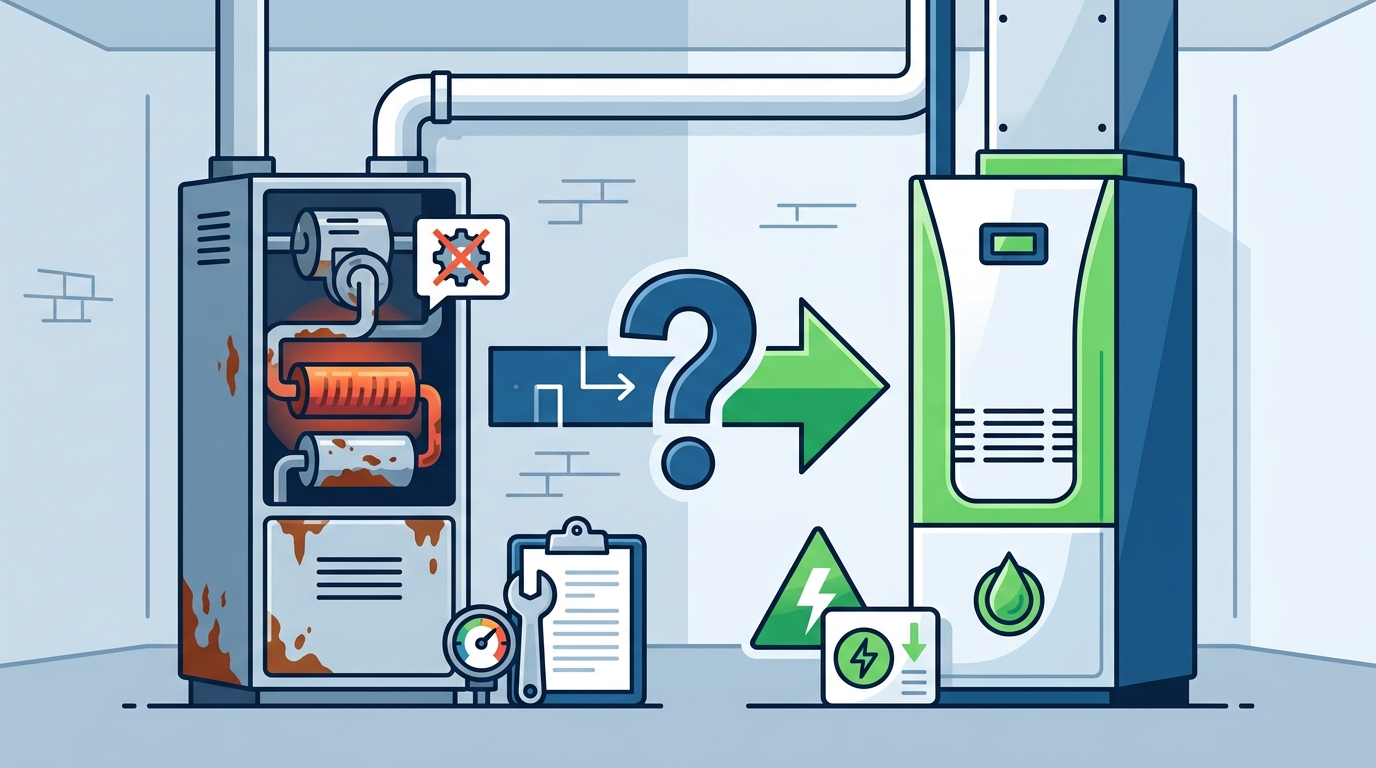
Uneven Heating and Frequent Breakdowns
Consistent cold spots in your home or the need for emergency HVAC service multiple times a year are clear signs of systemic failure. If your technician recommends a major repair more than once within a two-year period, it is time to consider replacement. Continuing to repair an aging unit is often compared to putting new tires on a car with a broken transmission; the underlying issues will eventually overwhelm the new parts.
Yellow Pilot Light or Soot
A healthy gas flame should be blue. If you see a yellow flame or notice soot around the furnace, this indicates incomplete combustion. This can produce carbon monoxide, a deadly odorless gas. Immediate replacement or professional inspection is critical for safety. Air Sharks prioritizes indoor air quality and safety in all heating assessments.
Cost Analysis: Repair vs. New Installation
The financial decision between repair and replacement requires a holistic view of both immediate and long-term costs. While a repair check might seem cheaper upfront, the total cost of ownership often favors replacement for older units.
Consider the following factors:
- Immediate Cost: A typical furnace repair in San Jose ranges from $150 to $500, depending on the part. A new high-efficiency furnace installation, including labor and disposal, typically ranges from $3,000 to $7,000.
- Warranty Coverage: New installations come with manufacturer warranties, often covering parts for 10 years and the heat exchanger for life. Repairs usually carry a limited warranty of 90 days to one year.
- Financing Options: Many homeowners utilize flexible payment plans to manage the cost of a new system, making the monthly outlay comparable to a high-cost repair.
It is also important to factor in the potential loss of value if a system fails completely during a sale. A new heating system can increase home value and provide peace of mind to potential buyers.
Energy Efficiency and California Standards
California has some of the strictest energy codes in the nation. The California Building Standards Code requires specific efficiency ratings for new HVAC installations. Older systems often fail to meet these modern standards, leading to higher energy consumption and environmental impact.
Upgrading to a high-efficiency system not only reduces your carbon footprint but also qualifies you for various rebates and incentives. Programs like those offered through local utility partnerships can offset a portion of the installation cost. Additionally, modern systems often feature variable-speed blowers and two-stage gas valves, which provide more consistent temperatures and quieter operation.
For homeowners concerned about indoor air quality, new systems can be integrated with advanced filtration and humidification technologies. This ensures that your home remains not only warm but also healthy and comfortable throughout the winter.
Service Comparison Overview
| Factor | Repair | Replacement |
|---|---|---|
| Typical Cost | $150 - $500 | $3,000 - $7,000+ |
| System Age Suitability | Under 10-12 years | Over 15 years |
| Warranty | 90 Days - 1 Year | 10 Years - Lifetime |
| Energy Efficiency | Restores to original | Improves by 20-40% |
| Long-Term Value | Low (if repeated) | High (increases home value) |
Key Takeaways
- Age Matters: If your furnace is over 15 years old, replacement is likely more cost-effective than repeated repairs.
- Cost Threshold: A general rule is to replace if the repair cost exceeds 50% of the price of a new system.
- Efficiency Gains: New high-efficiency systems can reduce heating bills by up to 30% compared to older models.
- Safety First: Signs of carbon monoxide leaks or soot require immediate professional attention and often necessitate replacement.
- Warranty Protection: New installations come with extensive warranties, whereas repairs offer limited coverage.
- Local Expertise: Air Sharks provides licensed, insured technicians serving San Jose and surrounding Santa Clara County areas.
- Financing Available: Flexible payment options make upgrading your heating system more manageable for homeowners.
Frequently Asked Questions
How do I know if my furnace needs repair or replacement?
Consider the age of the unit and the cost of the repair. If the furnace is over 15 years old and the repair cost is significant, replacement is often the better long-term investment. A professional diagnostic can provide a clear recommendation.
What is the average lifespan of a heating system in San Jose?
Most gas furnaces last between 15 and 20 years. Heat pumps may last 10 to 15 years. Regular maintenance can extend this lifespan, but efficiency declines over time.
Can I repair my furnace if it is 20 years old?
While you can technically repair a 20-year-old furnace, it is often not financially prudent. Parts may be obsolete, and the system is likely inefficient. Replacement is usually recommended.
How much does a new heating system cost in San Jose?
The cost varies based on the size of your home and the efficiency rating of the new system. Typically, installation ranges from $3,000 to $7,000. Air Sharks provides free, accurate estimates for all homeowners.
Does Air Sharks offer financing for new installations?
Yes, Air Sharks offers flexible monthly payment options to help homeowners manage the cost of new heating systems. Contact our office for details on current financing plans.
What are the benefits of the ASAP Membership?
The Air Sharks Annual Plan (ASAP) includes priority service, lifetime warranties on repairs, 20% off all repairs and parts, and annual tune-ups. This membership provides significant savings for homeowners.
How often should I schedule a heating tune-up?
It is recommended to schedule a professional tune-up once a year, ideally before the heating season begins. This ensures safety, efficiency, and longevity of your system.
Schedule Your Service Today
Do not wait for a complete breakdown to make a decision about your heating system. Whether you need a quick repair or a full replacement, Air Sharks is here to help. Our licensed and insured technicians serve San Jose, Santa Clara, Sunnyvale, Cupertino, and the greater Bay Area. We offer 100% satisfaction guarantees and transparent pricing. Schedule your visit now to ensure your home stays warm and safe all winter long.