

What Factors Affect Heat Pump Installation Prices in San Jose?
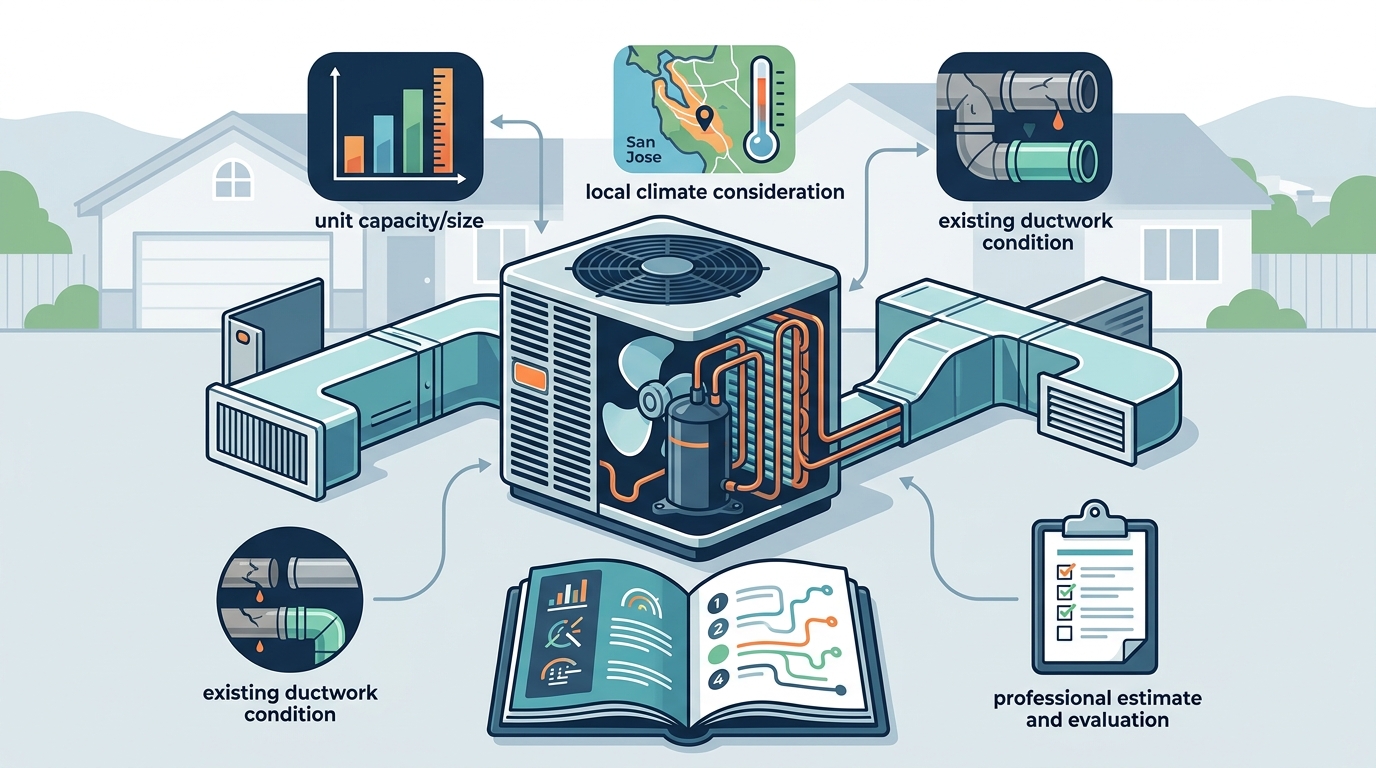
Heat pump installation prices in San Jose vary based on unit capacity, local climate, and existing ductwork. Air Sharks evaluates these variables to provide accurate estimates. Understanding these factors helps homeowners budget effectively for efficient heating and cooling solutions.
Unit Capacity and Efficiency Ratings
The size of the heat pump is the primary driver of equipment cost. A standard residential unit typically ranges from 1.5 to 5 tons. Larger units require more compressor work and higher-quality components, which increases the base price. Efficiency ratings, measured by SEER2 and HSPF2, also impact cost. Higher efficiency models consume less energy but carry a higher upfront price tag. In San Jose, where temperatures fluctuate, selecting the right capacity prevents oversizing, which wastes money and reduces comfort.
Ductwork Condition and Complexity
Local Climate and Zoning Requirements
San Jose's mild climate influences heat pump selection. While the area does not experience extreme cold, winter heating demands still require robust equipment. Local building codes and zoning regulations may mandate specific efficiency standards. Compliance with these codes can affect the type of unit installed. Additionally, the need for supplemental heating in colder months may require a hybrid system. This combination of a heat pump and a gas furnace adds to the installation price but ensures year-round comfort. For additional details, review the Career Air Sharks.
Labor Costs and Permitting
Labor rates in the San Jose area reflect the high cost of living and skilled labor demand. HVAC installation requires licensed technicians who understand local codes. Permitting fees are mandatory for new installations and vary by city and county. These administrative costs are often overlooked in initial estimates. Professional installation ensures safety and warranty validity. Attempting to cut corners on labor can lead to system failures and voided warranties. Air Sharks handles all permitting and code compliance to streamline the process.
Incentives and Rebates
Key Takeaways
- Unit capacity and efficiency ratings are the largest equipment cost factors. For additional details, review the Air Quality Air Sharks.
- Ductwork condition determines whether central or ductless systems are more cost-effective.
- San Jose's climate and local codes influence equipment selection and compliance costs.
- Labor and permitting fees are significant components of the total installation price.
- Federal and local incentives can reduce the net cost of high-efficiency heat pumps.
- Professional installation by licensed technicians ensures warranty validity and safety.
Frequently Asked Questions
What is the average cost of a heat pump in San Jose?
The average cost varies by unit size and efficiency. Most residential installations fall within a specific range depending on the complexity of the ductwork and local labor rates.
Do heat pumps work well in San Jose winters?
Yes, modern heat pumps are designed to handle San Jose's mild winters. They provide efficient heating without the need for supplemental gas in most cases.
How long does heat pump installation take?
Most installations take one to two days. Ductless systems may install faster, while central systems with duct modifications can take longer.
Are there rebates for heat pumps in San Jose?
Yes, federal tax credits and local utility rebates are often available. These incentives can significantly reduce the upfront cost of high-efficiency units.
What is SEER2 rating?
SEER2 is a measure of cooling efficiency. Higher SEER2 ratings indicate lower energy consumption and reduced utility bills over time.
Can I install a heat pump myself?
No, heat pump installation requires licensed professionals. DIY installation is illegal in most areas and voids manufacturer warranties.