
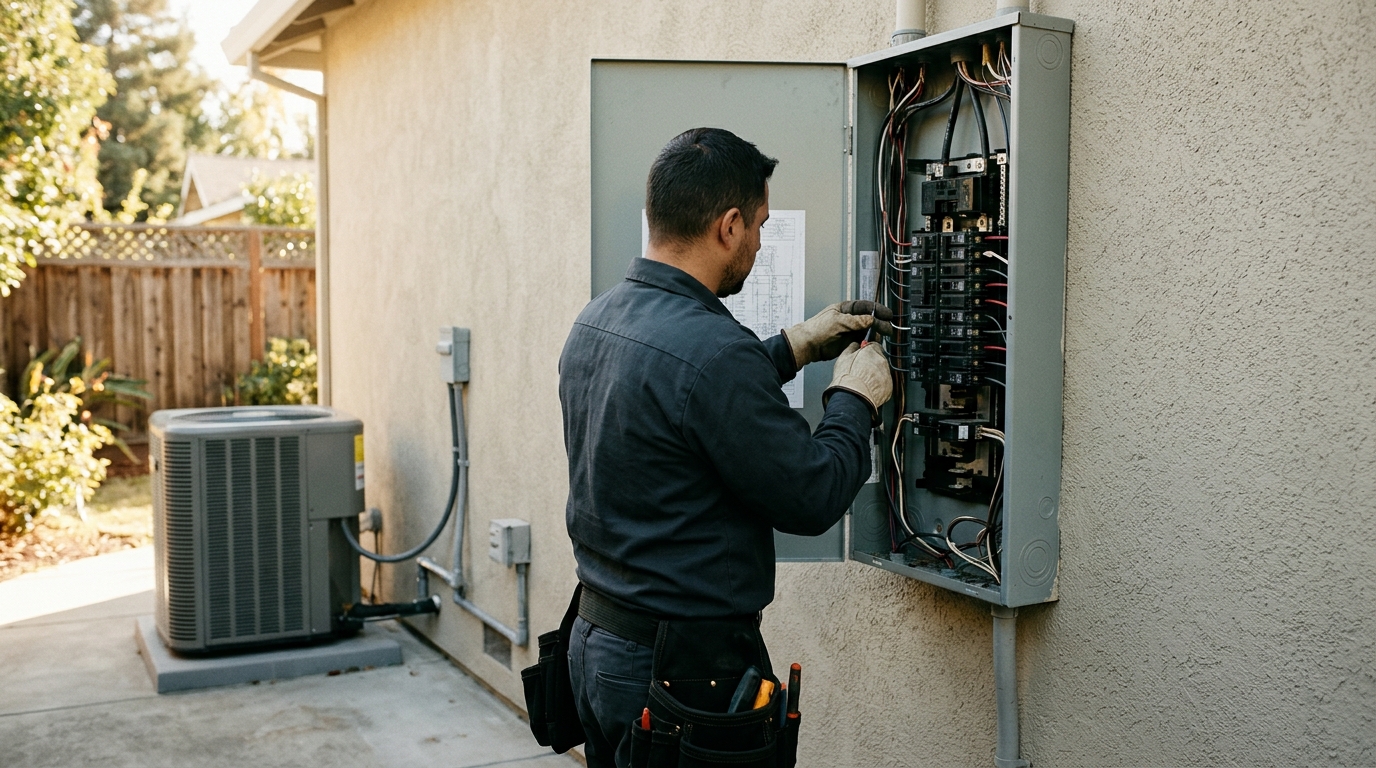
Installing a heat pump in San Jose often requires specific electrical panel upgrades to ensure safe and efficient operation. These upgrades prevent circuit overloads and comply with local building codes. Air Sharks helps homeowners navigate these requirements during the installation process.
1. Assessing Panel Capacity
Verify total load capacity before adding new equipment. An electrical panel is the main distribution point for your home's power. You must calculate the existing load to see if there is room for the heat pump. If the panel is near its limit, an upgrade may be necessary.
2. Dedicated Circuit Requirements
Install a dedicated circuit for the heat pump unit. A dedicated circuit is a single electrical path that supplies power to only one appliance. This prevents other devices from drawing power and tripping the breaker. Most modern heat pumps require a 240-volt dedicated circuit.
3. Breaker Size Selection
Choose the correct breaker size based on the unit's amperage. The breaker size must match the heat pump's maximum rated amperage. Using a breaker that is too small causes nuisance tripping. Using one that is too large creates a fire hazard. Your electrician will determine the exact size needed.
4. Conduit and Wiring Routing
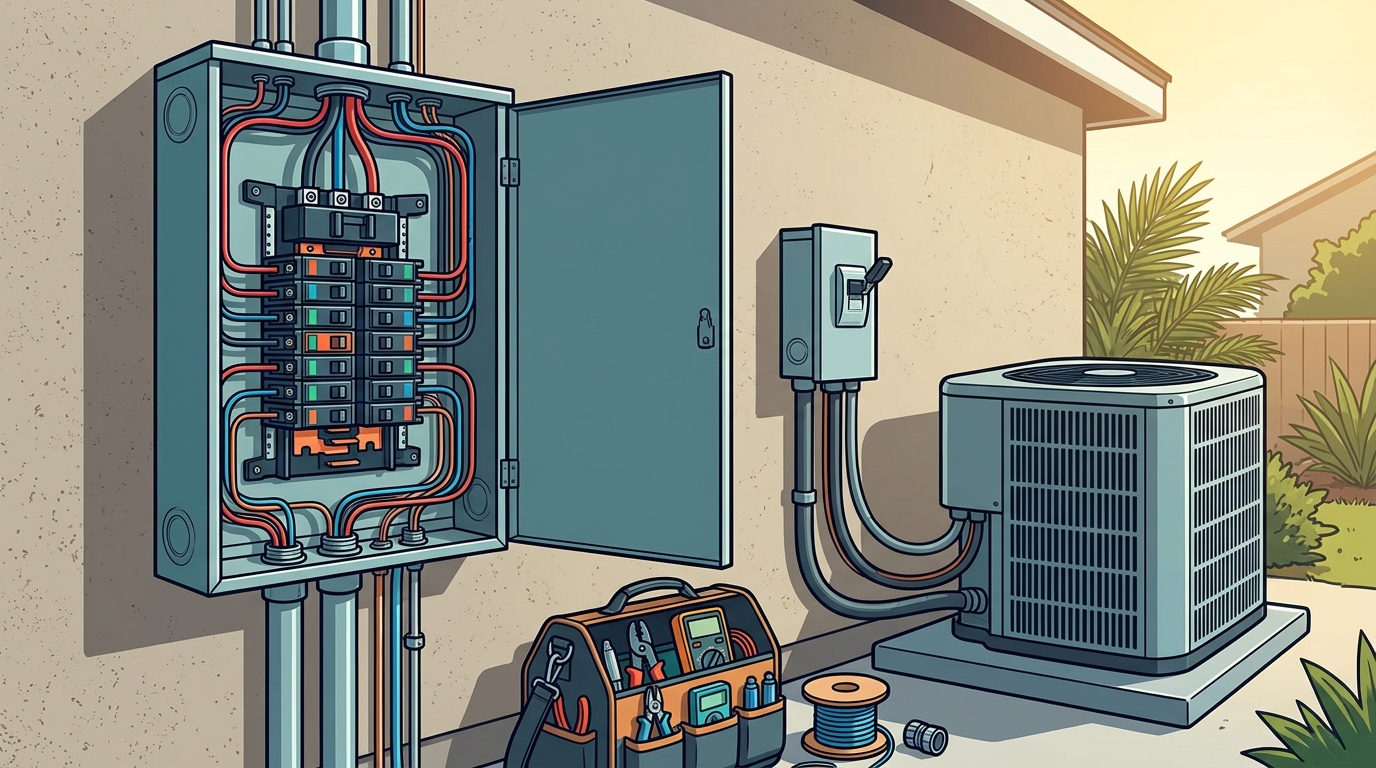
Route wiring through proper conduit to protect the cable. Conduit is a protective tube that houses electrical wires. It shields the wiring from physical damage and environmental factors. The route from the panel to the heat pump must be clear and code-compliant.
5. Neutral Wire Verification
Ensure a neutral wire is present for control signals. A neutral wire is the return path for current in an electrical circuit. Many heat pumps require a neutral wire for communication between the indoor and outdoor units. Older homes may lack this wire in the attic or wall cavity.
6. Grounding and Bonding
Verify proper grounding to prevent shock hazards. Grounding is the connection of an electrical system to the earth. It provides a safe path for fault current. The heat pump cabinet and the electrical panel must be properly bonded and grounded.
7. San Jose Code Compliance
Ensure all work meets local electrical codes. San Jose enforces strict electrical safety standards. A licensed electrician must inspect and approve the work. This ensures the installation is safe and passes final inspection.
Choosing the Right Upgrade
Select upgrades based on your specific heat pump model and existing panel condition. Consult with a professional to determine the exact requirements for your home. Air Sharks provides expert guidance on these electrical needs.
Frequently Asked Questions
Do all heat pumps require a new electrical panel?
No, not all heat pumps require a new panel. Many existing panels have enough capacity. However, older homes with 60-amp service may need an upgrade to 100 or 200 amps.
What is the most common electrical issue with heat pumps?
The most common issue is insufficient dedicated circuit capacity. The heat pump draws significant power during startup. A dedicated circuit prevents interference with other household appliances.
Can I install a heat pump without an electrician?
No, you cannot install the electrical components without a licensed electrician. Local codes require a professional to handle wiring and panel work. Air Sharks coordinates with licensed electricians for a seamless installation.
How much does an electrical panel upgrade cost?
Does Air Sharks handle electrical work?
Air Sharks specializes in HVAC installation and repair. We coordinate with licensed electricians to ensure all electrical requirements are met. This ensures a safe and compliant installation. Learn more: HVAC Company San Jose.