
Homeowners in San Jose often wonder why furnace replacement quotes vary so widely. The final price depends on a mix of equipment specs, labor complexity, and local market conditions. Understanding these variables helps you budget accurately and avoid unexpected charges. Air Sharks provides transparent guidance on these factors to ensure you make an informed decision for your home's comfort.
1. Furnace Type and Fuel Source
2. Efficiency Rating (AFUE)
Higher Annual Fuel Utilization Efficiency (AFUE) ratings increase the purchase price but lower long-term energy bills. AFUE is a measure of how much fuel a furnace converts into usable heat. Standard models typically range from 78% to 80% efficiency, while high-efficiency units can reach 90% to 98%. Investing in a higher AFUE rating is often justified by savings on monthly utility costs over the system's lifespan.
3. Size and Capacity (BTU Output)
The heating capacity, measured in British Thermal Units (BTU), must match your home's square footage and insulation quality. A furnace that is too small will run constantly and fail to heat the space, while an oversized unit will short-cycle and wear out prematurely. Accurate sizing requires a professional load calculation to ensure optimal performance and energy efficiency.
4. Labor and Installation Complexity
Labor costs vary based on the difficulty of the installation and the condition of existing ductwork. Replacing a furnace in a tight attic or crawl space requires more time and specialized equipment. If your existing ductwork is damaged or incompatible with the new system, additional labor and materials will be needed. Air Sharks technicians assess these site-specific challenges during the initial inspection.
5. Ductwork Modifications and Upgrades
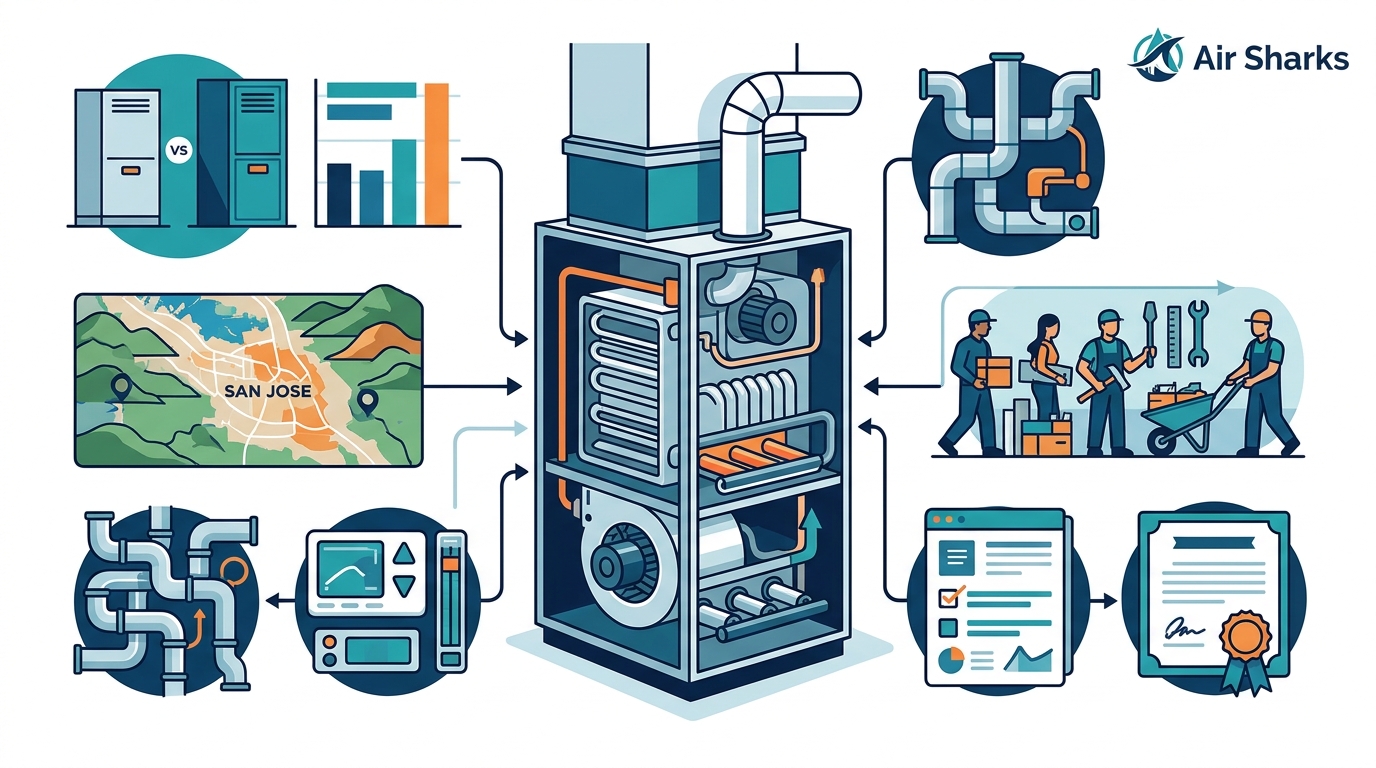
Existing ductwork condition can add significant costs if repairs or replacements are necessary. Older homes in San Jose may have ducts that are leaky, undersized, or made of materials that no longer meet code. Sealing leaks or replacing sections of ductwork ensures the new furnace operates at its rated efficiency. This step is critical for maintaining indoor air quality and consistent temperature distribution.
6. Local Permits and Code Compliance
San Jose building codes and permit requirements add a fixed cost to any major HVAC installation. Local regulations mandate specific safety features, venting materials, and clearances for gas appliances. Permits ensure the work is inspected and meets current safety standards. While these fees are a small portion of the total project, they are a mandatory line item in any professional quote.
7. Seasonal Demand and Market Availability
Choosing the Right Furnace for Your Budget
When evaluating quotes, focus on the total cost of ownership rather than just the upfront price. A slightly more expensive high-efficiency unit may save you money over ten years. Consider your long-term plans for the home and your comfort preferences. Air Sharks can help you balance these factors to find the right fit for your San Jose home.
Frequently Asked Questions
How much does a furnace replacement cost in San Jose?
Costs vary widely based on the factors listed above. Generally, homeowners should expect a range that covers the equipment, labor, and permits. For a precise estimate, a professional inspection is required to assess your specific home's needs.
What is the difference between a standard and high-efficiency furnace?
A standard furnace has an AFUE rating of 78% to 80%, while a high-efficiency model has a rating of 90% or higher. High-efficiency units use a secondary heat exchanger to capture more heat from the exhaust, resulting in lower fuel consumption.
Do I need to replace my ductwork with a new furnace?
Not always, but it depends on the condition of your existing ducts. If your ducts are leaky or undersized, upgrading them can improve the performance of your new furnace. A professional assessment will determine if ductwork modifications are necessary.
How long does a furnace replacement take?
A straightforward replacement typically takes one to two days. More complex installations involving ductwork modifications or difficult access points may take longer. Your technician will provide a timeline during the initial consultation.
Can I install a furnace myself to save money?
No, furnace installation requires a licensed professional due to safety and code requirements. Improper installation can lead to carbon monoxide leaks, fire hazards, and voided warranties. Always hire a licensed HVAC contractor for this work.
How long does a new furnace last?
With proper maintenance, a new furnace can last 15 to 20 years. Regular tune-ups and timely repairs help extend the life of your system. Keeping your filters clean and scheduling annual inspections are key to maximizing longevity.
Next Steps for Your Home
Understanding these seven factors empowers you to make a confident decision about your heating system. If you are ready to explore your options, the team at Air Sharks is here to help. Schedule a visit to get a detailed assessment and a transparent quote for your San Jose home. Learn more: HVAC Company San Jose.