
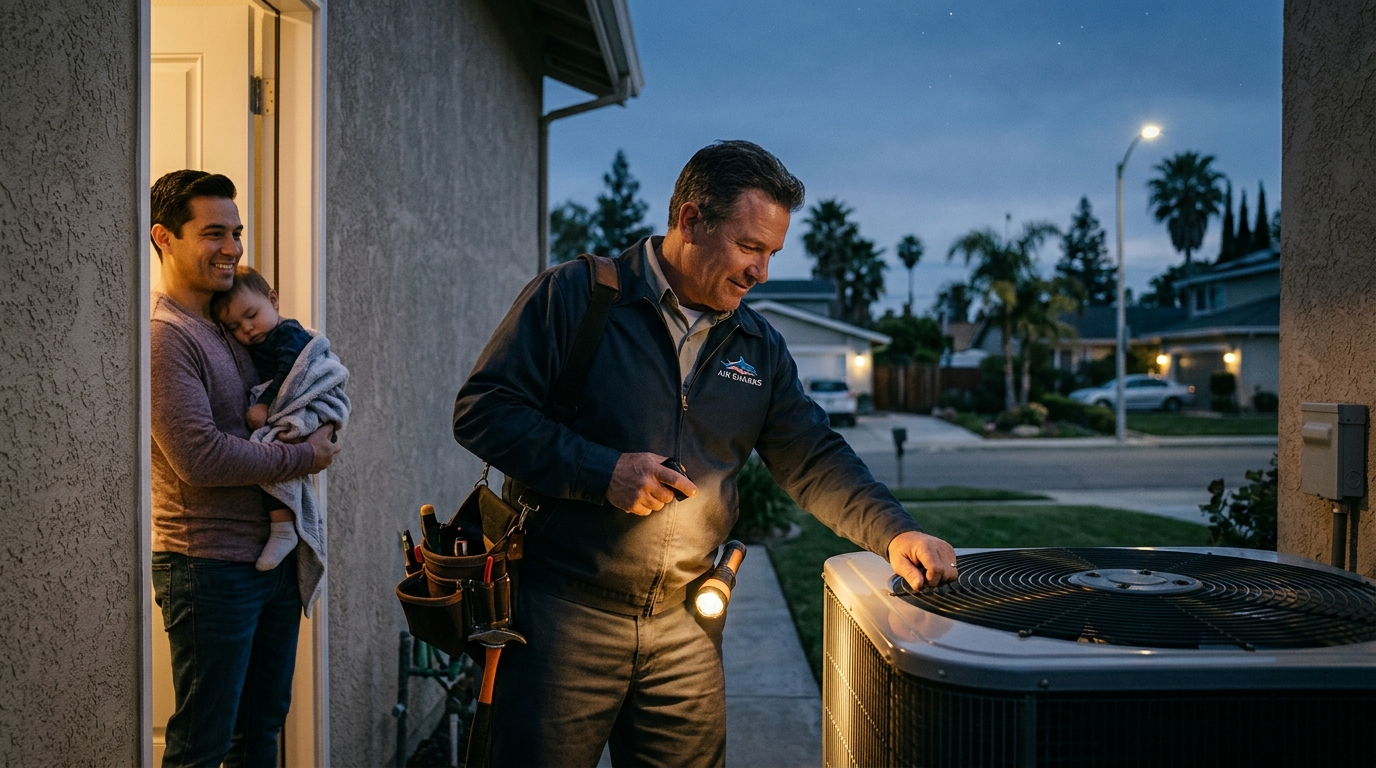
When your air conditioning or furnace fails, the answer to who offers emergency repair in San Jose is a licensed local provider like Air Sharks. This guide covers how to choose a reliable technician, verify credentials, understand costs, and navigate the repair process effectively.
How to Choose a Provider
Choosing the right HVAC company is critical when your home comfort is at stake. A reputable provider is one that holds proper state licensing and maintains a transparent pricing structure. In the San Jose area, you should look for companies that are fully insured and have a track record of serving both residential and commercial properties.
Licensing and Insurance
Licensing is the baseline requirement for any HVAC technician. In California, contractors must hold a C-20 license to perform heating and air conditioning work. Insurance protects you from liability if an accident occurs on your property. Always ask for proof of both before allowing anyone into your home. For additional details, review the Terms Of Use Air.
Local Experience
Local experience matters because San Jose homes have specific HVAC needs. The climate here is mild, but humidity and dust can affect system performance. A company that has served the area for years will understand these nuances better than a national chain that treats every home the same. For additional details, review the Privacy Policy Air Sharks.
What to Ask Before Committing
Before you sign a work order, you need to ask specific questions to avoid surprises. These questions help you gauge the professionalism of the technician and the clarity of the service agreement. For additional details, review the ASAP Membership Air Sharks.
Diagnostic and Repair Costs
Ask for the diagnostic fee upfront. Some companies waive this fee if you proceed with the repair, while others charge it regardless. Clarify whether the quote is a flat rate or an hourly estimate. Hourly rates can escalate quickly if the repair is more complex than expected.
Warranty Coverage
How to Verify Credentials
Verifying a company's claims is a simple but essential step. You can check a contractor's license status through the California Contractors State License Board (CSLB). This public database confirms whether a license is active and in good standing.
Check for Complaints
Look for complaints filed with the CSLB or the Better Business Bureau. A few complaints are normal for any business, but a pattern of unresolved issues is a red flag. Read recent reviews to see how the company handles problems.
Confirm Insurance
Ask for a certificate of insurance. This document proves that the company carries general liability and workers' compensation coverage. Do not rely on verbal assurances; request the actual paperwork.
How the Repair Process Works
Understanding the workflow helps you manage expectations. The process typically follows a standard sequence from initial contact to final payment.
Diagnosis
The technician arrives and performs a diagnostic check. This involves testing the system's components, checking refrigerant levels, and inspecting electrical connections. The goal is to identify the root cause of the failure.
Quote and Approval
Once the issue is identified, the technician provides a written quote. You review the quote and approve the work. No repairs should begin until you have given explicit consent. This step ensures you are not charged for work you did not authorize.
Repair and Testing
The technician performs the repair and then tests the system to ensure it is operating correctly. They should explain what was done and provide any necessary documentation. The process usually takes a few hours, depending on the complexity of the repair.
What It Costs
Costs for emergency HVAC repair vary based on several factors. Understanding these drivers helps you budget effectively and avoid overpaying.
Diagnostic Fees
Parts and Labor
Common Mistakes to Avoid
Homeowners often make mistakes that lead to higher costs or poor outcomes. Avoiding these pitfalls can save you money and stress.
Ignoring Maintenance
Lack of regular maintenance is the leading cause of HVAC failures. A dirty filter or clogged coil can strain the system and lead to a breakdown. Scheduling annual maintenance can prevent many of these issues.
Choosing the Cheapest Option
Repair vs. Replacement
Sometimes, repair is not the best option. You need to weigh the cost of repair against the cost of a new system.
The 50% Rule
A common guideline is the 50% rule. If the cost of repair is more than 50% of the cost of a new system, replacement is often the better choice. This rule helps you make a financially sound decision.
System Age
Consider the age of your system. If your HVAC unit is over 10 years old, it may be nearing the end of its lifespan. Frequent repairs on an old system are a sign that it is time to replace it.
Specific Situations
Different scenarios require different approaches. Understanding these nuances helps you respond effectively.
Extreme Heat
In San Jose, extreme heat is rare but can occur. If your AC fails during a heat wave, prioritize safety. Use fans and stay hydrated while waiting for the repair. Do not attempt to open the system yourself.
Gas Furnace Issues
If you smell gas, leave your home immediately and call the gas company. Do not use electrical switches or phones inside the house. Once it is safe, contact an HVAC professional for inspection.
Rules and Protections
California has specific rules that protect consumers. Understanding these rights helps you hold providers accountable.
Licensing Requirements
Only licensed contractors can perform HVAC work in California. Hiring an unlicensed contractor is illegal and voids any warranty. You can verify a license through the CSLB website.
Warranty Rights
Manufacturers provide warranties on their products. These warranties are transferable if you sell your home. Keep all documentation and service records to maintain warranty coverage.
Local Specifics for San Jose
San Jose has unique environmental factors that affect HVAC systems. The area is prone to dust and pollen, which can clog filters and coils. Regular cleaning is essential to maintain efficiency.
Climate Considerations
The mild climate means that heating systems are used less frequently than in other parts of California. This can lead to issues when the system is first used in the fall. A pre-season checkup can prevent these problems.
Local Regulations
San Jose has local regulations regarding HVAC installations. These rules ensure that systems meet energy efficiency standards. A local provider will be familiar with these requirements.
Timing and Urgency
Timing affects the cost and availability of emergency repair. Scheduling during off-peak hours can reduce costs. However, if your system fails during extreme weather, you may need to pay a premium for immediate service.
Preventive Timing
The best time to address HVAC issues is before they become emergencies. Schedule maintenance in the spring for cooling and in the fall for heating. This proactive approach prevents breakdowns.
Long-Term Results
Choosing a reliable provider leads to long-term benefits. A well-maintained system lasts longer and operates more efficiently. This translates to lower energy bills and fewer repairs.
Energy Efficiency
Modern HVAC systems are designed for energy efficiency. Regular maintenance ensures that your system operates at peak efficiency. This can save you money on your utility bills over time.
System Longevity
Proper care extends the life of your HVAC system. A system that is regularly serviced can last 15 to 20 years. Neglect can shorten this lifespan significantly.
Key Takeaways
- Always verify a contractor's license and insurance before hiring.
- Ask for a written quote before authorizing any work.
- Regular maintenance prevents most HVAC failures.
- Use the 50% rule to decide between repair and replacement.
- San Jose's climate requires specific attention to dust and pollen.
- Keep all service records to maintain warranty coverage.
- Choose a local provider with experience in the San Jose area.
Frequently Asked Questions
How much does emergency HVAC repair cost in San Jose?
How do I verify if an HVAC company is licensed in California?
You can check the California Contractors State License Board (CSLB) website to verify a contractor's license status.
What should I do if my AC stops working in extreme heat?
Stay hydrated, use fans, and contact a professional for emergency repair. Do not attempt to open the system yourself.
Is it better to repair or replace an old HVAC system?
If the repair cost is more than 50% of a new system, replacement is often the better choice. Consider the age and condition of the system.
How often should I schedule HVAC maintenance?
Schedule maintenance twice a year: once in the spring for cooling and once in the fall for heating.
What are the signs that my HVAC system needs repair?
Signs include unusual noises, reduced airflow, higher energy bills, and frequent cycling on and off.