
How to Choose a Contractor
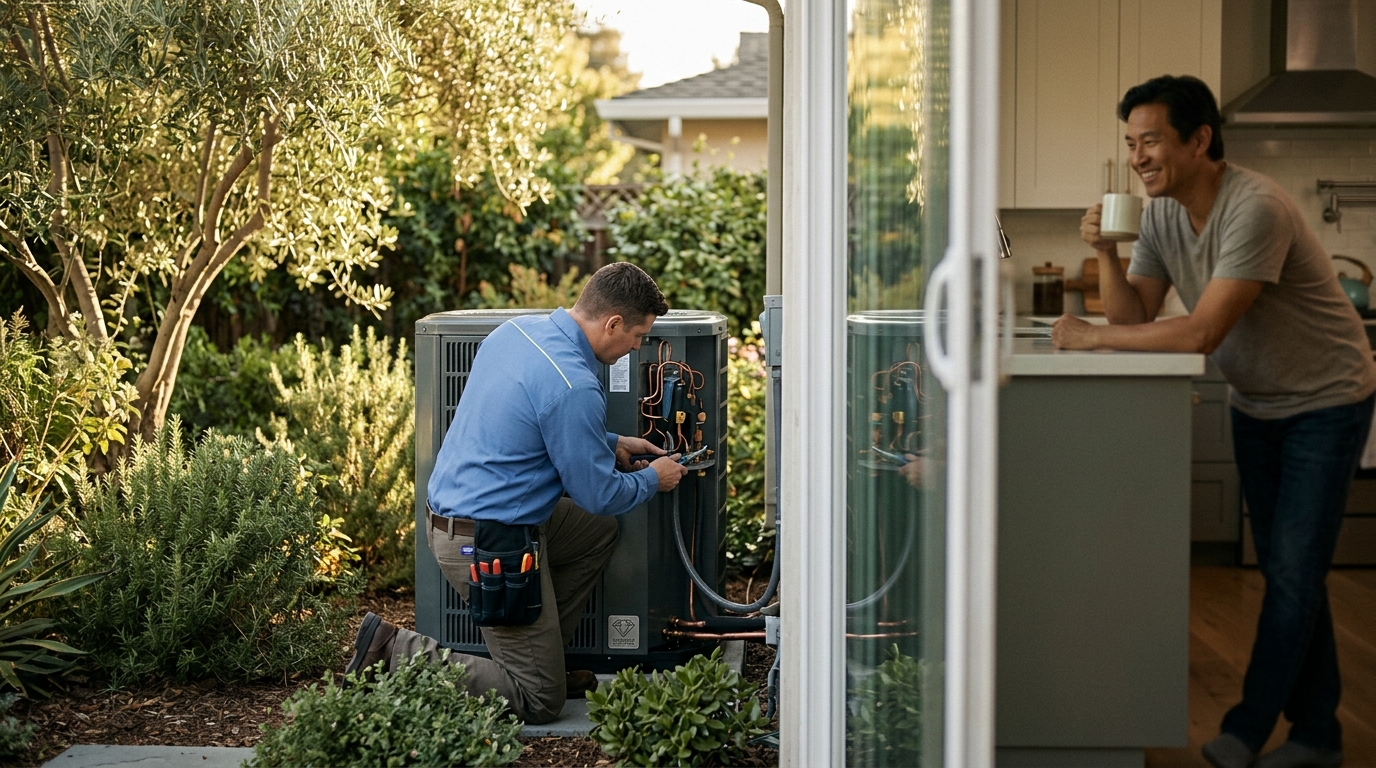
Choosing the right HVAC provider is the most critical step in controlling your final bill. A reputable company provides transparent, itemized quotes rather than vague estimates. Air Sharks is a Diamond Certified HVAC company serving the San Jose area, known for providing superior service and full solutions for heating and cooling needs. When evaluating providers, look for firms that specialize in heat pump technology rather than generalist repair shops. Specialized expertise ensures accurate load calculations and proper equipment sizing. This prevents the common issue of oversized units that cycle frequently and waste energy.
Experience with Local Climate
San Jose's microclimate requires specific equipment configurations. Contractors familiar with the region understand how humidity and temperature swings affect heat pump efficiency. They will recommend systems with variable-speed compressors that handle mild winters and warm summers effectively. This local knowledge is a key differentiator between a good option and a bad one. For additional details, review the Air Quality Air Sharks.
What to Ask Before Committing
Key Questions for Your Quote
- Is the quote fixed or an estimate? For additional details, review the Terms Of Use Air.
- What is the expected SEER2 and HSPF2 rating of the unit? For additional details, review the Privacy Policy Air Sharks.
- Who performs the final inspection and commissioning?
How to Verify Credentials
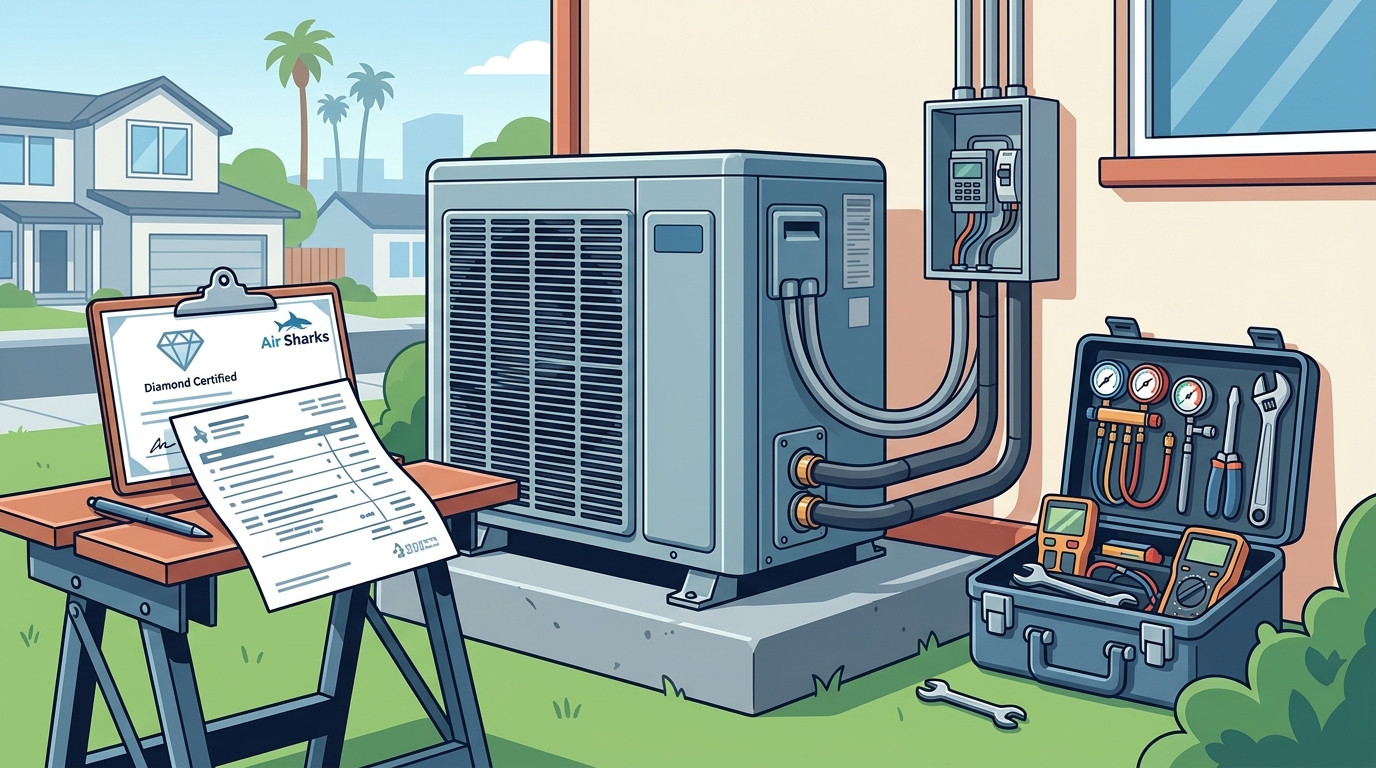
Verifying a contractor's credentials protects your investment and ensures safety. Heat pump installation is a specialized trade that requires specific licensing in California. You must verify that the contractor holds a valid C-20 HVAC license. This license is issued by the California Contractors State License Board (CSLB). You can check a license's status online to ensure it is active and in good standing. Additionally, look for certifications from manufacturers like Carrier, Trane, or Daikin. These certifications indicate that the technicians have completed advanced training on specific heat pump models.
Checking Insurance and Bonding
Ensure the company carries general liability insurance and workers' compensation. This protects you from liability if a worker is injured on your property. A bonded contractor is also preferable, as it provides financial recourse if the job is not completed as agreed. You can request copies of their insurance certificates before signing any agreement.
How the Installation Process Works
Understanding the workflow helps you plan for the disruption. The process typically begins with a site assessment and Manual J load calculation. This calculation determines the exact heating and cooling capacity your home requires. Once the equipment is ordered, the installation usually takes one to two days. The first day involves removing the old system and installing the new outdoor condenser and indoor air handler. The second day focuses on connecting refrigerant lines, electrical wiring, and thermostat integration. Finally, the technician performs a commissioning test to ensure the system operates at peak efficiency.
Timeline Expectations
Most standard residential installations are completed within 48 hours. However, complex homes with extensive ductwork modifications may take longer. Electrical upgrades, if required, can add a few days to the timeline. Scheduling these upgrades in advance prevents delays.
What Drives the Cost
Cost Breakdown Table
| Component | Estimated Cost Range | Notes |
|---|
Common Mistakes to Avoid
Red Flags in Quotes
- Vague descriptions of equipment models
- Pressure to sign immediately
- Lack of a detailed line-item breakdown
- No mention of manufacturer warranties
Heat Pumps vs. Alternatives
Comparing heat pumps to traditional systems helps clarify the value proposition. A standard gas furnace and central air conditioner is often cheaper upfront. However, heat pumps offer dual functionality, providing both heating and cooling from a single system. This eliminates the need for two separate units. Electric resistance heating is the least efficient option. It converts electricity to heat at a 1:1 ratio, whereas heat pumps move heat, achieving efficiencies of 3:1 or higher. For most San Jose homes, a heat pump is the most cost-effective long-term solution.
Costs for Specific Home Types
Your home's specific characteristics significantly impact the final price. For a 1,500-square-foot home with good insulation, expect to pay on the lower end of the spectrum. Larger homes or those with poor insulation will require higher-capacity units, pushing the cost up. Homes with existing ductwork are generally cheaper to convert than ductless mini-split installations. Ductless systems require new piping and indoor units for each room, which can be more expensive for whole-house coverage. However, they are ideal for homes without existing ducts.
Rules and Consumer Protections
California has strict regulations governing HVAC installations. The California Energy Commission (CEC) sets minimum efficiency standards for all new equipment. Contractors must comply with these standards to pass inspection. Additionally, the CSLB provides a dispute resolution process for consumers who have issues with licensed contractors. You have the right to a written contract that outlines the scope of work, price, and timeline. Keep all documentation and receipts for warranty claims and potential tax credits.
San Jose Local Specifics
Timing Your Installation
When you schedule your installation can impact both price and availability. Spring and early fall are the peak seasons for HVAC work. Demand is high, and contractors may have limited availability. Scheduling in the off-season, such as late winter or mid-summer, can sometimes result in lower labor costs or faster service. However, the weather in San Jose is mild year-round, so the urgency is less than in extreme climates. Planning ahead allows you to take advantage of any seasonal promotions or utility rebate deadlines.
Long-Term Results and Savings
The true value of a heat pump is realized over time. High-efficiency models can reduce energy bills by 30% to 50% compared to older systems. The initial investment is typically recouped within 5 to 10 years through energy savings. Additionally, heat pumps have a longer lifespan than traditional systems, often lasting 15 to 20 years with proper maintenance. Regular maintenance, such as annual filter changes and coil cleaning, ensures the system continues to operate at peak efficiency. This long-term reliability makes heat pumps a smart financial decision for San Jose homeowners.
Key Takeaways
- Choose a Diamond Certified or highly rated local contractor like Air Sharks.
- Verify the contractor's C-20 license and insurance before signing.
- Check for PG&E rebates and federal tax credits to lower your cost.
- Proper sizing and installation are critical for long-term efficiency.
- High-efficiency models pay for themselves through energy savings.
- Schedule during off-peak times for potentially better service.
Frequently Asked Questions
How much does a heat pump cost in San Jose?
Are heat pumps worth it in California?
Yes, heat pumps are highly efficient in California's mild climate. They provide both heating and cooling, often reducing energy bills by 30% to 50% compared to older systems. The energy savings typically offset the higher upfront cost within a few years.
What is the difference between a heat pump and a central air conditioner?
A central air conditioner only cools your home, while a heat pump provides both cooling and heating. A heat pump moves heat from outside to inside in winter and from inside to outside in summer. This dual functionality makes it a more versatile and often more efficient system.
Do I need to upgrade my electrical panel for a heat pump?
How long does heat pump installation take?
Most standard installations take one to two days. The first day involves removing the old system and installing the new outdoor and indoor units. The second day focuses on connecting lines, wiring, and testing the system. Complex jobs with ductwork modifications may take longer.
What rebates are available for heat pumps in San Jose?
How do I verify if an HVAC contractor is licensed in California?
You can verify a contractor's license through the California Contractors State License Board (CSLB) website. Look for a valid C-20 HVAC license. Ensure the license is active and in good standing. You can also check for any complaints or disciplinary actions against the contractor.