

How to Choose a Quality System
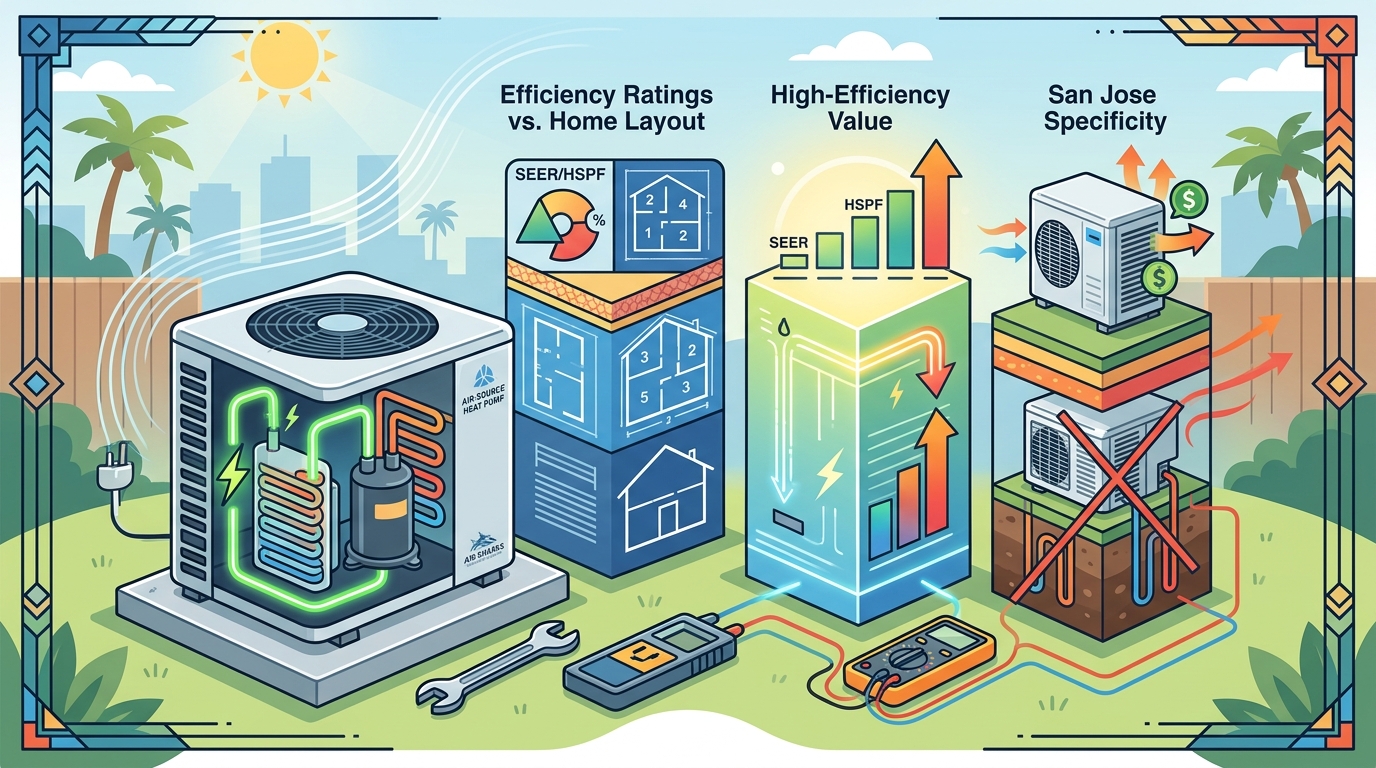
Choosing the right heat pump requires balancing efficiency ratings with your specific home layout. A high-efficiency system is one that converts electrical energy into heat with minimal waste, often measured by the Seasonal Energy Efficiency Ratio (SEER) or Heating Seasonal Performance Factor (HSPF). In San Jose, where temperatures rarely drop below freezing, a standard air-source heat pump is often sufficient and more cost-effective than a ground-source model. For additional details, review the Privacy Policy Air Sharks.
Efficiency Ratings Matter
Look for systems with a SEER rating of 16 or higher. Higher ratings mean lower monthly utility bills. While the upfront cost is higher, the energy savings usually offset the difference within a few years. Avoid units with ratings below 14, as they may not qualify for the best local rebates. For additional details, review the .
Right-Sizing the Unit
An oversized unit is one that cycles on and off frequently, leading to poor humidity control and increased wear. An undersized unit runs constantly and fails to reach the set temperature. A professional load calculation, often called a Manual J calculation, is the only way to ensure the unit matches your home's actual heating and cooling demands.
Questions to Ask Before Committing
Before signing a contract, you need to understand the scope of work and the warranty terms. Ask the provider for a detailed line-item quote rather than a single lump sum. This transparency helps you identify where the money is going and prevents hidden fees.
Key Questions for Your Contractor
- What is the exact model and brand of the equipment?
- What is the warranty coverage for both parts and labor?
- Do you handle the permitting and utility inspections?
- What is the estimated timeline for completion?
Verifying Credentials and Claims
Not all HVAC companies are created equal. Verifying credentials is a process of confirming that a contractor holds the necessary state licenses and industry certifications. In California, HVAC contractors must hold a C-20 license. You can verify this status through the California Contractors State License Board (CSLB) website. Additionally, look for NATE (North American Technician Excellence) certification, which indicates that the technicians have passed rigorous exams on HVAC systems.
The Installation Process and Timeline
A standard heat pump installation is a multi-step process that typically takes one to three days. The first step is the site assessment, where the technician measures your home and calculates the load. Next, they remove the old system and prepare the site for the new unit. The final step is the installation of the new equipment and the commissioning of the system to ensure it operates correctly.
Step-by-Step Workflow
- Consultation and Load Calculation
- Equipment Delivery and Site Preparation
- Removal of Old System
- Installation of New Heat Pump and Ductwork
- System Testing and Commissioning
- Final Inspection and Walkthrough
Detailed Cost Breakdown
| Component | Estimated Cost Range | Notes |
|---|
Common Mistakes to Avoid
Homeowners often make mistakes that lead to poor performance or higher costs. One common error is choosing a unit based solely on price rather than efficiency. Another is ignoring the condition of the existing ductwork. If the ducts are leaky, the new heat pump will not perform as expected, regardless of its quality.
Heat Pumps vs. Traditional HVAC
Heat pumps are more energy-efficient than traditional gas furnaces and electric resistance heaters. A heat pump is a device that moves heat rather than creating it, which makes it significantly more efficient. While a gas furnace might have a lower upfront cost, the long-term energy savings of a heat pump usually make it the better financial choice. Additionally, heat pumps provide both heating and cooling, eliminating the need for two separate systems.
Costs for Specific Home Scenarios
The cost varies depending on your home's specific characteristics. For a home with no existing ductwork, a ductless mini-split system is often the most cost-effective solution. For a large home with multiple zones, a multi-zone system may be required, which increases the equipment cost but allows for better temperature control in different areas of the house.
Local Rules and Consumer Protections
San Jose has specific building codes and energy efficiency standards that must be met. The city requires that new HVAC systems meet certain efficiency thresholds to qualify for permits. Homeowners are protected by California's consumer protection laws, which require contractors to provide written estimates and warranties. Always ensure that the contractor is insured and bonded to protect yourself from liability in case of damage or injury.
San Jose Climate and Utility Factors
San Jose's mild climate makes it an ideal location for heat pumps. The city's average winter temperatures rarely drop below 40 degrees Fahrenheit, which is well within the operating range of modern air-source heat pumps. Pacific Gas and Electric (PG&E) offers rebates for high-efficiency heat pumps, which can significantly reduce the net cost of the installation. These rebates are designed to encourage the adoption of energy-efficient technologies and reduce the overall carbon footprint of the region.
When to Schedule Your Installation
Timing your installation can affect the cost and the wait time. The best time to schedule a heat pump installation is in the spring or fall, when demand is lower. During the peak summer and winter months, contractors are often booked weeks in advance, and prices may be higher due to increased demand. Scheduling during the off-season can also make it easier to secure the best rebates and promotions.
Long-Term Performance and Savings
Heat pumps provide measurable savings over time. On average, homeowners can expect to save 30% to 50% on their heating and cooling bills compared to older systems. The lifespan of a modern heat pump is typically 15 to 20 years with proper maintenance. Regular maintenance, such as changing filters and cleaning coils, is essential to maintain efficiency and extend the life of the system.
Key Takeaways
- Choose a system with a SEER rating of 16 or higher for maximum efficiency.
- Verify your contractor's C-20 license and NATE certification before hiring.
- Ask for a detailed line-item quote to avoid hidden fees.
- PG&E offers rebates for high-efficiency heat pumps, reducing the net cost.
- Schedule your installation in the spring or fall to avoid peak season prices.
- Regular maintenance is essential to maintain efficiency and extend the system's lifespan.
Frequently Asked Questions
How much does it cost to install a heat pump in San Jose?
Are heat pumps efficient in San Jose's climate?
Yes, San Jose's mild winters make it an ideal location for air-source heat pumps.
What rebates are available for heat pumps in San Jose?
PG&E offers rebates for high-efficiency heat pumps, which can reduce the net cost by several hundred dollars.
How long does a heat pump installation take?
A standard installation typically takes one to three days, depending on the complexity of the job.
Do I need to replace my ductwork?
Not necessarily, but a professional assessment is required to determine if your existing ducts are adequate.
What is the lifespan of a heat pump?
With proper maintenance, a modern heat pump can last 15 to 20 years.
How do I verify a contractor's credentials?
Check their C-20 license with the CSLB and look for NATE certification.
Conclusion
Installing a heat pump in San Jose is a significant investment that offers long-term savings and improved comfort. By choosing a high-efficiency system, verifying your contractor's credentials, and taking advantage of local rebates, you can maximize the value of your investment. Air Sharks provides expert heat pump installation services in the San Jose area, ensuring that your system is sized correctly and installed to the highest standards. today to schedule your consultation and take the first step toward a more efficient home.