Federal Tax Credits
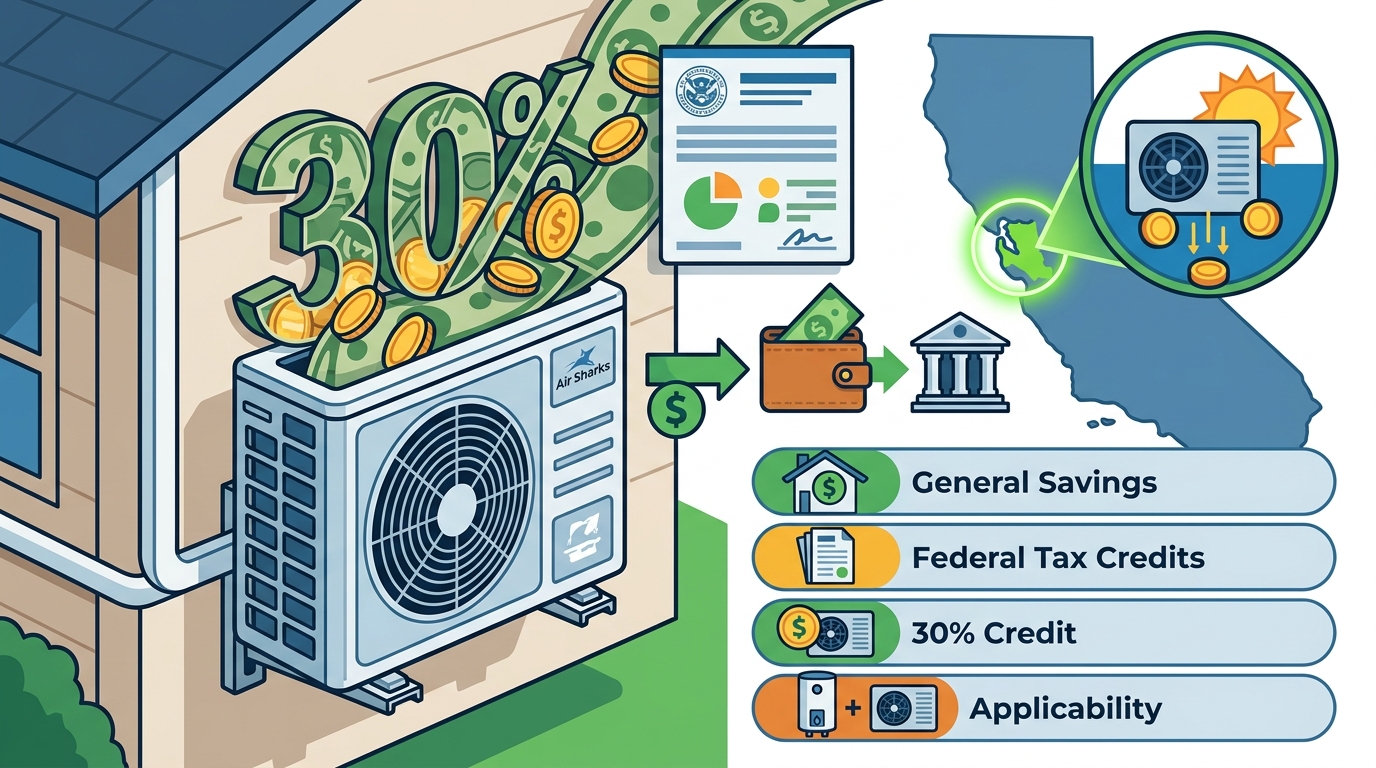
Federal tax credits are the most significant financial incentive for heat pump adoption in the United States. The Inflation Reduction Act established a robust framework for residential clean energy credits that remains active in 2026. Homeowners can claim a 30% tax credit for the total cost of eligible heat pump equipment and installation. This credit applies to both air-source heat pumps and heat pump water heaters. There is no cap on the total amount of equipment you can purchase to qualify for this credit.
Eligibility and Filing
To claim the credit, you must file IRS Form 5695 with your federal tax return. The equipment must be new and installed in your primary or secondary residence. You cannot claim this credit for used equipment or for systems installed in rental properties unless you are the owner. The credit is non-refundable, meaning you can only reduce your tax liability to zero, not receive a cash refund for the excess amount. However, you can carry forward unused credits to future tax years.
Heat Pump Water Heaters
Heat pump water heaters that have earned the ENERGY STAR are eligible for this credit. This specific category often offers higher efficiency ratings than standard gas or electric resistance water heaters. The 30% credit applies to the full purchase price, including professional installation costs. This makes the federal credit a powerful tool for offsetting the higher upfront cost of high-efficiency water heating systems.
MCE Rebates
Rebate Amounts and Tiers
Rebates are typically tiered based on the Seasonal Energy Efficiency Ratio (SEER) for cooling and the Heating Seasonal Performance Factor (HSPF) for heating. Higher efficiency units qualify for larger rebates. For example, a high-efficiency central heat pump might qualify for a rebate of several hundred dollars, while a premium unit could qualify for significantly more. MCE also offers rebates for duct sealing and insulation improvements that accompany heat pump installations. according to Clean Heating and
Application Process
To receive an MCE rebate, you must use a participating contractor. The contractor typically handles the rebate application on your behalf. You will need to provide proof of purchase, installation dates, and equipment specifications. The rebate is usually issued as a check or direct deposit after the utility verifies the installation. It is important to check the current MCE rebate schedule, as amounts can change annually based on budget availability.
SJCE Incentives
San Jose Clean Energy (SJCE) provides local incentives for residents in the City of San Jose. These incentives are designed to accelerate the adoption of clean energy technologies in the local community. SJCE offers rebates for heat pump installations that meet specific efficiency standards. These local incentives can be stacked with federal tax credits and utility rebates to maximize savings.
Local Rebate Structure
SJCE rebates are often structured as a flat amount per unit or based on the efficiency of the equipment. The program may have annual budget limits, so it is important to apply early in the year. SJCE also offers incentives for ductless mini-split systems, which are popular in older Bay Area homes that lack central ductwork. The local program complements state and federal incentives by addressing specific regional needs and climate conditions.
Eligibility Requirements
To qualify for SJCE incentives, the installation must be performed by a licensed contractor. The equipment must be new and meet minimum efficiency standards set by the program. Homeowners must provide proof of residency and installation. The SJCE program is part of a broader effort to reduce greenhouse gas emissions in the San Jose area. By participating, homeowners contribute to local environmental goals while saving money on energy bills.
Income Qualified Programs
Income-qualified programs provide additional financial assistance for low- and moderate-income households. These programs are designed to ensure that the benefits of clean energy technology are accessible to all residents, regardless of income level. In the Bay Area, several state and local programs offer enhanced rebates or full cost coverage for heat pump installations for eligible households.
State and Local Assistance
Application and Verification
Applying for income-qualified programs typically requires proof of income, such as tax returns or pay stubs. The application process may take longer than standard rebate applications, so it is important to start early. Contractors who specialize in these programs can help navigate the paperwork and ensure that all eligibility requirements are met. These programs can reduce the out-of-pocket cost of a heat pump installation to zero or near zero for eligible households.
Comparison of Incentive Programs
| Program | Type | Maximum Benefit | Eligibility |
|---|---|---|---|
| Federal Tax Credit | Tax Credit | 30% of cost | All homeowners |
| MCE Rebate | Utility Rebate | Varies by efficiency | MCE customers |
| SJCE Incentive | Local Rebate | Flat amount | San Jose residents |
| Income Qualified | Grant/Assistance | Up to 100% of cost | Low/moderate income |
Key Takeaways
- Federal tax credits provide a 30% credit on the total cost of eligible heat pump equipment and installation.
- MCE offers tiered rebates based on the efficiency rating of the heat pump system. according to Air Source Heat
- SJCE provides local incentives for San Jose residents that can be stacked with other programs.
- Income-qualified programs can cover a significant portion or all of the installation cost for eligible households.
- Heat pump water heaters are eligible for the federal tax credit and often qualify for utility rebates.
- Using a participating contractor is essential for accessing utility and local rebates.
- Stacking federal, state, and local incentives can result in substantial savings on heat pump installations.
Frequently Asked Questions
Can I stack federal tax credits with utility rebates?
Yes, you can stack federal tax credits with utility rebates and local incentives. The federal credit is based on the total cost of the equipment, while utility rebates are typically issued as a separate payment. This allows you to maximize your total savings. according to Heat Pump Water
What is the maximum federal tax credit for a heat pump?
There is no cap on the total amount of equipment you can purchase to qualify for the 30% federal tax credit. The credit is calculated as 30% of the total cost of the eligible equipment and installation.
Do heat pump water heaters qualify for rebates?
Yes, heat pump water heaters that have earned the ENERGY STAR are eligible for the federal tax credit. They may also qualify for utility rebates from MCE and other providers.
How do I apply for MCE rebates?
You must use a participating contractor to apply for MCE rebates. The contractor typically handles the application process on your behalf. You will need to provide proof of purchase and installation.
Are there income limits for local incentives?
Some local incentives, such as those from SJCE, may have income limits or be part of income-qualified programs. It is important to check the specific eligibility requirements for each program.
Can I claim the federal credit for a rental property?
No, the federal tax credit is only available for primary or secondary residences. You cannot claim the credit for equipment installed in rental properties unless you are the owner and the property is your primary residence.
How long does it take to receive a utility rebate?
It typically takes several weeks to several months to receive a utility rebate after the installation is complete. The timeline depends on the utility company and the volume of applications they are processing.
Do I need to seal my ducts to qualify for rebates?
Some utility rebates require duct sealing or insulation improvements to qualify for the highest tier. It is important to check the specific requirements for the rebate you are applying for.
Conclusion
Bay Area homeowners have access to a robust stack of financial incentives for heat pump installations in 2026. By combining federal tax credits, MCE rebates, SJCE local incentives, and income-qualified programs, you can significantly reduce the upfront cost of upgrading your heating and cooling system. These incentives not only save you money but also contribute to a cleaner, more sustainable environment. To ensure you maximize your savings, it is important to work with a knowledgeable contractor who understands the current rebate landscape. Schedule your visit with Air Sharks today to explore your options and take advantage of these valuable incentives.