
Furnace Replacement Cost Breakdown
Equipment vs. Labor Costs
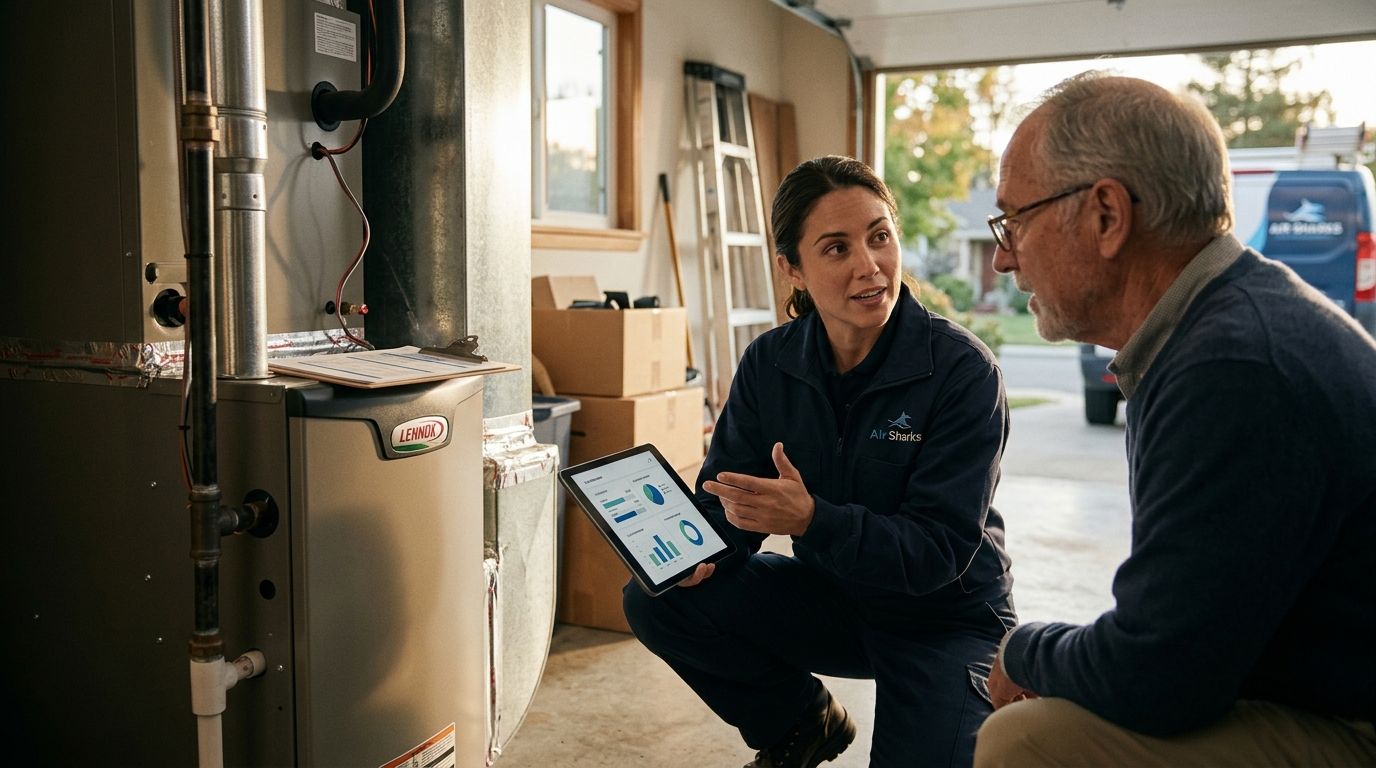
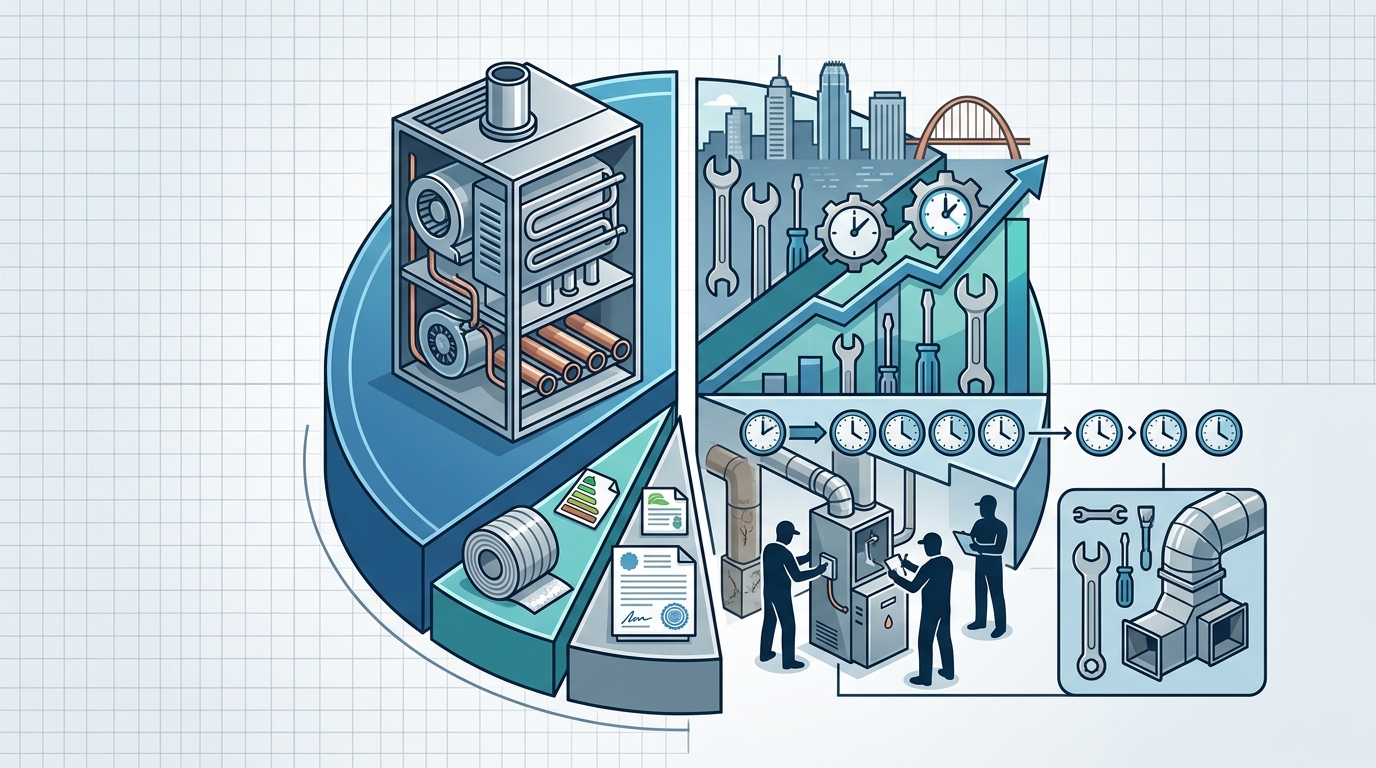
The furnace unit typically accounts for 40% to 60% of the total project cost. Labor rates in the San Jose area are higher than the national average due to the region's cost of living and strict building codes. A standard installation takes 6 to 10 hours for a skilled technician. Complex installations involving ductwork resizing or gas line upgrades can add 4 to 8 additional hours of labor. Air Sharks provides transparent estimates that separate equipment and labor costs, allowing you to see exactly where your money goes.
Hidden Costs to Watch For
HVAC Contractor Licensing in California
HVAC contractor licensing is the legal requirement for a business to perform heating and cooling work in California. The state mandates that all HVAC contractors hold a C-36 license issued by the Contractors State License Board (CSLB). This license ensures the business has passed financial, legal, and technical examinations. Additionally, individual technicians must hold a Universal Refrigeration License (UCL) to handle refrigerants. Hiring an unlicensed contractor is illegal and voids your insurance coverage.
Verifying a Contractor's License
You can verify any California contractor's license status through the CSLB website. Look for a license number on the contractor's website or business card. Air Sharks operates under CSLB license #1100692. You can verify this license directly with the state to ensure it is active and in good standing. A licensed contractor is also required to carry general liability insurance and workers' compensation. Ask for proof of insurance before signing any contract.
Why Licensing Matters for Your Home
Licensed contractors are bound by state regulations regarding safety and code compliance. They are trained to identify gas leaks, electrical hazards, and structural issues that unlicensed workers might miss. In San Jose, local building codes are strict. A licensed contractor like Air Sharks ensures your installation meets all municipal requirements, protecting your home's safety and resale value. Unlicensed work can result in failed inspections and costly rework.
Key Cost Factors: Efficiency, Size, and Permits
Several variables significantly impact the final price of your furnace replacement. Understanding these factors helps you make an informed decision that balances upfront cost with long-term savings. The three primary drivers are efficiency rating, system size, and permit requirements.
Efficiency Rating (AFUE)
Annual Fuel Utilization Efficiency (AFUE) is a measure of how effectively a furnace converts fuel into heat. Standard furnaces have an AFUE of 78% to 80%, meaning 20% of the fuel is wasted. High-efficiency models range from 90% to 98% AFUE. While high-efficiency units cost more upfront, they can reduce annual heating bills by 15% to 30%. In San Jose's mild climate, the payback period for a high-efficiency unit is typically 5 to 8 years. Consider your local utility rates and climate when choosing an efficiency level.
System Size and Load Calculation
System size is determined by a Manual J load calculation, which measures your home's heating requirements based on square footage, insulation, and window placement. An oversized furnace cycles on and off frequently, leading to premature wear and uneven heating. An undersized furnace runs continuously, straining components and failing to reach your set temperature. A proper load calculation ensures you buy the right size for your home. Air Sharks performs detailed load calculations to recommend the optimal system size for your specific property.
Permits and Inspections
| Factor | Standard Model | High-Efficiency Model | Impact on Cost |
|---|
Key Takeaways
- Always hire a contractor with a valid C-36 CSLB license to ensure legal and safe installation.
- High-efficiency furnaces (90%+ AFUE) cost more upfront but can save 15-30% on annual heating bills.
- A proper Manual J load calculation prevents buying an oversized or undersized unit.
- Request a detailed line-item estimate to avoid hidden costs for ductwork or gas line upgrades.
- Licensed contractors like Air Sharks provide full reports and digital photos for transparency.
- Verify contractor insurance and license status before signing any contract.
Frequently Asked Questions
How much does it cost to replace a furnace in San Jose?
Do I need a permit to replace my furnace?
How long does furnace replacement take?
A standard furnace replacement takes 6 to 10 hours for a skilled technician. Complex installations involving ductwork resizing or gas line upgrades can take 1 to 2 days. The process includes removing the old unit, installing the new unit, and performing a final safety inspection.
What is the difference between standard and high-efficiency furnaces?
Standard furnaces have an AFUE of 78% to 80%, while high-efficiency models range from 90% to 98%. High-efficiency units recover heat from exhaust gases, resulting in lower fuel consumption. They cost more upfront but offer significant long-term savings on energy bills.
How do I verify if an HVAC contractor is licensed in California?
You can verify a contractor's license through the Contractors State License Board (CSLB) website. Look for a C-36 license number on the contractor's website or business card. Air Sharks operates under CSLB license #1100692. You can also ask for proof of general liability insurance and workers' compensation.
Can I install a furnace myself?
No, it is illegal to install a furnace without a valid C-36 license in California. DIY installation voids manufacturer warranties and insurance coverage. It also poses serious safety risks, including gas leaks and carbon monoxide poisoning. Always hire a licensed professional for furnace installation.
What factors affect the cost of furnace replacement?
The primary factors are the furnace's efficiency rating (AFUE), system size, and labor complexity. Additional costs may include ductwork modifications, gas line upgrades, and permit fees. A detailed load calculation and line-item estimate help you understand the total project cost.
How long does a new furnace last?
A well-maintained furnace typically lasts 15 to 20 years. High-efficiency models may last longer due to advanced components. Regular annual maintenance, such as a tune-up, can extend the lifespan of your system and prevent premature failure.
Conclusion
Replacing your furnace in San Jose is a significant investment that requires careful planning and professional execution. By understanding the cost breakdown, verifying contractor licensing, and considering key factors like efficiency and permits, you can make an informed decision that protects your home and budget. Air Sharks provides transparent, licensed, and code-compliant furnace replacement services in San Jose. To get a free, accurate estimate for your home, schedule your visit now.