

Choosing between a heat pump and a furnace in San Jose depends on your home's electrical capacity, local climate, and long-term energy goals. A heat pump is generally more efficient for year-round comfort in the Bay Area, but it requires specific electrical infrastructure. This guide covers the critical electrical panel upgrades, energy cost savings, and technical requirements you must evaluate before replacing your heating system with Air Sharks.
Electrical Panel Upgrades
Many older homes in San Jose were built with 100-amp electrical panels, which may not support modern high-efficiency heat pumps. A heat pump is an electrically driven device that moves heat rather than generating it through combustion. Unlike a gas furnace, which requires a gas line and venting, a heat pump relies entirely on your home's electrical grid. If your existing panel is near its capacity limit, adding a new heat pump can cause breakers to trip or create fire hazards.
Assessing Current Load
Before committing to a heat pump, a licensed electrician must assess your total electrical load. This includes calculating the amperage required for the new unit alongside your existing appliances, such as electric water heaters, EV chargers, and central air conditioning. In many San Jose homes, the transition from a gas furnace to a heat pump requires a panel upgrade to 200 amps. This upgrade ensures that your home can handle the simultaneous operation of heating and cooling systems during shoulder seasons.
The Cost of Upgrading
Panel upgrades are a significant investment, but they are often a prerequisite for modern HVAC efficiency. The cost varies based on the complexity of the wiring and the age of the home. Older homes may require rewiring of certain circuits to meet current safety codes. Air Sharks technicians can coordinate with electricians to ensure that your electrical infrastructure is ready for the new system before installation begins. This proactive approach prevents costly delays and ensures that your new heat pump operates safely from day one.
Energy Cost Savings
The primary financial argument for a heat pump is its superior energy efficiency. A heat pump is a device that transfers thermal energy from one place to another, using electricity to drive the process. In San Jose's mild climate, heat pumps operate at high efficiency even in cooler months. Traditional gas furnaces have an Annual Fuel Utilization Efficiency (AFUE) rating, while heat pumps use a Coefficient of Performance (COP) or Heating Seasonal Performance Factor (HSPF). A COP of 3.0 means the heat pump delivers three units of heat for every one unit of electricity consumed.
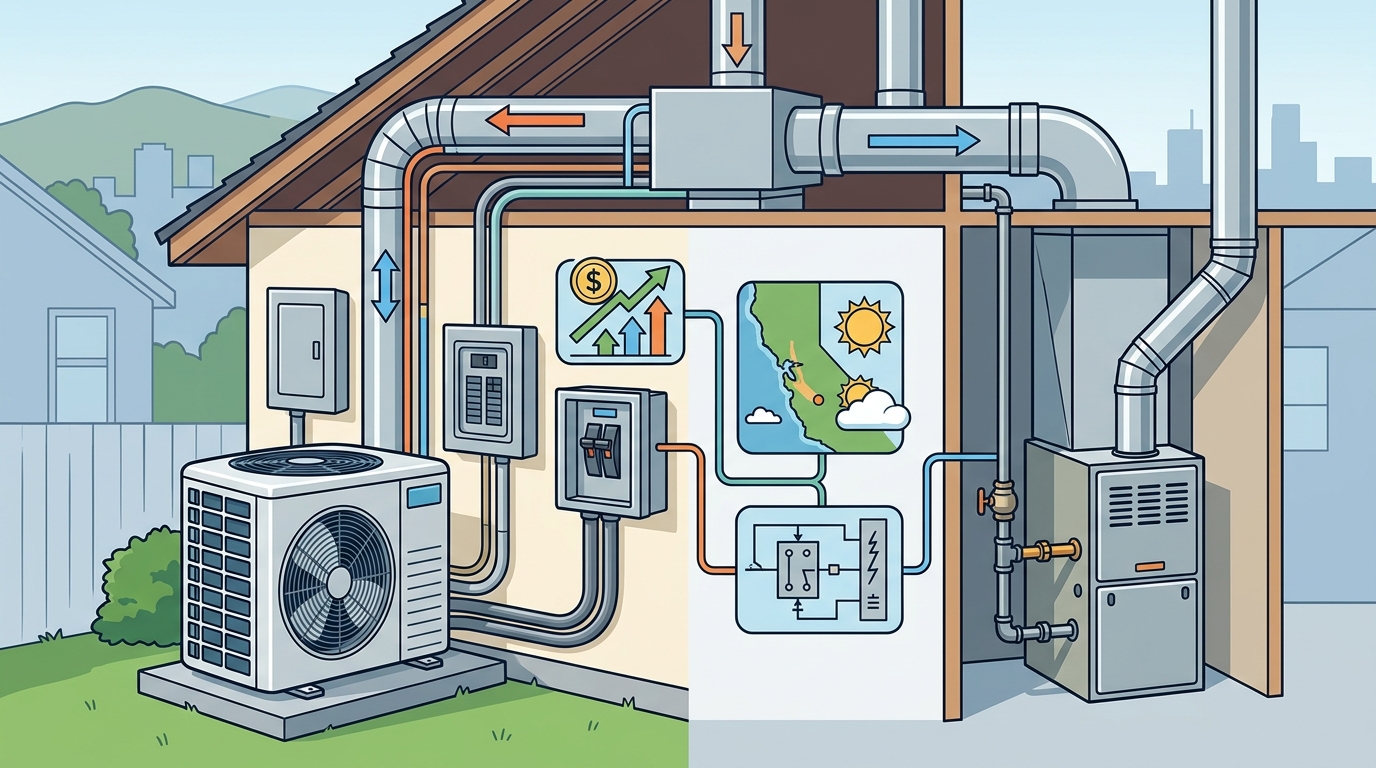
Comparing Operating Costs
While electricity rates in California are higher than in many other states, the efficiency of modern heat pumps often offsets this difference. For homes that already use electric air conditioning, a heat pump can serve as both the heating and cooling system, eliminating the need for a separate furnace. This consolidation reduces maintenance costs and simplifies your home's mechanical systems. Over a 15-year lifespan, the savings on energy bills can be substantial, especially when paired with time-of-use rate optimization.
Rebates and Incentives
California offers various rebates and incentives for installing high-efficiency heat pumps. These programs can significantly reduce the upfront cost of the equipment and installation. Air Sharks can help you identify eligible incentives and ensure that your installation meets all program requirements. By maximizing these financial benefits, you can accelerate the return on investment for your new heating system.
| Feature | Gas Furnace | Heat Pump |
|---|---|---|
| Primary Fuel | Natural Gas | Electricity |
| Efficiency Metric | AFUE (80-98%) | COP / HSPF |
| Heating Method | Combustion | Heat Transfer |
| Cooling Capability | No (requires separate AC) | Yes (dual function) |
| Electrical Demand | Low | High |
Electrical Panel Requirements
Dedicated Circuits and Breakers
Your electrical panel must have available space for a new breaker dedicated to the heat pump. If your panel is full, you may need to add a sub-panel or replace the main panel entirely. The breaker size must match the manufacturer's specifications for the heat pump. Using an undersized breaker can lead to frequent tripping, while an oversized breaker can pose a fire risk. Air Sharks ensures that all electrical connections are made in compliance with local codes and manufacturer guidelines.
Voltage and Phase Considerations
Most residential homes in San Jose use single-phase 240-volt power. However, some larger heat pumps or commercial-grade units may require three-phase power. It is essential to verify your home's electrical service type before selecting a heat pump. If your home has a 100-amp service, you may need to upgrade to 200 amps to accommodate the heat pump and your existing loads. This upgrade involves replacing the main breaker, service entrance conductors, and potentially the meter base. Working with a licensed professional ensures that these upgrades are performed safely and correctly.
Key Takeaways
- A heat pump is an electrically driven device that moves heat, offering higher efficiency than gas furnaces in mild climates like San Jose.
- Older homes with 100-amp panels may require a 200-amp upgrade to safely support a modern heat pump.
- Heat pumps can serve as both heating and cooling systems, consolidating your HVAC needs into one unit.
- Energy cost savings depend on local electricity rates, but high-efficiency heat pumps often offset higher rates with superior COP ratings.
- California offers rebates and incentives that can reduce the upfront cost of heat pump installation.
- A dedicated circuit with the correct breaker size is mandatory for heat pump safety and performance.
- Consulting with a licensed HVAC professional like Air Sharks ensures your electrical infrastructure is ready for the new system.
- Panel upgrades are a one-time investment that increases your home's electrical capacity and future-proofing.
Frequently Asked Questions
Can I install a heat pump without upgrading my electrical panel?
It depends on your current electrical load. If your 100-amp panel has sufficient capacity and available breaker space, you may not need an upgrade. However, many homes require a 200-amp panel to safely support a heat pump alongside other appliances. A professional assessment is necessary to determine your specific needs.
How much does a heat pump cost in San Jose?
The cost varies based on the size of the unit, the complexity of the installation, and any required electrical upgrades. While the upfront cost is higher than a gas furnace, the long-term energy savings and rebates can offset the initial investment. Air Sharks provides free estimates to help you understand the total cost.
Do heat pumps work well in San Jose winters?
Yes, San Jose's mild winters are ideal for heat pumps. The climate rarely drops to extreme lows, allowing heat pumps to operate efficiently year-round. Modern cold-climate heat pumps can even handle colder temperatures, making them a reliable choice for the Bay Area.
What is the difference between a heat pump and a furnace?
A furnace generates heat through combustion, while a heat pump moves heat from outside to inside. Furnaces require gas lines and venting, whereas heat pumps require electrical connections. Heat pumps can also provide cooling, making them a dual-function system.
How long does a heat pump last?
With proper maintenance, a heat pump can last 15 to 20 years. Regular tune-ups and filter changes help extend the lifespan of the system. Air Sharks offers maintenance plans to ensure your system operates at peak efficiency.
Are there rebates for heat pumps in California?
Yes, California offers various rebates and incentives for installing high-efficiency heat pumps. These programs can significantly reduce the upfront cost. Air Sharks can help you identify and apply for eligible incentives.
Do I need a new air conditioning system if I install a heat pump?
No, a heat pump can serve as both your heating and cooling system. This consolidation eliminates the need for a separate furnace and air conditioner, simplifying your home's mechanical systems and reducing maintenance costs.
How do I know if my home is ready for a heat pump?
A professional assessment of your electrical panel, ductwork, and insulation will determine if your home is ready for a heat pump. Air Sharks can perform a comprehensive evaluation to ensure a successful installation.
Conclusion
Deciding between a heat pump and a furnace in San Jose requires a careful evaluation of your home's electrical infrastructure and long-term energy goals. A heat pump offers superior efficiency and dual-function capability, but it demands a robust electrical panel. By understanding the necessary upgrades and potential savings, you can make an informed decision that enhances your home's comfort and value. Air Sharks is your trusted partner in navigating this transition, providing expert guidance and reliable installation services tailored to the San Jose climate.