

Who Installs Heat Pumps in San Jose?
Homeowners in San Jose can install heat pumps through licensed HVAC contractors like Air Sharks. These professionals hold the required state credentials to handle electrical, refrigerant, and mechanical work safely. This guide covers how to verify contractor licenses, the specific types of heat pumps suitable for the Bay Area, and the critical steps to ensure a compliant and efficient installation.
Licensed HVAC Contractors in San Jose
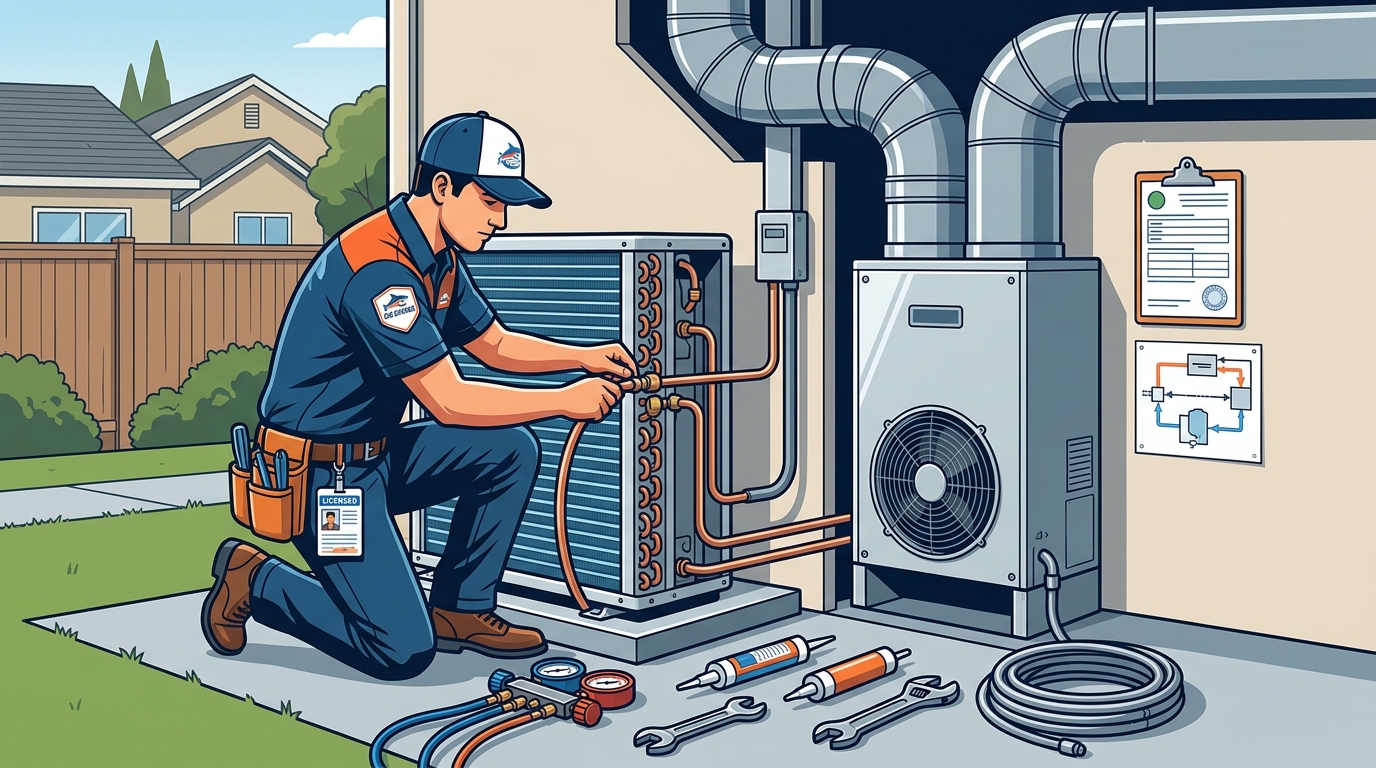
Installing a heat pump is a complex mechanical and electrical project that requires specialized training. In California, only licensed professionals can perform work involving refrigerants and high-voltage connections. A licensed HVAC contractor is a business or individual authorized by the state to design, install, and repair heating and cooling systems. These contractors must pass rigorous exams and maintain specific insurance coverage to operate legally.
The Role of the C-36 License
The primary credential for heat pump installation is the C-36 HVACR contractor license. This license specifically covers heating, ventilation, air conditioning, and refrigeration. Contractors holding this license are trained in the physics of heat transfer, electrical load calculations, and refrigerant handling. They understand how to size a unit correctly for a specific home, which is critical for efficiency. An improperly sized unit will short-cycle or fail to reach the desired temperature, leading to higher energy bills and premature equipment failure.
Why Local Expertise Matters
Insurance and Liability
Reputable contractors carry general liability insurance and workers' compensation. This protects your home and your family from accidents during the installation process. If a technician drops a heavy unit or causes water damage, the contractor's insurance should cover the repair costs. Always ask for a certificate of insurance before signing a contract. This step is non-negotiable for any professional service provider. It demonstrates that the business is established and takes its legal obligations seriously.
Heat Pump Types for San Jose Homes
Heat pumps are versatile systems that can provide both heating and cooling. They work by moving heat rather than generating it, which makes them highly efficient. Understanding the different types of heat pumps helps you choose the right system for your home's layout and energy goals. The most common options for residential use are air-source and mini-split systems.
Air-Source Heat Pumps
An air-source heat pump is a system that extracts heat from the outdoor air to warm your home in the winter and removes heat from indoors to cool it in the summer. These systems are the most common type of heat pump installed in California. They are generally more affordable to install than ground-source systems. In San Jose, air-source heat pumps perform well because the winters are mild. The outdoor temperature rarely drops low enough to significantly reduce the efficiency of these units. They are an excellent choice for homeowners looking to replace a traditional furnace and air conditioner with a single, efficient system.
Mini-Split Heat Pumps
A mini-split heat pump is a ductless system that consists of an outdoor compressor unit and one or more indoor air handlers. These systems are ideal for homes without existing ductwork or for adding cooling to specific rooms. They offer zone control, allowing you to set different temperatures in different areas of the house. This feature can lead to significant energy savings because you are not heating or cooling unoccupied rooms. Mini-splits are also quieter than central systems and can be installed with minimal disruption to your home's structure. They are a popular choice for home additions and older homes where installing ductwork would be too expensive or invasive.
Comparison of Heat Pump Types
| Feature | Air-Source Central | Mini-Split Ductless |
|---|---|---|
| Ductwork Required | Yes | No |
| Zone Control | Limited | Full |
| Installation Complexity | High | Moderate |
| Best For | Whole-home comfort | Specific rooms or no ducts |
Contractor Licensing Verification
Verifying a contractor's license is the most important step in protecting your investment. California maintains a public database of licensed contractors that anyone can access. This process is quick and free, and it provides critical information about the contractor's legal status and history.
How to Check a License
You can verify a contractor's license through the California Contractors State License Board (CSLB) website. Enter the contractor's license number to view their current status. The database shows whether the license is active, suspended, or revoked. It also lists the specific classifications the contractor holds, such as C-36 for HVAC. If the license is not active, do not hire that contractor. An active license means the contractor is in good standing with the state and has paid the required fees.
Checking for Complaints and Disciplinary Actions
The CSLB database also provides a history of complaints and disciplinary actions. Review this information carefully. A few minor complaints may be normal for any business, but a pattern of serious violations is a red flag. Look for issues related to unpermitted work, failure to pay subcontractors, or poor workmanship. If you see significant problems, consider choosing a different provider. This due diligence helps you avoid potential legal and financial headaches down the road.
Why Air Sharks Prioritizes Compliance
Air Sharks operates with a full C-36 license and maintains strict compliance with all state and local regulations. Their team is committed to transparency and professionalism. By choosing a licensed provider, you ensure that your installation meets all safety codes and qualifies for any available utility rebates. Unlicensed work can result in fines and may void your equipment warranty. Always ask for the license number and verify it yourself before signing any agreement. This simple step gives you peace of mind and protects your home.
Key Takeaways
- Only licensed C-36 contractors can legally install heat pumps in California.
- Air-source heat pumps are the most common choice for San Jose homes due to the mild climate.
- Mini-split systems offer zone control and are ideal for homes without ductwork.
- Always verify a contractor's license status through the CSLB database.
- Check for a history of complaints and disciplinary actions before hiring.
- Ensure the contractor carries general liability and workers' compensation insurance.
- Local expertise is crucial for proper system sizing and code compliance.
- A professional assessment helps determine the best heat pump type for your home.
Frequently Asked Questions
What license do I need to install a heat pump in California?
You need a C-36 HVACR contractor license. This license specifically authorizes the installation and repair of heating, ventilation, air conditioning, and refrigeration systems. It is the standard requirement for all heat pump installations in the state.
Are heat pumps efficient in San Jose winters?
Yes, heat pumps are highly efficient in San Jose. The mild winter temperatures mean that air-source heat pumps do not lose significant efficiency. They can provide reliable heating without the need for supplemental electric resistance heat, which is less efficient.
How do I verify a contractor's license?
You can verify a license through the California Contractors State License Board (CSLB) website. Enter the license number to check the status, classifications, and complaint history. This is a free and public resource that every homeowner should use.
What is the difference between a central and mini-split heat pump?
Do I need a permit to install a heat pump?
Yes, most heat pump installations require a building permit. A licensed contractor will typically handle the permit process on your behalf. This ensures that the installation meets all local building codes and safety standards. Unpermitted work can cause issues when selling your home.
Can I install a heat pump myself?
No, you cannot legally install a heat pump yourself in California. The work involves high-voltage electrical connections and refrigerant handling, which require a licensed professional. Attempting to do this work without a license is illegal and can be dangerous.
How long does a heat pump installation take?
Installation time varies depending on the type of system and the complexity of the job. A central system replacement may take one to two days. A mini-split installation can often be completed in a single day. A professional assessment will provide a more accurate timeline for your specific project.
What should I look for in a heat pump contractor?
Look for a contractor with a valid C-36 license, positive reviews, and proof of insurance. They should provide a detailed written estimate and explain the process clearly. A reputable contractor will also offer a warranty on both the equipment and their labor.
Conclusion
Choosing the right contractor is the most critical step in your heat pump installation. By verifying licenses and understanding the different system types, you can make an informed decision that protects your home and your investment. Air Sharks provides the expertise and local knowledge needed to ensure a successful installation in San Jose. Their commitment to compliance and customer satisfaction makes them a reliable partner for your HVAC needs. For more information on our services, you can visit our website or schedule a service visit today.