

Homeowners in San Jose often face the critical decision of whether to repair or replace their HVAC ductwork. This guide answers who performs these services and what the costs typically entail. We cover the full lifecycle of ductwork, from initial inspection to long-term maintenance, providing a clear roadmap for making informed decisions about your home's air distribution system.
How to Choose a Provider
Selecting the right contractor is the first step in ensuring a successful ductwork project. A reputable HVAC company in San Jose should demonstrate deep local knowledge and technical expertise. Look for providers who specialize in both heating and cooling systems, as ductwork is integral to both functions. Air Sharks is a Diamond Certified HVAC company serving the San Jose area, providing superior service and full solutions for heating and cooling needs. This certification indicates a commitment to quality and customer satisfaction that goes beyond basic licensing.
Experience and Specialization
Not all HVAC companies treat ductwork with the same level of care. Some view it as an afterthought, while others recognize it as the backbone of indoor air quality. A good provider will have specific experience with the types of ductwork common in San Jose homes, including both older galvanized steel and newer flexible ducting. They should be able to explain the pros and cons of each material in the context of your specific home layout. For additional details, review the Terms Of Use Air.
Reputation and Reviews
Check online reviews and ask for references from recent clients. Pay attention to comments about communication, punctuality, and the cleanliness of the work site. A professional team will respect your home and leave the area as they found it, if not better. Consistent positive feedback regarding their ability to diagnose issues accurately is a strong indicator of technical competence. For additional details, review the Air Conditioning Repair San.
What to Ask Before Committing
Before signing any contract, you need to ask specific questions to gauge the provider's expertise and transparency. These questions help you understand the scope of work and the potential outcomes. Do not be afraid to ask for detailed explanations; a trustworthy contractor will welcome the opportunity to educate you.
Diagnostic Questions
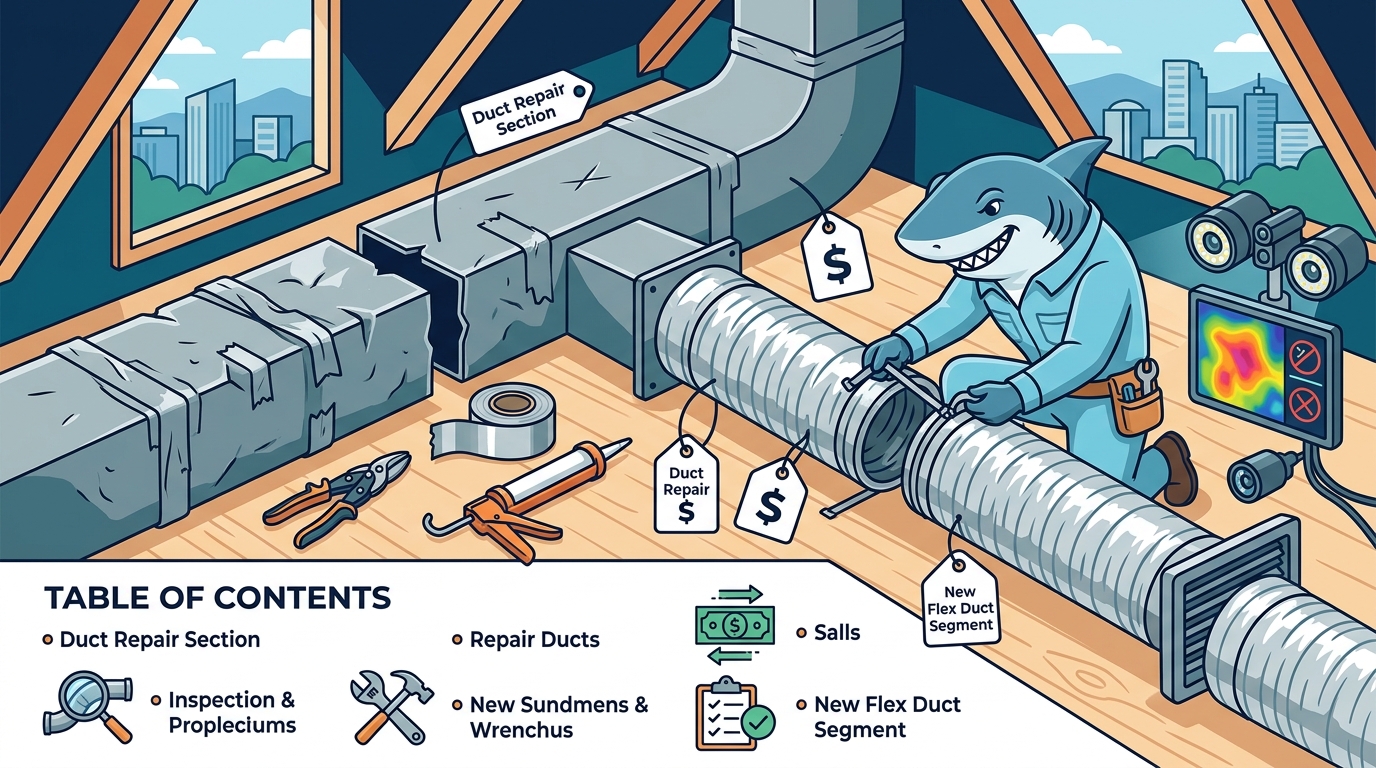
Ask how they diagnose ductwork issues. Do they use thermal imaging, smoke pencils, or airflow measurements? A thorough diagnostic process is essential for identifying hidden leaks or blockages. Ask if they perform a Manual J load calculation to determine if your current system is properly sized for your home. This calculation is critical for ensuring that any new ductwork will function efficiently.
Scope and Timeline
Inquire about the specific steps involved in the repair or replacement. Ask for a detailed timeline, including how long the project will take and what days of the week work will occur. Clarify what is included in the quote. Does it cover disposal of old materials? Is there a warranty on the workmanship? Understanding these details upfront prevents surprises later.
How to Verify Credentials
Verifying a contractor's credentials is a crucial step in protecting your investment. In California, HVAC contractors must be licensed by the Contractors State License Board (CSLB). You can verify a license online to ensure it is active and in good standing. Additionally, look for industry certifications that demonstrate ongoing training and adherence to best practices.
Licensing and Insurance
Always request a copy of the contractor's license and proof of insurance. General liability insurance protects your property from damage during the project, while workers' compensation covers injuries to their employees. Never hire an unlicensed contractor, as this can lead to legal issues and voided warranties. The CSLB website allows you to search for licensed contractors and view any complaints or disciplinary actions.
Certifications and Training
Look for certifications from recognized bodies such as NATE (North American Technician Excellence) or EPA Section 608 certification for handling refrigerants. These certifications indicate that the technicians have passed rigorous exams and stay current with industry standards. A company that invests in its technicians' education is more likely to provide high-quality service.
The Process: How It Works
Understanding the workflow of a ductwork project helps you prepare your home and manage expectations. The process typically begins with a comprehensive inspection, followed by a detailed proposal. Once approved, the work proceeds in a structured sequence to minimize disruption.
Inspection and Assessment
The technician will inspect the visible ductwork and use tools to detect hidden issues. They will check for leaks, disconnections, and insulation problems. They will also assess the condition of the air handler and blower motor, as these components interact directly with the ducts. This assessment forms the basis of the repair or replacement plan.
Execution and Installation
If replacement is needed, the old ductwork is carefully removed. New ducts are then measured, cut, and installed. Sealing is a critical step, using mastic or specialized tape to ensure airtight connections. The system is then tested for airflow and balance to ensure even distribution throughout the home. This phase can take anywhere from a few days to a week, depending on the complexity.
Cost Factors and Estimates
The cost of ductwork repair or replacement in San Jose varies widely based on several factors. Understanding these drivers helps you budget accurately and avoid unexpected expenses. Prices can range from a few hundred dollars for minor repairs to several thousand for a full system replacement.
Repair Costs
Replacement Costs
Common Mistakes to Avoid
Homeowners often make mistakes that can compromise the effectiveness of their ductwork. Avoiding these pitfalls ensures that your investment delivers the expected benefits. Being proactive and informed is key to a successful project.
Ignoring Small Issues
One common mistake is ignoring minor leaks or noise. Small issues can worsen over time, leading to more expensive repairs. Regular maintenance and prompt attention to problems can save money in the long run. Do not wait until the system fails completely to address ductwork concerns.
Choosing the Cheapest Bid
Selecting a contractor solely based on price can lead to poor quality work. Low bids may indicate the use of inferior materials or a lack of experience. Always compare the scope of work in each bid, not just the total price. A slightly higher bid from a reputable provider is often a better value than a low bid from an unqualified contractor.
Repair vs. Replacement
Deciding between repair and replacement depends on the condition of your existing ductwork and your long-term goals. A comparison of the two options helps you make an informed choice.
| Factor | Repair | Replacement |
|---|---|---|
| Cost | Lower upfront cost | Higher upfront cost |
| Lifespan | Extends life of existing system | New system with full lifespan |
| Efficiency | May improve slightly | Significant efficiency gains |
| Disruption | Minimal | More invasive |
| Best For | Minor leaks, localized damage | Old, corroded, or poorly designed systems |
Repair is ideal when the ductwork is in generally good condition and only has isolated issues. Replacement is recommended when the ducts are old, corroded, or poorly designed, leading to significant energy waste and comfort problems. A professional assessment can help you determine which option is best for your home.
Specific Scenarios
Different home situations require different approaches to ductwork. Understanding how your specific scenario affects the project helps you prepare better.
Older Homes
Older homes in San Jose often have galvanized steel ducts that may be corroded. These ducts can be difficult to repair and may require replacement. Additionally, older homes may lack proper insulation in the ducts, leading to energy loss. Upgrading to insulated, sealed ducts can significantly improve comfort and efficiency.
New Construction
In new construction, ductwork design is critical for ensuring proper airflow and comfort. Working with the HVAC contractor during the design phase allows for optimal duct sizing and placement. This proactive approach prevents common issues such as uneven cooling or heating. Proper design also allows for future modifications if needed.
Rules and Protections
Understanding the rules and protections that apply to HVAC work helps you navigate the process with confidence. California has specific regulations governing HVAC installations and modifications.
Building Codes
All HVAC work must comply with local building codes and the California Mechanical Code. These codes ensure that installations are safe and efficient. Permits may be required for certain types of work, and inspections may be conducted to verify compliance. A reputable contractor will handle the permitting process for you.
Consumer Protections
As a consumer, you have the right to a clear, written contract that outlines the scope of work, costs, and timeline. You also have the right to a warranty on the workmanship and materials. Ensure that all promises are documented in writing. If issues arise, you can refer to the contract and warranty terms to resolve them.
San Jose Local Specifics
San Jose's climate and housing stock present unique challenges for ductwork. The mild winters and hot summers mean that cooling is the primary load for most of the year. This places significant demand on the ductwork, making leaks and inefficiencies more noticeable.
Climate Impact
The dry climate in San Jose can cause dust and debris to accumulate in ducts, affecting air quality. Regular cleaning and maintenance are essential to keep the system running smoothly. Additionally, the temperature swings between day and night can cause thermal expansion and contraction in ducts, potentially leading to leaks over time.
Housing Stock
San Jose has a mix of older and newer homes. Older homes may have outdated ductwork that does not meet current efficiency standards. Newer homes are more likely to have modern, efficient duct systems. Understanding the specific characteristics of your home helps you make the right decisions about repair or replacement.
Timing Your Project
Timing can significantly impact the cost and convenience of your ductwork project. Scheduling work during off-peak seasons can often result in lower prices and faster service.
Seasonal Considerations
Spring and fall are ideal times for ductwork projects. The weather is mild, making it easier to work and test the system. Demand for HVAC services is lower during these months, which can lead to better availability and pricing. Avoid scheduling major work during the peak of summer or winter, when demand is highest and prices may be higher.
Urgency
If you have an urgent issue, such as a major leak or system failure, you may need to act immediately. In these cases, prioritize finding a reliable provider who can respond quickly. While emergency service may cost more, it is necessary to restore comfort and prevent further damage.
Long-Term Results
Energy Efficiency
Sealed and insulated ducts reduce energy loss, leading to lower utility bills. Studies have shown that duct leaks can account for 20-30% of energy costs in cooling. By addressing these leaks, you can significantly reduce your energy consumption. This not only saves money but also reduces your environmental footprint.
Indoor Air Quality
Properly maintained ductwork improves indoor air quality by preventing the circulation of dust, allergens, and other contaminants. This is particularly important for individuals with allergies or respiratory conditions. Regular cleaning and sealing of ducts ensure that the air you breathe is clean and healthy.
Key Takeaways
- Choose a reputable, licensed HVAC contractor with local experience and positive reviews.
- Ask specific questions about diagnostics, scope, and timeline before committing.
- Verify credentials through the CSLB and look for industry certifications like NATE.
- Understand the process, from inspection to installation, to manage expectations.
- Costs vary widely; repairs are cheaper, while replacements are a larger investment.
- Avoid common mistakes like ignoring small issues or choosing the cheapest bid.
- Compare repair vs. replacement based on the condition of your existing ducts.
- Consider local climate and housing stock when planning your project.
- Time your project for off-peak seasons to save money and ensure availability.
- Expect long-term benefits in energy efficiency and indoor air quality.
Frequently Asked Questions
How much does ductwork repair cost in San Jose?
How much does full ductwork replacement cost?
How long does ductwork replacement take?
A full replacement project can take anywhere from a few days to a week, depending on the size of the home and the complexity of the layout.
Do I need a permit for ductwork work?
Yes, certain types of HVAC work require permits in San Jose. A reputable contractor will handle the permitting process for you, ensuring compliance with local building codes.
How often should I have my ducts cleaned?
It is generally recommended to have your ducts cleaned every 3 to 5 years, or more frequently if you have pets, smokers, or individuals with allergies in the home.
What is the difference between flexible and rigid ducts?
Can I repair ductwork myself?
Minor repairs, such as sealing small leaks, can be done by homeowners. However, complex repairs or replacements should be left to professional HVAC technicians to ensure safety and efficiency.
How do I know if my ducts need replacement?
Signs that your ducts may need replacement include visible corrosion, significant leaks, uneven cooling or heating, and high energy bills. A professional assessment can provide a definitive answer.