

How to Choose a Furnace
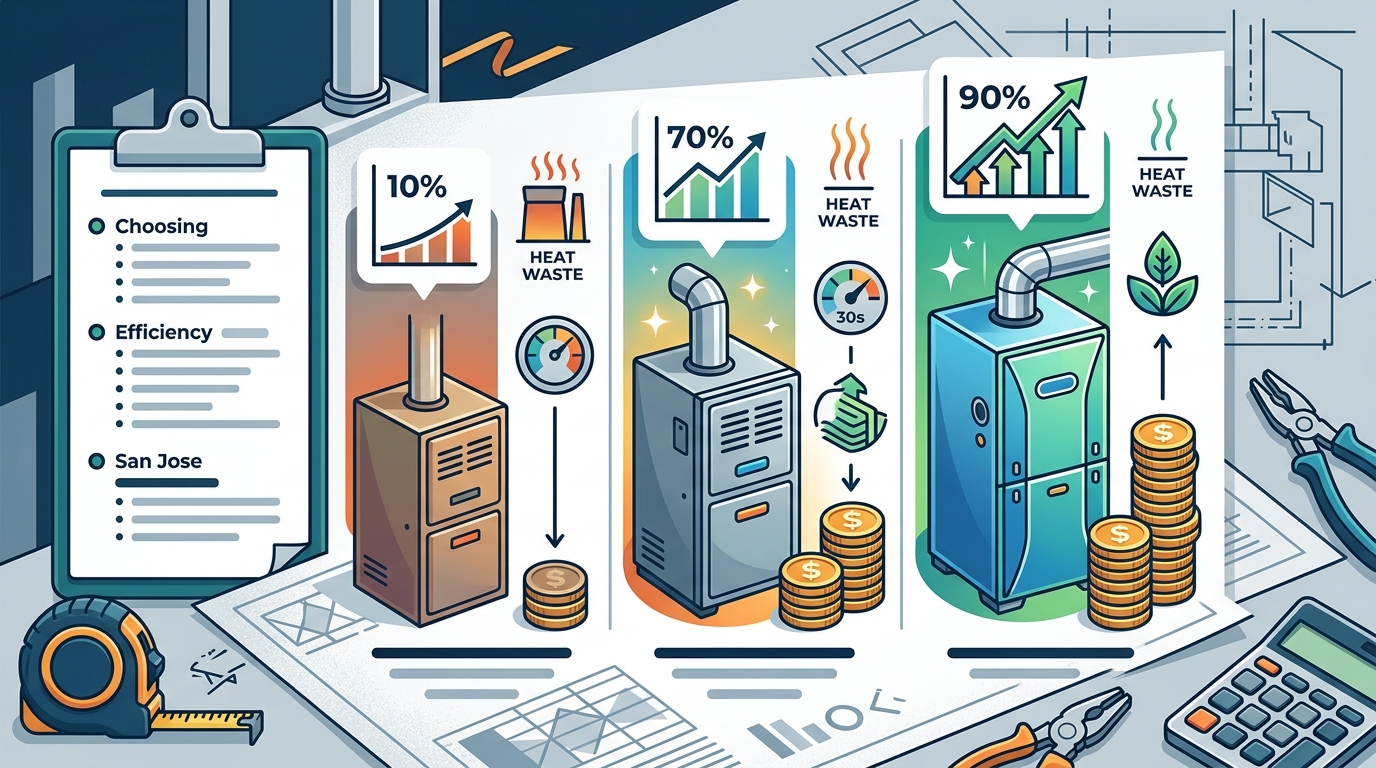
Choosing the right furnace requires balancing efficiency, capacity, and budget. A high-efficiency furnace is a system that converts fuel to heat with minimal waste, often exceeding 90% AFUE. In San Jose, where heating seasons are mild but winters can drop to the 30s, a mid-to-high efficiency unit is often the sweet spot. For additional details, review the Terms Of Use Air.
Efficiency Ratings
AFUE (Annual Fuel Utilization Efficiency) is the standard metric for gas furnace performance. Standard units range from 78% to 80% AFUE. High-efficiency condensing units range from 90% to 98% AFUE. The higher the rating, the lower your monthly gas bill, but the higher the upfront cost. For additional details, review the Privacy Policy Air Sharks.
Capacity Sizing
Proper sizing is critical. An oversized furnace is a unit that cycles on and off too frequently, leading to wear and tear. An undersized unit struggles to maintain temperature. A professional load calculation, often called a Manual J calculation, determines the exact BTU requirement for your home. For additional details, review the ASAP Membership Air Sharks.
Questions to Ask Before Committing
Before signing a contract, you must ask specific questions to ensure you are getting a fair deal. These questions help verify the scope of work and the expertise of the provider. For additional details, review the .
- What is the total installed price, including labor, permits, and disposal?
- Is the price fixed or an estimate?
- What warranty covers the unit and the labor?
- Do you perform a Manual J load calculation?
- What is the expected timeline for installation?
Verifying Credentials and Claims
Verifying a contractor's credentials is essential for safety and quality. A licensed HVAC contractor is a business authorized by the state to perform mechanical work. In California, you should verify the license number with the Contractors State License Board (CSLB). Additionally, check for manufacturer certifications, which indicate that the technicians have completed specific training for the brands they install.
The Installation Process
The replacement process follows a structured sequence to ensure safety and code compliance. The typical timeline for a standard replacement is one to two days.
- Assessment: Technicians inspect the existing system and ductwork.
- Proposal: You receive a detailed quote with options.
- Permitting: The contractor files the necessary permits with the city.
- Removal: The old unit is disconnected and removed.
- Installation: The new unit is placed, connected, and sealed.
- Testing: Technicians test for gas leaks, airflow, and safety controls.
Detailed Cost Breakdown
Understanding what drives the price helps you budget effectively. The cost of furnace replacement in San Jose varies based on several factors.
| Factor | Low End Cost | High End Cost | Notes |
|---|
Common Mistakes to Avoid
Homeowners often make errors that lead to poor performance or higher costs. Avoiding these mistakes ensures a successful installation.
- Ignoring Sizing: Buying a unit based on the old unit's size rather than a load calculation.
- Choosing the Cheapest Bid: Low bids often cut corners on labor or use inferior parts.
- Skipping Permits: Unpermitted work can cause insurance issues and safety hazards.
- Ignoring Ductwork: A new furnace cannot fix leaky or poorly designed ducts.
Furnace vs. Heat Pump
While gas furnaces are traditional, heat pumps are a growing alternative. A heat pump is a system that moves heat rather than generating it, offering higher efficiency in mild climates. In San Jose, heat pumps are increasingly popular due to lower operating costs and environmental benefits. However, they may struggle in extreme cold, though San Jose rarely experiences such conditions. Gas furnaces remain a reliable choice for consistent heating, especially if you already have gas lines installed.
Costs for Specific Home Types
The type of home affects the final price. Older homes in San Jose may require more extensive ductwork modifications. Newer builds often have better-insulated ducts, reducing costs. If you are replacing a furnace in a home with a complex layout, expect higher labor costs due to the difficulty of accessing the unit.
Regulations and Consumer Protections
California has strict regulations for HVAC work. The California Energy Commission (CEC) mandates minimum efficiency standards for new equipment. Additionally, local building codes require permits for furnace replacement. Consumers are protected by state laws that require contractors to provide written estimates and warranties. Always request a written contract that outlines the scope of work, price, and warranty terms.
San Jose Local Factors
San Jose has unique factors that influence furnace replacement. The city's climate is mild, meaning heating is needed for only a few months a year. This affects the choice of efficiency rating. Additionally, San Jose has specific permitting requirements and local utility incentives. Air Sharks is familiar with these local nuances, ensuring compliance and optimal performance for your specific neighborhood.
When to Replace Your Furnace
Timing your replacement can save money and stress. The best time to replace a furnace is in the spring or fall, when demand is lower. This allows for better scheduling and potentially lower prices. If your furnace is over 15 years old, it is approaching the end of its typical lifespan. Regular maintenance can extend its life, but eventually, replacement is necessary.
Long-Term Performance
A well-installed furnace should last 15 to 20 years. High-efficiency units can save 20% to 30% on heating costs compared to older models. Regular maintenance, such as annual filter changes and tune-ups, ensures the system operates at peak efficiency. Monitoring your energy bills after installation helps verify that the new system is performing as expected.
Key Takeaways
- High-efficiency units cost more upfront but save money long-term.
- Always request a Manual J load calculation for proper sizing.
- Verify contractor licenses with the CSLB.
- Permits are required for all furnace replacements in California.
- Heat pumps are a viable alternative in San Jose's mild climate.
- Spring and fall are the best times for installation.
- Regular maintenance extends the life of your new system.
Frequently Asked Questions
How much does it cost to replace a furnace in San Jose?
What is the difference between a standard and high-efficiency furnace?
Standard furnaces have an AFUE of 78-80%, while high-efficiency models have an AFUE of 90% or higher, resulting in lower energy bills.
Do I need a permit to replace my furnace?
Yes, California requires permits for all HVAC work. A licensed contractor will handle the permitting process for you.
How long does furnace installation take?
Most installations take one to two days, depending on the complexity of the job and any required modifications.
Should I choose a gas furnace or a heat pump?
Gas furnaces are reliable and cost-effective for heating. Heat pumps are more efficient and environmentally friendly, especially in mild climates like San Jose.
How do I know if my furnace needs to be replaced?
If your furnace is over 15 years old, requires frequent repairs, or has rising energy bills, it is time to consider replacement.