

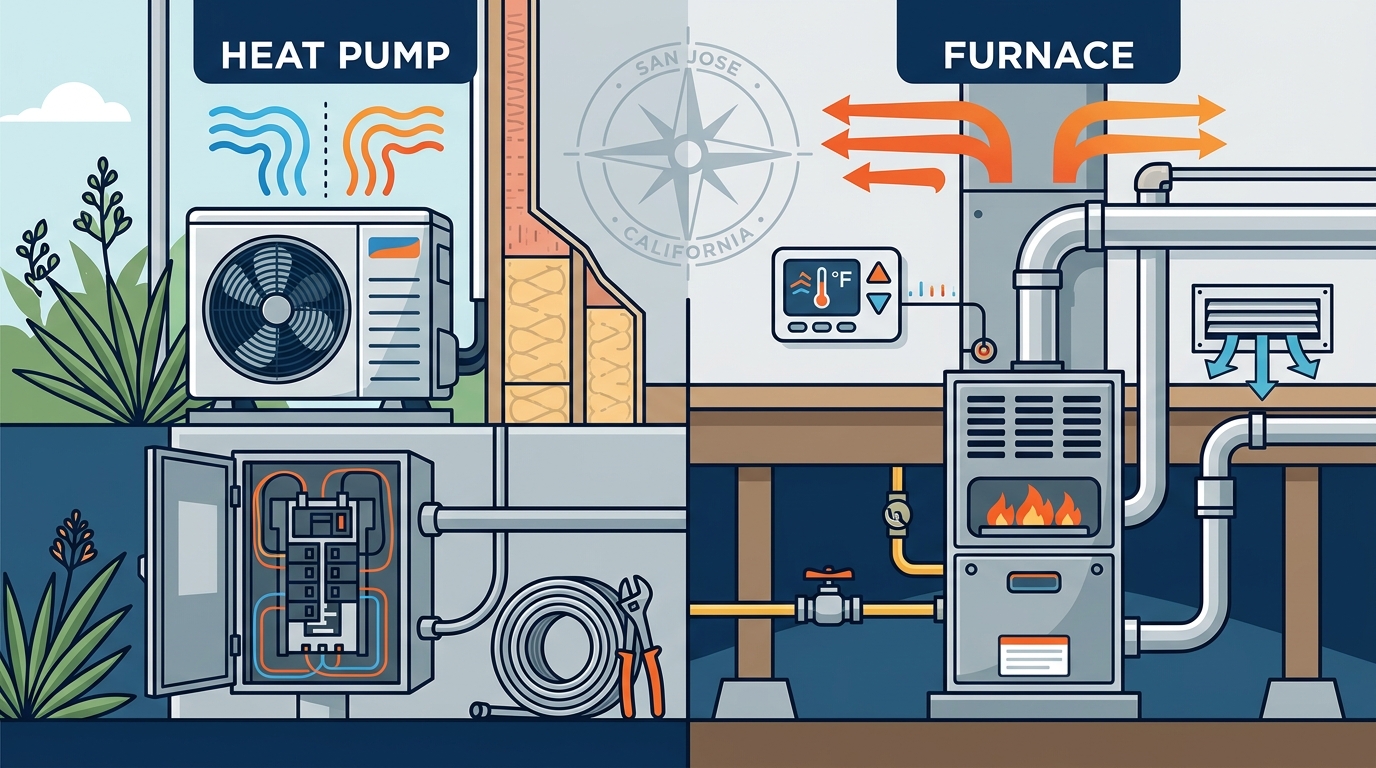
Choosing between a heat pump and a furnace in San Jose depends on your home's electrical capacity, insulation, and long-term energy goals. A heat pump is generally more efficient for cooling and heating in mild climates, while a furnace excels in extreme cold. This guide covers the critical electrical panel upgrades required for heat pumps, compares efficiency metrics, and helps you decide the best fit for your San Jose home. For additional details, review the Terms Of Use Air.
Electrical Panel Upgrades for Heat Pumps
Assessing Your Current Load
Before selecting a heat pump, a professional assessment of your electrical panel is essential. You must determine if your main breaker and branch circuits can handle the startup surge and continuous operation of the new unit. If your panel is near its capacity limit, adding a heat pump could trip breakers or create a fire hazard. An electrician or HVAC technician can perform a load calculation to verify if your existing infrastructure is sufficient. For additional details, review the Customer Experience.
The Upgrade Process
If an upgrade is necessary, it typically involves replacing the main service panel with a 200-amp unit. This process also allows for the addition of dedicated circuits for the heat pump, ensuring safe and efficient operation. While this adds to the initial project cost, it is a critical safety step that also increases your home's capacity for future electric appliances, such as electric vehicle chargers or induction cooktops. Air Sharks coordinates with licensed electricians to ensure that any electrical upgrades are performed to code and integrated seamlessly with the HVAC installation.
Efficiency Comparison: Heat Pumps vs Furnaces
Understanding the efficiency metrics of both systems is key to making an informed decision. A furnace is a combustion device that burns fuel, such as natural gas or propane, to generate heat. Its efficiency is measured by Annual Fuel Utilization Efficiency (AFUE), which indicates the percentage of fuel converted into heat. Modern high-efficiency furnaces can achieve AFUE ratings of 90% to 98%.
In contrast, a heat pump is a heat transfer device that moves thermal energy from one place to another. Its efficiency is measured by the Coefficient of Performance (COP) or Heating Seasonal Performance Factor (HSPF). A heat pump with a COP of 3.0 produces three units of heat for every one unit of electricity consumed. This means that, in terms of energy conversion, heat pumps are inherently more efficient than furnaces, especially in moderate temperatures.
| Primary Energy Source | Electricity | Natural Gas or Propane |
| Efficiency Metric | COP / HSPF | AFUE |
| Heating Capability | Excellent in mild climates, degrades in extreme cold | Consistent in all temperatures |
| Cooling Capability | Yes (integrated) | No (requires separate AC) |
| Electrical Requirements | High (may require panel upgrade) | Low (standard 24V control) |
| Operating Cost (San Jose) | Lower (due to high efficiency) | Higher (fuel costs) |
San Jose Climate Considerations
San Jose's climate is classified as Mediterranean, characterized by mild, wet winters and hot, dry summers. This specific climate profile makes heat pumps an exceptionally strong candidate for residential heating and cooling. The average winter low in San Jose rarely drops below freezing, which is the temperature range where heat pump efficiency begins to decline significantly. In these mild conditions, a heat pump can operate at peak efficiency for the majority of the heating season.
However, microclimates within San Jose can vary. Homes in higher elevation areas or those with poor insulation may experience colder indoor temperatures. For these homes, a hybrid system, which combines a heat pump with a gas furnace backup, might be the optimal solution. This setup allows the heat pump to handle the majority of the heating load while the furnace kicks in only during the coldest days, ensuring comfort without sacrificing efficiency.
Cost Analysis and ROI
The initial cost of a heat pump is typically higher than that of a standard furnace. However, the long-term return on investment (ROI) often favors heat pumps due to lower operating costs. In San Jose, where electricity rates are relatively stable and natural gas prices can fluctuate, the efficiency advantage of a heat pump can lead to significant savings over the system's lifespan. Additionally, heat pumps provide both heating and cooling, eliminating the need for a separate air conditioning unit, which further reduces upfront costs.
When evaluating cost, consider the total installed price, including any necessary electrical upgrades. While a panel upgrade adds to the initial expense, it is a one-time investment that enhances your home's electrical infrastructure. Over a 10 to 15-year period, the energy savings from a heat pump can offset the higher initial cost, particularly if you take advantage of available rebates or incentives for high-efficiency equipment. Air Sharks provides detailed cost estimates that factor in equipment, installation, and any required electrical work, ensuring transparency in your budget planning.
Key Takeaways
- Heat pumps are more efficient than furnaces in mild climates like San Jose.
- Furnaces offer consistent heating in extreme cold but lack cooling capability.
- Hybrid systems combine the benefits of both heat pumps and furnaces.
- Long-term energy savings often offset the higher initial cost of heat pumps.
- Professional assessment of your home's electrical load is critical before installation.
- San Jose's Mediterranean climate is ideal for heat pump performance.
Frequently Asked Questions
Do I need to upgrade my electrical panel for a heat pump?
Are heat pumps efficient in San Jose winters?
Yes, San Jose's mild winters are ideal for heat pumps. Since temperatures rarely drop below freezing, heat pumps can operate at high efficiency throughout the heating season.
Can a heat pump replace both my furnace and AC?
Yes, a heat pump provides both heating and cooling, eliminating the need for separate systems. This can simplify your HVAC setup and reduce overall costs.
What is the difference between AFUE and COP?
AFUE measures the efficiency of combustion-based systems like furnaces, while COP measures the efficiency of heat pumps by comparing heat output to electrical input. A COP of 3.0 means the heat pump produces three units of heat for every unit of electricity used.
How much does a heat pump cost in San Jose?
Costs vary based on system size, efficiency, and installation complexity. Including any necessary electrical upgrades, the total installed cost can be higher than a furnace but is often offset by long-term energy savings.
Is a hybrid system a good option?
A hybrid system, which combines a heat pump with a gas furnace, is an excellent option for homes that experience occasional cold snaps. It allows the heat pump to handle most of the heating load while the furnace provides backup during extreme cold.
Conclusion
Deciding between a heat pump and a furnace in San Jose requires a careful evaluation of your home's electrical infrastructure, climate, and long-term energy goals. While furnaces offer reliable heating in all conditions, heat pumps provide superior efficiency and dual heating/cooling capabilities that are well-suited to San Jose's mild climate. The key to a successful installation is ensuring that your electrical panel can support the new system. By working with a trusted provider like Air Sharks, you can receive a comprehensive assessment of your home's needs, including any necessary electrical upgrades, and make an informed decision that balances comfort, efficiency, and cost. Whether you choose a standalone heat pump, a furnace, or a hybrid system, the right choice will enhance your home's comfort and reduce your energy bills for years to come.