
Choosing between a heat pump and a furnace in San Jose depends on your home's insulation, current fuel type, and long-term energy goals. A heat pump is a highly efficient electric device that moves heat rather than burning fuel, making it ideal for mild climates like the Bay Area. This guide covers the technical, financial, and practical factors you must evaluate before committing to a system replacement. We will analyze electrical requirements, efficiency metrics, and local climate impacts to help you make an informed decision. For additional details, review the Career Air Sharks.
Electrical Panel Upgrades and Capacity
Before selecting a heat pump, you must verify your home's electrical infrastructure. A heat pump is an electrically powered device that transfers thermal energy using a refrigerant cycle. Unlike gas furnaces, which rely on combustion and minimal electricity for controls, heat pumps draw significant power from your main service panel. In San Jose, many older homes have 100-amp or 150-amp panels that may not support a modern high-capacity heat pump alongside other major appliances.
Assessing Your Current Load
Your electrician or HVAC technician will perform a load calculation to determine if your panel has sufficient capacity. If your home already has an electric water heater, electric range, or EV charger, adding a heat pump may exceed the panel's rating. An upgrade to a 200-amp panel is a common requirement for new heat pump installations. This upgrade ensures safe operation and prevents tripped breakers during peak demand periods.
Service Panel Upgrades
Efficiency Metrics in the San Jose Climate
San Jose's mild winters make heat pumps exceptionally efficient. The Seasonal Energy Efficiency Ratio (SEER) measures cooling efficiency, while the Heating Seasonal Performance Factor (HSPF) measures heating efficiency. In the Bay Area, heat pumps often achieve HSPF ratings that far exceed the efficiency of standard gas furnaces. According to the U.S. Department of Energy, heat pumps can save households hundreds of dollars on energy costs by leveraging ambient outdoor air for heating.
Cooling and Heating in One Unit
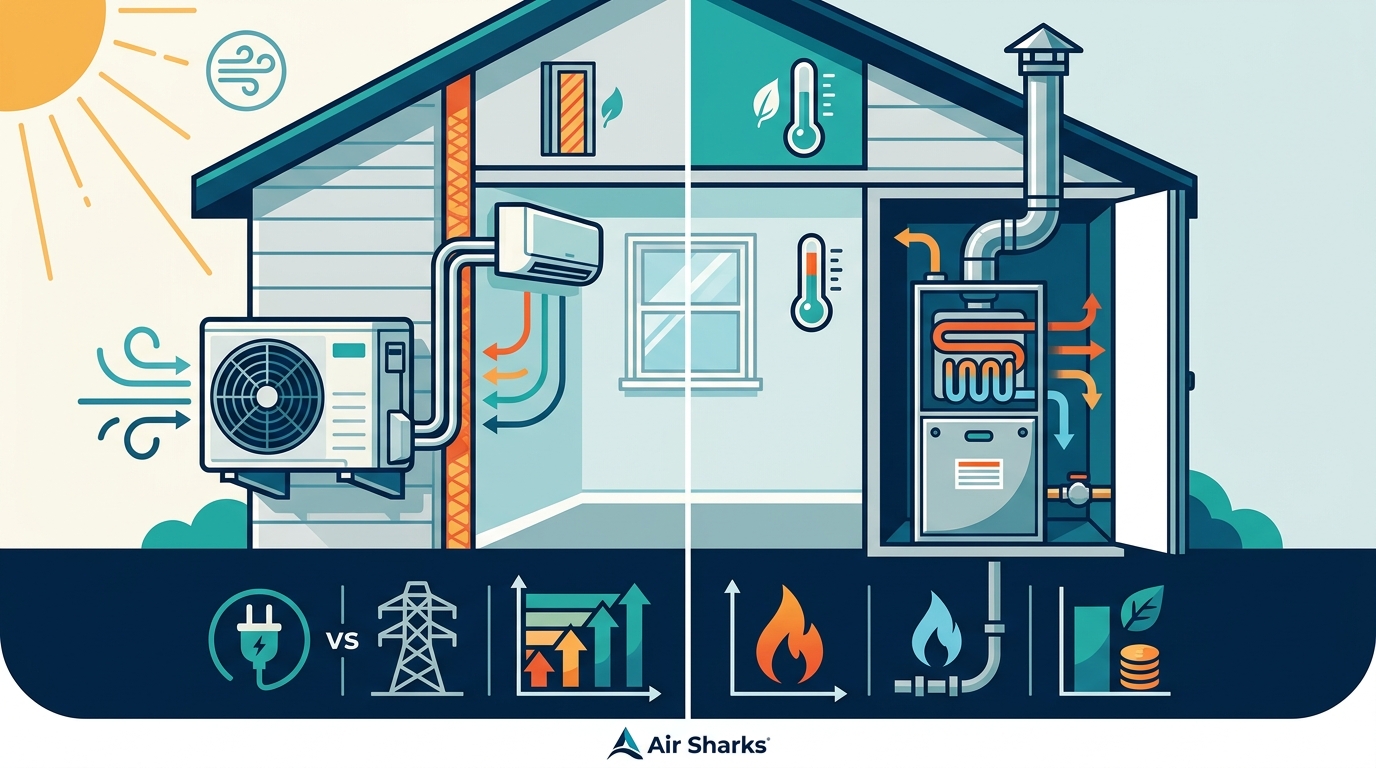
A heat pump is a dual-function system that provides both cooling and heating. In San Jose, where summer cooling is a primary need and winter heating is mild, a single system can handle both loads efficiently. This consolidation simplifies maintenance and reduces the footprint of equipment in your attic or garage. The efficiency advantage is most pronounced when replacing an older, less efficient gas furnace or electric resistance heater.
Local Climate Advantages
The Bay Area's climate allows heat pumps to operate at peak efficiency for most of the year. Unlike colder regions where heat pumps may struggle to extract heat from freezing air, San Jose's temperatures rarely drop low enough to significantly reduce heat pump performance. This makes the technology a natural fit for local homeowners seeking reliable comfort.
Cost Analysis: Installation vs. Long-Term Savings
Understanding the total cost of ownership is essential for your decision. A heat pump is an investment that typically has a higher upfront installation cost than a standard gas furnace. However, the long-term savings on energy bills can offset this initial expense. The U.S. Department of Energy notes that the right heat pump can save households hundreds of dollars or more across the country. In San Jose, these savings are often realized within a few years due to the high efficiency of the system.
Rebates and Incentives
Local and state incentives can significantly reduce the net cost of a heat pump. The Santa Clara County and Bay Area Regional Energy Network (BayREN) have been active in promoting clean heating. The County and BayREN have held training sessions for contractors on new heat pump technology and available rebates. Homeowners should check current utility programs for specific rebate amounts, which can vary by equipment type and efficiency rating.
Comparison of System Options
| Feature | Gas Furnace | Electric Heat Pump |
|---|---|---|
| Primary Fuel | Natural Gas | Electricity |
| Heating Efficiency | 80-98% AFUE | 200-300% HSPF |
| Cooling Capability | Requires separate AC | Built-in Cooling |
| Upfront Cost | Lower | Higher |
| Monthly Energy Cost | Variable (Gas Price) | Lower (High Efficiency) |
| Electrical Requirements | Standard | May require panel upgrade |
System Compatibility and Ductwork
Your existing ductwork plays a crucial role in determining the best system for your home. A heat pump is a forced-air system that relies on ducts to distribute conditioned air. If your home has existing ducts, a heat pump can often be installed with minimal modification. However, if your ducts are leaky or poorly insulated, the efficiency benefits of the heat pump will be diminished. Air Sharks performs comprehensive ductwork inspections to ensure your system is airtight and properly sized.
Ductless Mini-Splits as an Alternative
If your home lacks ductwork or has inefficient ducts, a ductless mini-split heat pump is a viable alternative. These systems provide zoned heating and cooling without the need for extensive duct installation. They are particularly effective in additions, garages, or rooms that are difficult to condition with a central system. Ductless systems offer high efficiency and precise temperature control for individual spaces.
Professional Assessment
A professional assessment is the best way to determine compatibility. Your HVAC technician will evaluate your home's insulation, duct condition, and electrical capacity. This holistic approach ensures that the system you choose will perform optimally for your specific living environment. Air Sharks provides detailed reports and digital photos to help you understand the condition of your current system.
Key Takeaways
- Heat pumps are highly efficient in San Jose's mild climate, often outperforming gas furnaces in heating efficiency.
- Electrical panel upgrades may be required to support a new heat pump, especially in older homes.
- Long-term energy savings can offset the higher upfront cost of a heat pump installation.
- Local rebates and incentives from Santa Clara County and utility providers can reduce net costs.
- Ductwork condition is critical; leaky ducts can negate the efficiency benefits of a heat pump.
- Ductless mini-splits are a strong alternative for homes without existing ductwork.
- Professional assessment by a licensed HVAC company ensures the right system for your home.
- Consolidating heating and cooling into one system simplifies maintenance and reduces equipment footprint.
Frequently Asked Questions
Is a heat pump more expensive than a furnace to install?
Yes, heat pumps typically have a higher upfront installation cost than standard gas furnaces. However, the long-term energy savings and potential rebates can make them more cost-effective over time.
Do I need to upgrade my electrical panel for a heat pump?
It depends on your current panel capacity and existing electrical loads. Many older homes in San Jose may require an upgrade to a 200-amp panel to safely support a heat pump.
Can a heat pump heat my home in San Jose winters?
Yes, San Jose's mild winters are ideal for heat pumps. The system can efficiently extract heat from the outdoor air even when temperatures drop, providing reliable comfort.
What are the benefits of a ductless mini-split system?
Ductless mini-splits offer zoned temperature control, high efficiency, and no need for ductwork. They are ideal for homes without existing ducts or for conditioning specific rooms.
Are there rebates for heat pump installation in Santa Clara County?
Yes, local programs and utility providers often offer rebates for high-efficiency heat pumps. Check with your utility company and local government for current incentive programs.
How long does a heat pump last compared to a furnace?
Both systems typically last 15-20 years with proper maintenance. Regular tune-ups and filter changes can extend the lifespan of either system.
Final Recommendation
For most San Jose homeowners, a heat pump is a compelling choice for system replacement. The combination of high efficiency, dual heating and cooling capability, and local climate suitability makes it a smart long-term investment. However, the decision should be based on a professional assessment of your home's electrical capacity, ductwork condition, and insulation. Air Sharks provides comprehensive evaluations and expert guidance to help you choose the right system for your home. Whether you opt for a central heat pump or a ductless mini-split, working with a licensed and experienced HVAC company ensures a smooth installation and optimal performance. To plan your visit, schedule a service appointment with Air Sharks today. according to For Most Americans