

Choosing between a heat pump and a furnace in San Jose depends on your home's existing ductwork, local climate, and long-term energy goals. A heat pump is a heating and cooling system that moves thermal energy, offering dual functionality in a single unit. This guide examines the technical, financial, and regulatory factors that determine which system is the right fit for your property in 2026.
Climate and Efficiency Impact
San Jose features a Mediterranean climate with mild, wet winters and dry, warm summers. This specific weather pattern makes heat pumps highly effective because they do not need to operate at extreme capacities for long periods. A heat pump is a device that transfers heat from one place to another rather than generating it through combustion. This technology allows a single unit to provide both warmth during the cold months and cool air during the hot summers. Unlike traditional furnaces that burn gas, heat pumps rely on electricity, which aligns with California's push toward electrification and reduced carbon emissions. For additional details, review the Career Air Sharks.
The efficiency of these systems is largely determined by their ability to move air and manage refrigerant cycles. According to the U.S. Department of Energy, heat pumps can deliver up to three units of heat for every one unit of electricity consumed, making them significantly more efficient than traditional fossil fuel systems. The Department of Energy notes that the right heat pump can save households hundreds of dollars on energy costs. For San Jose homeowners, this efficiency translates to lower monthly utility bills and a reduced environmental footprint. For additional details, review the Terms Of Use Air.
Electrical Panel Upgrades
One of the most critical technical considerations when replacing a gas furnace with a heat pump is the electrical capacity of your home. Modern heat pumps, particularly high-efficiency models, require a dedicated circuit and a stable power supply. If your home was built before the 1990s, your electrical panel may not have the capacity to support a new heat pump alongside your existing appliances.
Assessing Your Current Load
Cost and Timeline Considerations
While an electrical upgrade adds to the initial project cost, it is a one-time investment that increases the overall value and safety of your home. The timeline for an electrical upgrade typically ranges from one to three days, depending on the complexity of the wiring. It is essential to have this work performed by a licensed electrician in coordination with your HVAC installation to ensure all codes are met.
System Comparison and Sizing
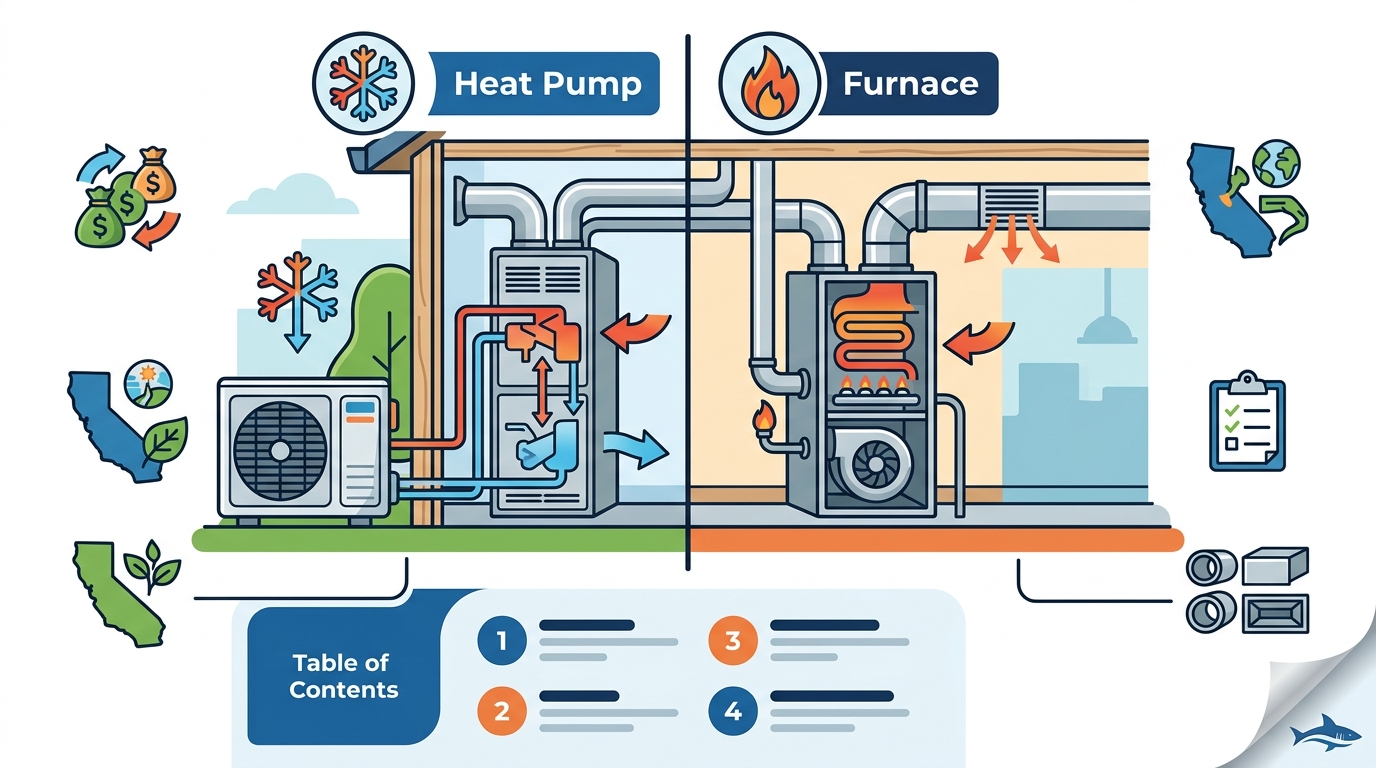
Choosing the correct capacity and type of heat pump is the first step in the installation process. Homeowners must decide between a central ducted system or a ductless mini-split configuration. Central systems are ideal for homes with existing ductwork, while ductless systems offer targeted efficiency for additions or homes without ducts. Proper sizing is critical because even the most advanced unit will underperform if the ductwork is leaky or the unit is improperly sized.
| Feature | Gas Furnace | Central Heat Pump | Ductless Mini-Split |
|---|---|---|---|
| Energy Source | Natural Gas | Electricity | Electricity |
| Heating Efficiency | 80-98% AFUE | 200-300% COP | 200-300% COP |
| Cooling Capability | Requires separate AC | Built-in | Built-in |
| Installation Complexity | Medium | High (Ductwork required) | Low to Medium |
| Best For | Existing gas lines, no AC | Whole-home comfort, existing ducts | Room-by-room control, no ducts |
Undersized units struggle to maintain temperature during extreme weather, while oversized units cycle on and off frequently, leading to premature wear. A professional load calculation, often referred to as a Manual J calculation, is required to determine the exact BTU capacity needed for your specific home layout and insulation levels.
Regulatory Compliance and Incentives
California has implemented strict building codes and environmental regulations that favor electrified heating systems. The state's push toward net-zero emissions by 2045 has led to the development of various incentive programs for homeowners who switch from fossil fuels to electric heat pumps. Understanding these programs can significantly offset the upfront cost of installation.
Local Rebates and Programs
The County and the Bay Area Regional Energy Network (BayREN) have been active in promoting clean heating solutions. Recent training sessions in San José have focused on new heat pump water heater technology and the rebates available to homeowners. While these specific rebates often target water heaters, the broader infrastructure supports the adoption of heat pump space heating systems. Homeowners should check with their local utility provider for current electric heat pump rebates, which can range from several hundred to several thousand dollars.
Building Code Requirements
New construction and major renovations in San Jose must comply with Title 24 energy efficiency standards. These standards often mandate the use of high-efficiency equipment, making heat pumps a default choice for new builds. For existing homes, while there is no immediate mandate to replace gas furnaces, the long-term trajectory of local codes strongly suggests that electrification is the preferred path for future-proofing your home.
Maintenance and Longevity
The lifespan of a heating system is a key factor in the total cost of ownership. A heat pump is a heating and cooling system that moves thermal energy, and its components are subject to wear from constant operation. On average, a well-maintained heat pump lasts between 15 and 20 years. In contrast, a gas furnace typically lasts between 15 and 20 years, but the associated air conditioning unit may have a shorter lifespan if not properly maintained.
Preventative maintenance is essential to maximize the efficiency and longevity of any HVAC system. This includes annual inspections, filter changes, and coil cleaning. ENERGY STAR recommends that homeowners consider replacing their equipment if it is more than 10 years old and requires frequent repairs. Regular maintenance not only extends the life of the system but also ensures that it operates at peak efficiency, which is crucial for realizing the promised energy savings.
Key Takeaways
- Heat pumps are significantly more efficient than gas furnaces, delivering up to three units of heat per unit of electricity.
- San Jose's mild climate makes heat pumps an ideal choice for both heating and cooling needs.
- Electrical panel upgrades may be necessary for older homes to support the power demands of a new heat pump.
- Proper sizing through a Manual J calculation is critical to ensure system performance and efficiency.
- Local incentives and rebates can offset a significant portion of the installation cost.
- Ductless mini-splits are a viable option for homes without existing ductwork or for targeted room-by-room control.
- Regular maintenance is required to maintain the efficiency and longevity of any HVAC system.
Frequently Asked Questions
Is a heat pump more expensive to install than a furnace?
Yes, the upfront cost of a heat pump is generally higher than that of a gas furnace. However, the long-term energy savings and the elimination of the need for a separate air conditioning unit can offset this initial investment over time.
Can a heat pump heat my home in San Jose winters?
Yes, modern heat pumps are designed to operate efficiently in a wide range of temperatures. San Jose's mild winters are well within the operational range of standard air-source heat pumps, making them a reliable heating solution.
Do I need to upgrade my electrical panel for a heat pump?
It depends on your current electrical capacity. If your home has a 100-amp panel, an upgrade to 200 amps is often recommended to safely support a central heat pump system. A professional assessment will determine your specific needs.
What is the difference between a central heat pump and a ductless mini-split?
A central heat pump uses existing ductwork to distribute air throughout the home, while a ductless mini-split uses individual indoor units connected to an outdoor compressor. Mini-splits are ideal for homes without ducts or for zoned temperature control.
Are there rebates for installing a heat pump in San Jose?
Yes, various state and local programs offer rebates for installing high-efficiency heat pumps. Homeowners should check with their utility provider and local government agencies for the most current incentive programs.
How long does a heat pump last?
With proper maintenance, a heat pump typically lasts between 15 and 20 years. Regular annual inspections and filter changes can help extend the lifespan of the system.
Can I keep my existing ductwork when installing a heat pump?
In most cases, yes. If your existing ductwork is in good condition and properly sized, it can be reused for a central heat pump installation. A professional inspection will determine if any modifications are needed.
Final Recommendation
For most San Jose homeowners, a heat pump is the superior choice for long-term comfort, efficiency, and cost savings. The dual functionality of heating and cooling in a single system, combined with the potential for significant energy savings, makes it a compelling investment. If you are considering a system replacement, it is essential to work with a qualified professional who can assess your specific home needs, including electrical capacity and ductwork condition. Air Sharks provides comprehensive heating and cooling services in San Jose, ensuring that your new system is installed correctly and optimized for maximum performance. To plan your visit and discuss your options, today.