
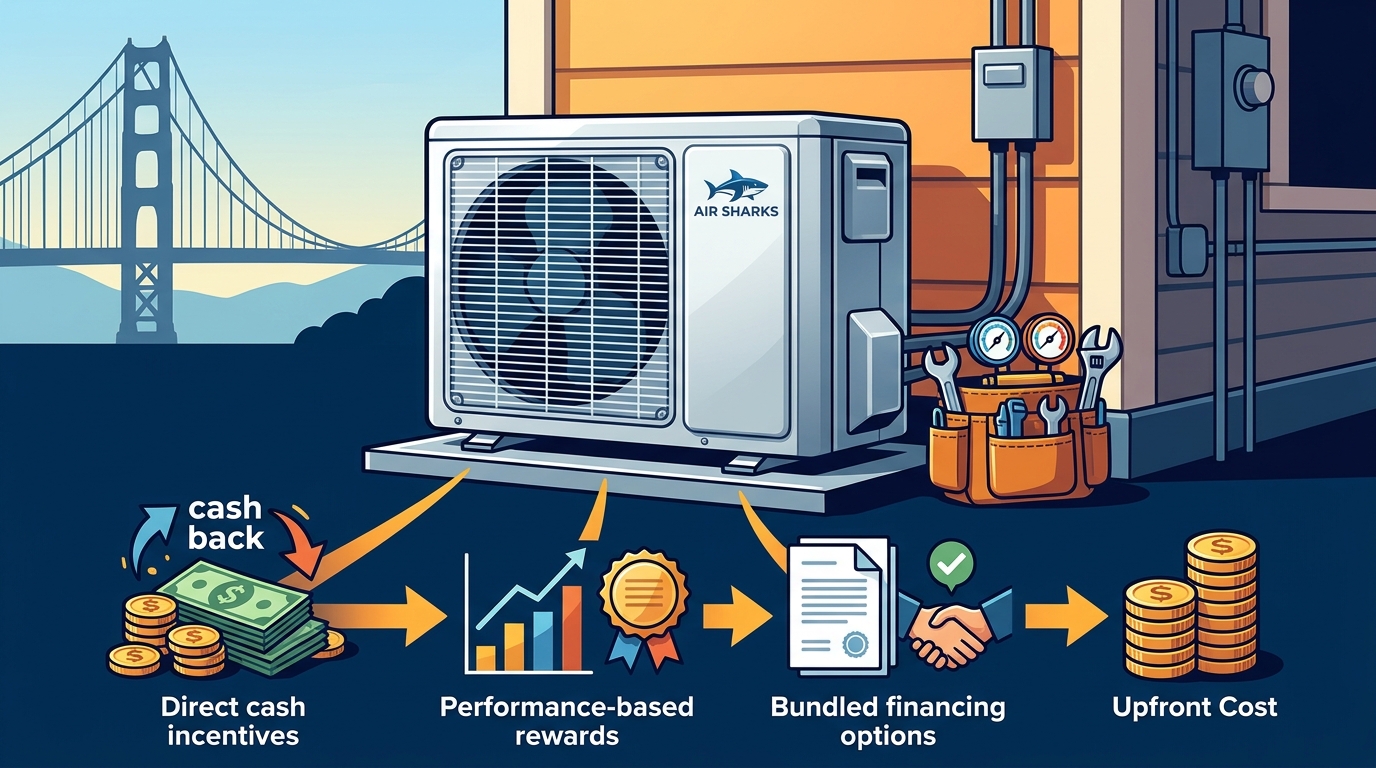
Bay Area utility companies offer heat pump rebates through direct cash incentives, performance-based rewards, and bundled financing options. These programs are designed to offset the upfront cost of high-efficiency equipment and encourage the adoption of electrified heating and cooling systems. By understanding the specific mechanisms of your local provider, you can maximize your savings and ensure a smooth installation process with a professional team like Air Sharks.
Direct Cash Incentives and Equipment Eligibility
Most utility programs in the San Jose and broader Bay Area region provide direct cash rebates for installing qualifying heat pump systems. A direct rebate is a fixed amount of money paid to the customer or installer after the equipment is verified as installed and operational. These incentives are typically tiered based on the efficiency rating of the unit, such as the Seasonal Energy Efficiency Ratio (SEER) for cooling or the Heating Seasonal Performance Factor (HSPF) for heating.
For example, a high-efficiency ducted heat pump might qualify for a higher rebate tier than a standard unit. Utilities often require that the equipment be listed on specific approved product lists, such as the Energy Star Most Efficient list or the utility's own qualified products database. This ensures that the rebate is only applied to systems that meet strict performance and safety standards. Homeowners should verify that their chosen model is eligible before purchasing to avoid losing out on potential savings.
The implication for homeowners is that the choice of equipment directly impacts the financial return. Selecting a unit that sits at the top of the efficiency scale can significantly reduce the net cost of the project. Air Sharks technicians are trained to guide clients toward models that not only meet utility requirements but also fit the specific load calculations of the home.
Performance-Based Incentives and Data Verification
Beyond fixed cash amounts, many Bay Area utilities offer performance-based incentives that reward actual energy savings. A performance-based incentive is a payment structure where the rebate amount is determined by the measured reduction in energy consumption over a specific period, often one to two years. These programs use smart meters or data loggers to track usage before and after the heat pump installation.
For instance, a utility might offer a rebate that scales up if the household reduces its natural gas usage by a certain percentage after switching to an electric heat pump. This approach aligns the incentive with the environmental goal of decarbonizing the grid. The data is usually collected automatically, meaning the homeowner does not need to manually track bills, though they must ensure the meter is active and reporting correctly.
This mechanism implies that the long-term savings on utility bills are a key component of the rebate. Homeowners who pair their new heat pump with energy-efficient practices, such as sealing ducts or upgrading insulation, may see higher performance scores and, consequently, larger rebates. Air Sharks provides comprehensive air quality and ductwork inspections that can help optimize system performance for these data-driven programs.
Financing Options and Bundled Programs
Utility companies often bundle rebates with low-interest financing or on-bill financing options to make the upfront cost more manageable. On-bill financing is a loan structure where the cost of the equipment and installation is repaid through monthly utility bill payments over a set term. This allows homeowners to spread the cost of the heat pump over several years, often with interest rates lower than traditional credit cards or personal loans.
Some programs also offer bundled incentives that combine the heat pump rebate with rebates for other electrification upgrades, such as electric water heaters or electric vehicle chargers. For example, a utility might offer a combined package that reduces the total cost of electrifying the entire home. This holistic approach can make the financial case for full electrification much stronger than addressing the HVAC system in isolation.
The implication is that homeowners should look at the total cost of ownership rather than just the equipment price. By leveraging bundled financing and rebates, the monthly cost of the new system can be comparable to or lower than the previous gas system. Air Sharks can help clients navigate these financial options to find the most suitable payment plan for their budget.
The Application and Verification Process
Securing a utility rebate typically involves a structured application and verification process. The process usually begins with the installation of the new equipment, followed by the submission of proof of purchase and installation. The utility then verifies that the work was performed by a licensed contractor and that the equipment meets the required specifications. This verification step is crucial to prevent fraud and ensure that the public funds are used for legitimate efficiency improvements.
Homeowners should keep all documentation, including invoices, warranty cards, and product specification sheets, readily available. Some utilities require the installer to submit the application on the homeowner's behalf, while others allow the homeowner to file directly. The timeline for receiving the rebate can vary, ranging from a few weeks to several months, depending on the utility's processing volume.
This process implies that patience and organization are key to a smooth experience. Working with a professional service provider like Air Sharks can streamline this process, as they are familiar with the specific documentation and verification requirements of local utilities. This expertise helps ensure that no steps are missed and that the rebate is processed without delay.
Local Utility Variations in the Bay Area
It is important to note that rebate programs vary significantly between different utility providers in the Bay Area. A local utility rebate is a financial incentive offered by a specific electric or gas provider to customers within their service territory. For example, PG&E, which serves much of the San Jose area, has specific programs that differ from those offered by smaller municipal utilities or community choice aggregations. Each provider has its own set of eligibility criteria, application portals, and incentive amounts.
Homeowners should check with their specific utility provider to understand the exact details of the available programs. Some utilities may offer higher rebates for low-income households or for homes that are part of specific energy efficiency programs. Additionally, some programs may have annual caps on the number of rebates they can issue, meaning that early application can be advantageous.
The implication is that there is no one-size-fits-all approach to utility rebates. Homeowners must research their specific provider's offerings to maximize their savings. Air Sharks serves the San Jose area and is well-versed in the local utility landscape, helping clients identify and apply for the most relevant incentives available to them.
Key Takeaways
- Direct cash rebates are typically tiered based on the efficiency rating of the heat pump equipment.
- Performance-based incentives reward actual energy savings measured over time via smart meters.
- On-bill financing allows homeowners to repay the cost of the heat pump through monthly utility bills.
- Bundled programs may combine heat pump rebates with incentives for other electrification upgrades.
- The application process requires verification of installation by a licensed contractor and submission of proof of purchase.
- Rebate programs vary by utility provider, so homeowners should check with their specific local utility.
- Working with a professional installer like Air Sharks can help navigate the rebate application and verification process.
Frequently Asked Questions
Do all heat pumps qualify for utility rebates?
No, only heat pumps that meet specific efficiency standards and are listed on the utility's approved product list qualify for rebates. Homeowners should verify the eligibility of their chosen model before purchasing.
How long does it take to receive a utility rebate?
The timeline for receiving a rebate can vary from a few weeks to several months, depending on the utility's processing volume and the specific program requirements.
Can I combine utility rebates with other incentives?
In many cases, yes. Homeowners may be able to combine utility rebates with state or federal incentives, such as tax credits, to further reduce the net cost of the heat pump installation.
Do I need to apply for the rebate myself?
It depends on the utility program. Some utilities require the installer to submit the application on the homeowner's behalf, while others allow the homeowner to file directly. Air Sharks can assist with the application process as needed.
What happens if my heat pump does not meet the performance requirements?
If the heat pump does not meet the performance requirements for a performance-based incentive, the rebate amount may be reduced or denied. It is important to ensure that the system is installed and maintained correctly to maximize performance.
Are there any income requirements for utility rebates?
Conclusion
Understanding how Bay Area utility companies offer rebates for heat pump installations is essential for maximizing your savings and ensuring a successful transition to electrified heating and cooling. By leveraging direct cash incentives, performance-based rewards, and financing options, you can significantly reduce the net cost of your new system. Air Sharks is committed to helping you navigate these programs and find the best solution for your home. To schedule a consultation and learn more about how we can help you qualify for local rebates, schedule your visit now.